The 2026 Seed Monopoly: Why Heirlooms Are the Ultimate Currency When the Food Supply Breaks
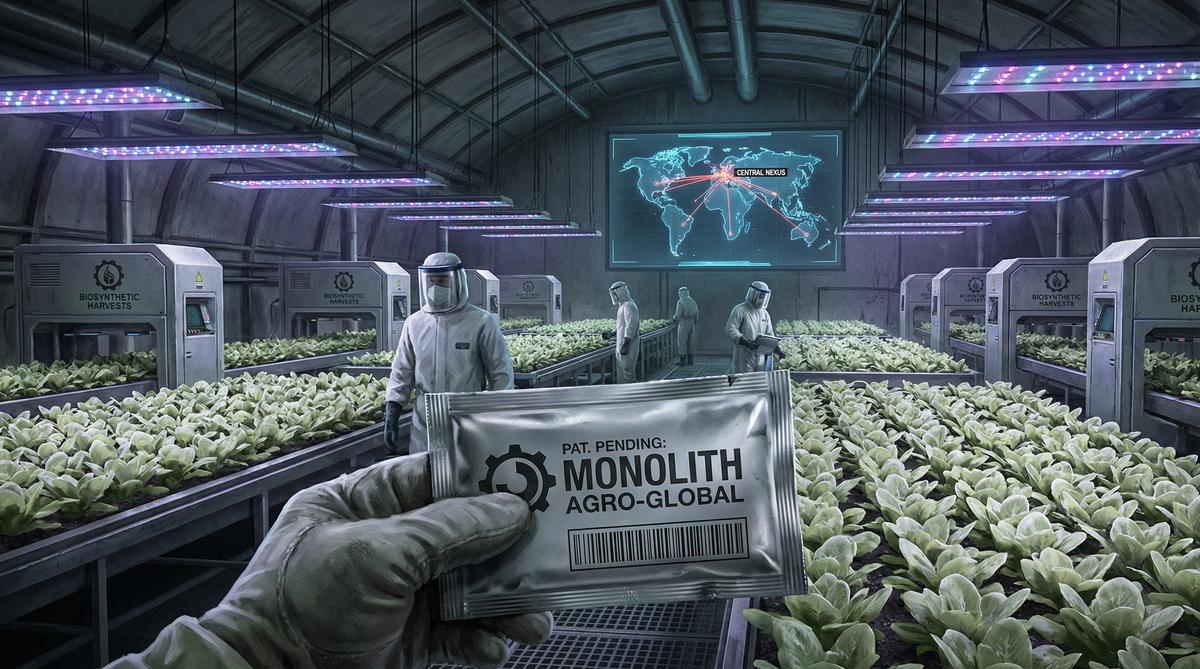
Three corporations now control over 50% of the world’s commercial seed supply.
Read that again.
The very foundation of human survival—the ability to grow food—has been quietly monopolized while you were distracted by the news cycle.
And right now, the industrial food system is flashing red.
The USDA just released its 2026 Food Price Forecast, predicting that grocery prices will rise another 3.6% this year.
Beef and veal are expected to spike by 5.5%.
Retailers are already warning that the bulk of new tariff-driven price increases will hit supermarket shelves by mid-to-late 2026.
But inflation is only the symptom.
The root cause is a fragile, hyper-consolidated supply chain that is one geopolitical shock away from total paralysis.
Consider the Strait of Hormuz.
Every single day, one-third of the world’s synthetic fertilizers pass through this narrow, volatile chokepoint.
Almost half of the world’s urea—the most widely used nitrogen fertilizer—is produced in that region.
If that shipping lane closes, the industrial agricultural machine grinds to a halt.
The food you buy at the store doesn’t come from a farm anymore; it comes from a petrochemical supply chain.
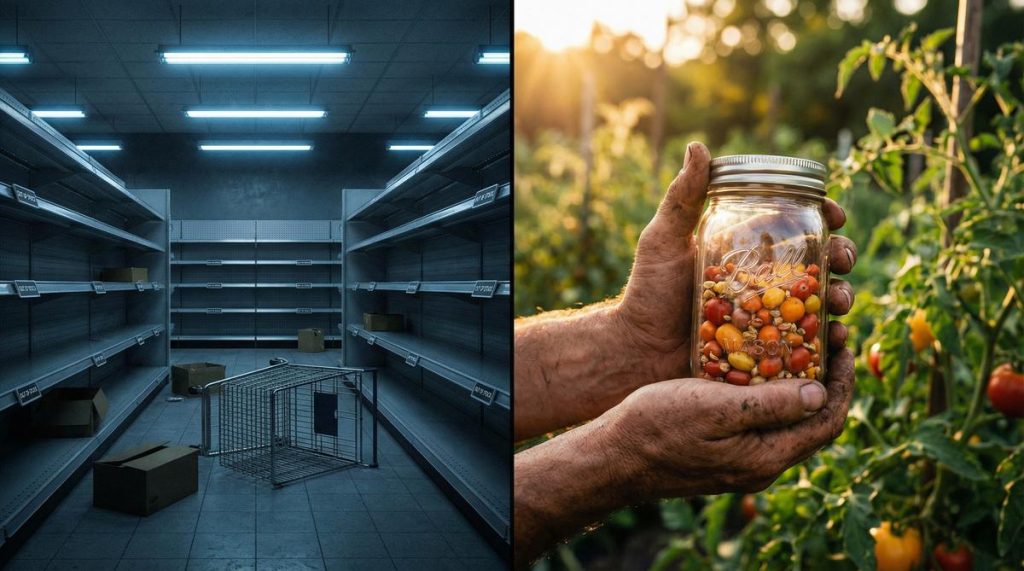
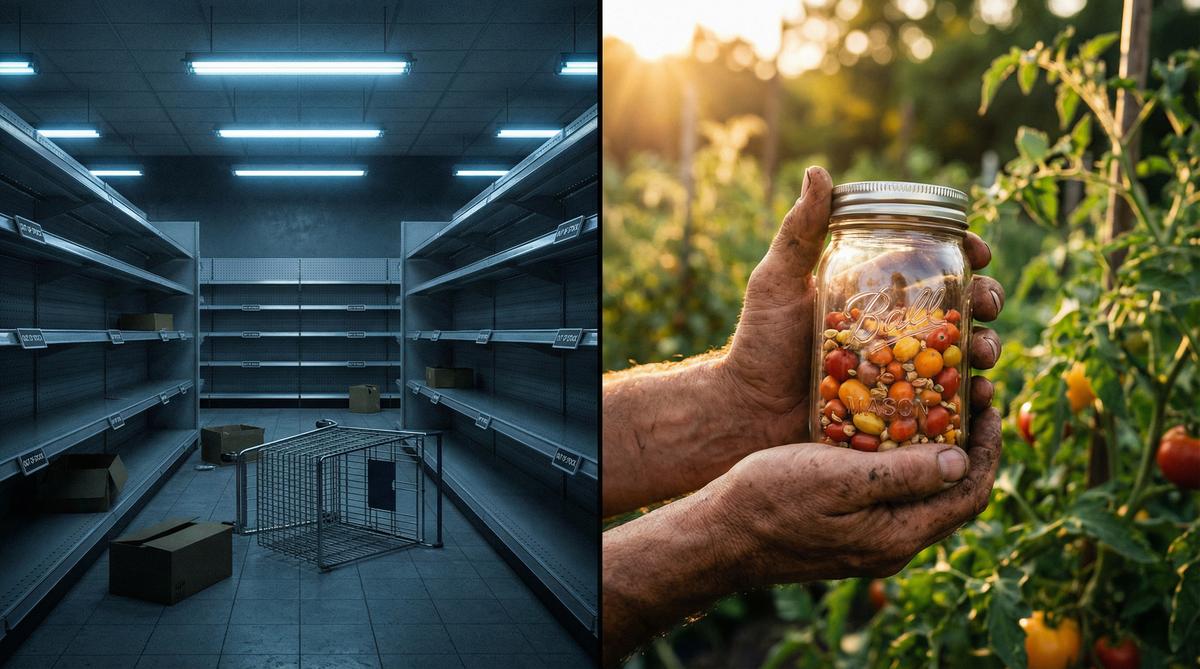
And when that chain breaks, the shelves empty in 72 hours.
The Reality Check: Why Your Pantry Isn’t Enough
Standard preparedness advice tells you to buy a bucket of freeze-dried meals and call it a day.
That is a fatal miscalculation.
A three-month food supply is a great start, but it is a bridge, not a destination.
What happens on day 91?
What happens when the government steps in to “manage” the crisis with rationing and price controls?
Relying on FEMA, traditional grocery stores, or even long-term food storage buckets means you are still dependent on a system you do not control.
You are still a consumer.
And in a prolonged crisis, consumers are victims.
The modern agricultural system has engineered dependency by pushing hybrid (F1) and genetically modified seeds.
These seeds are patented.
They are designed not to breed true.
If you plant the seeds from a store-bought hybrid tomato, you will not get the same tomato next year—if you get anything at all.
This forces farmers and gardeners to buy new seeds every single spring from the same three mega-corporations.
They don’t just want your money; they want your perpetual dependence.
True food sovereignty cannot be bought in a bucket.
It must be grown.
And it starts with the oldest, most valuable currency in human history: heirloom seeds.
The Practical Solution: Building Your Personal Seed Vault
You don’t need a hundred acres to break free from the industrial food grid.
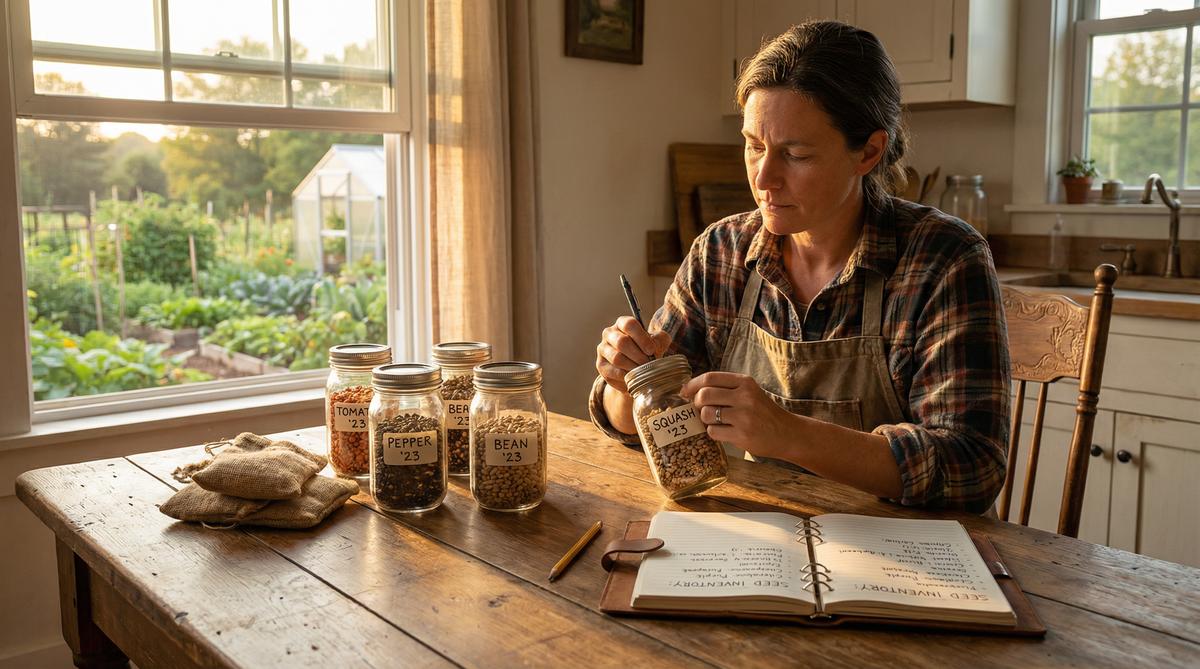
You need a cool, dark space, a few mason jars, and the knowledge to save your own seeds.
Building a personal heirloom seed vault is the most asymmetric preparedness investment you can make in 2026.
A single packet of heirloom tomato seeds costs about $4.
If you grow those tomatoes and save the seeds properly, you will have enough seeds to plant 50 more plants next year.
That is a return on investment that no stock market can match.
Here is exactly how you start.
First, you must only buy open-pollinated, heirloom seeds.
These are the only seeds that will produce the exact same plant generation after generation.
Start with the easiest crops: tomatoes, peppers, beans, and squash.
For beans and peas, the process is effortless.
You simply let the pods dry completely on the vine until they are brown and rattling.
Shell them, let them air dry indoors for a few more days, and store them.
For tomatoes, you need to use the wet fermentation method.
Scoop the seeds and the surrounding gel into a small mason jar.
Add a little water and let it sit at room temperature for two to three days until a layer of mold forms on top.
This fermentation process breaks down the germination-inhibiting gel and kills seed-borne diseases.
Rinse the seeds in a fine mesh strainer, spread them on a screen or paper plate, and let them dry completely.
For peppers and squash, simply scrape the seeds out of fully mature fruit, rinse them, and let them dry flat for two weeks.
Once your seeds are bone dry, storage is the critical final step.
Seeds have three enemies: heat, light, and moisture.
Store your completely dry seeds in airtight glass jars or vacuum-sealed mylar bags.
Add a silica gel packet to absorb any residual moisture.
Keep them in a cool, dark place—a basement below 60°F or even your refrigerator.
Properly stored tomato and squash seeds will remain viable for four to six years.
You are not just saving seeds; you are building a generational wealth transfer of calories.
The Path to Resilience
The headlines are designed to make you feel powerless.
They want you paralyzed by inflation, terrified of supply chain collapses, and dependent on the next government handout.
But you have a choice.
You can step off the treadmill of perpetual consumption.
When you hold a jar of seeds that you saved with your own hands, the anxiety of the grocery store aisle disappears.
You are no longer at the mercy of global shipping lanes or corporate monopolies.
You become a producer.
This is the essence of true sovereignty.
It is the quiet confidence of knowing that no matter what happens to the dollar, the grid, or the supply chain, your family will eat.
You are reclaiming the knowledge that sustained your ancestors.
You are building a localized, resilient system that cannot be taxed, inflated, or confiscated.
The time to start is not when the shelves are empty.
The time to start is today.
The Blueprint for Independence
True independence requires a multi-front strategy, and food sovereignty is just the beginning.
If you are ready to turn those heirloom seeds into a perpetual food machine, the 4ft Farm Blueprint shows you exactly how to maximize your yield in minimal space, ensuring your family never relies on a fragile grocery supply chain again.
To build out the rest of your off-grid infrastructure, you need the right tools, which is why Homesteader Depot provides the essential, field-tested gear required to maintain total self-sufficiency when the system fails.
Because physical preparedness is only half the battle, you must also protect your wealth from the coming economic storm; American Downfall delivers the unvarnished financial and political analysis you need to stay three steps ahead of the collapse.
For a comprehensive, strategic approach to hardening your home and your life against every modern threat, the intelligence briefings at Self Reliance Report are mandatory reading for serious operators.
Of course, surviving the collapse means nothing if your body fails you, which is why Seven Holistics offers the natural, sovereign health solutions necessary to maintain peak physical vitality without relying on the broken pharmaceutical grid.
And to ensure you have the daily tactical knowledge to protect your family’s well-being in an increasingly toxic world, Freedom Health Daily provides the actionable health independence strategies you need to thrive outside the medical matrix.