
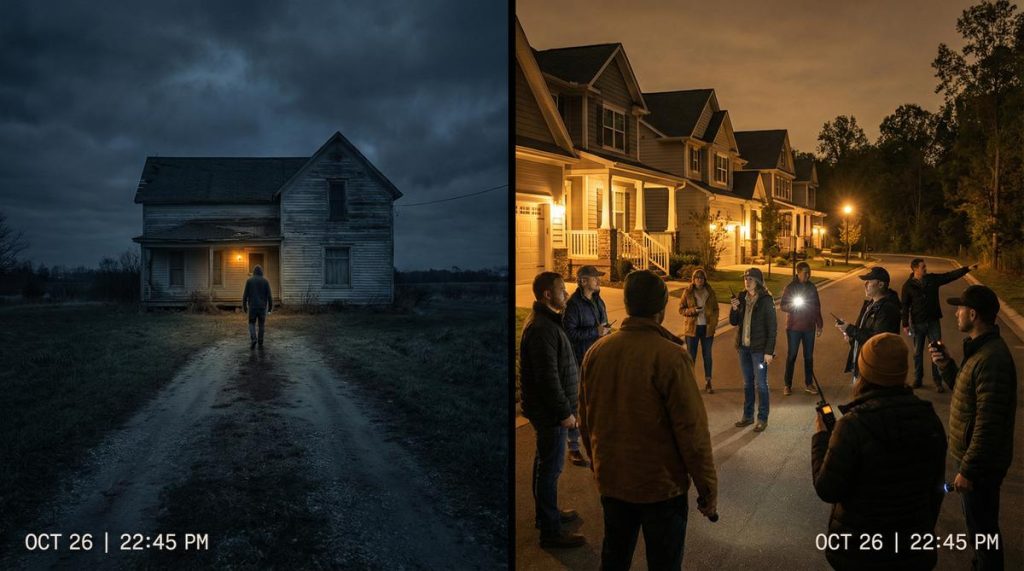
The math is terrifying, and no politician wants to talk about it.
Right now, U.S. law enforcement agencies are operating at just 91% of their authorized staffing levels.
That is a massive, nationwide 10% workforce deficit.
And the consequences are already bleeding into your neighborhood.
Sixty-five percent of police departments have been forced to reduce services or eliminate specialized units entirely.
Just five years ago, that number was only 25%.
The system is buckling under its own weight.
In California, police staffing has plummeted to a 30-year low.
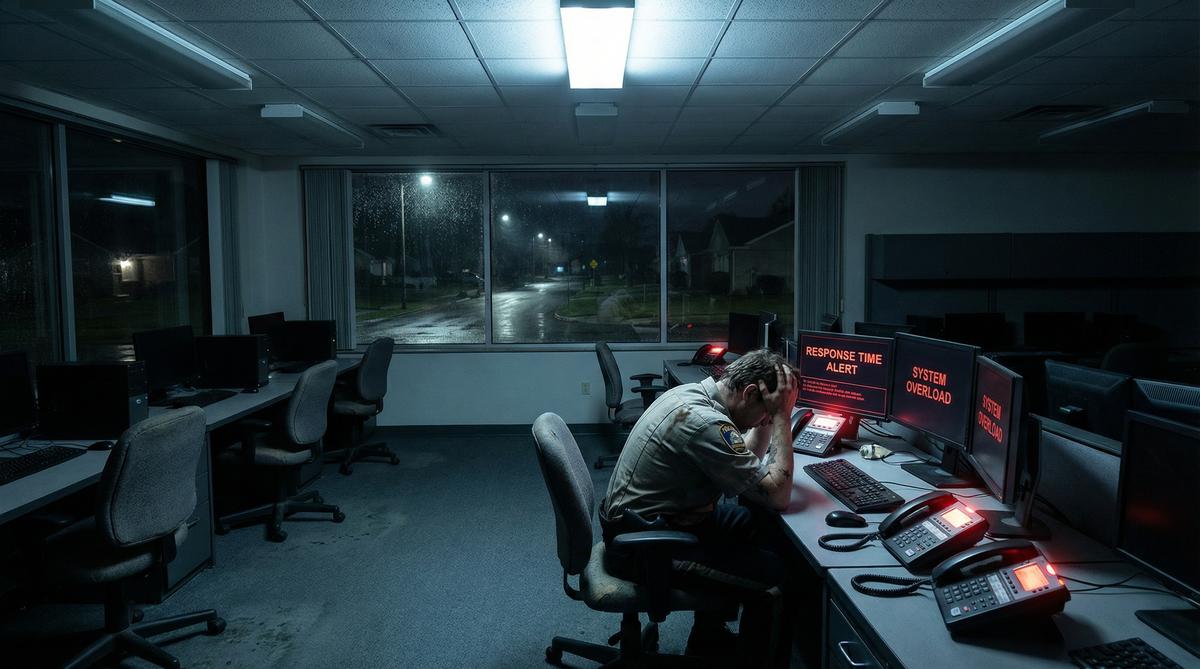
In major cities like San Diego, the average response time for serious crimes now exceeds 36 agonizing minutes.
If you live in rural America, the reality is even bleaker.
Rural EMS and emergency response times are now averaging 92.8 minutes.
When seconds count, help is an hour and a half away.
And the federal government is making it worse.
As of late March 2026, the Department of Homeland Security partial shutdown has dragged on for a record-breaking 44 days.
This isn’t just a Washington political game.
That shutdown is actively freezing the federal grants that local law enforcement agencies rely on to keep patrols on the street.
The thin blue line isn’t just thinning.
It is actively breaking.
If you are relying on 911 to protect your family, your property, or your life, you are playing a deadly game of roulette.
You are outsourcing your survival to a system that is mathematically guaranteed to fail you when you need it most.
The Reality Check: Why Standard Advice Fails
The standard advice is always the same.
“Lock your doors, install an alarm, and call the police.”
This advice is dangerously obsolete.
An alarm system only makes noise.
It does not stop a home invasion.
It only notifies a dispatcher, who then notifies a police department that is already understaffed, overworked, and potentially hours away.
An alarm is just a stopwatch counting down how long you have to survive on your own.
And relying solely on yourself is a tactical error.
You cannot stay awake 24 hours a day.
You cannot watch every perimeter of your property simultaneously.
You cannot defend against a coordinated threat alone, no matter how well-armed you are.
The “lone wolf” survival fantasy is a Hollywood myth that gets people killed in the real world.
When the grid goes down, or when civil unrest spills into the suburbs, the lone wolf is just an isolated target.
The government knows this.
They know they cannot protect you.
But they will never admit it, because admitting it would cause a panic.
Instead, they offer platitudes and tell you to trust the system.
A system that is currently missing one out of every ten officers it needs just to function at a baseline level.
Your security is no longer a public service.
It is a private responsibility.
And the only viable solution is one that scales beyond your front door.
The Practical Solution: Building Your Neighborhood Defense Network
You do not need to form a militia.
You need to build a resilient, localized mutual aid and defense network.
And the data proves it works.
According to a comprehensive Department of Justice meta-analysis, organized neighborhood watch and community defense programs are associated with a 16% to 26% reduction in crime.
Criminals and opportunists look for soft, isolated targets.
A unified neighborhood is a hard target.
Here is exactly how you build your network, step by step.
Step 1: Identify Your Core Group
Do not invite the entire street to a town hall meeting.
Start small.
Identify three to five neighbors who share your mindset.
Look for the veterans, the first responders, the practical thinkers, and the people who already take care of their own property.
Have a quiet, one-on-one conversation over coffee or a beer.
Frame it around recent news — the police shortages, the rising response times.
Ask them: “If something happens and 911 can’t come, what’s our plan?”
Step 2: Establish Secure Communications
Cell towers will jam during a crisis.
You need a localized comms plan that does not rely on the grid.
Invest in a set of quality GMRS (General Mobile Radio Service) radios.
They are inexpensive, easy to use, and do not require the complex licensing of Ham radio for basic operation.
Assign a specific channel and privacy code for your core group.
Establish a daily check-in time.
If the grid drops, your radio network becomes your neighborhood’s central nervous system.
Step 3: Map the Terrain and Resources
You need to know exactly what you have and what you lack.
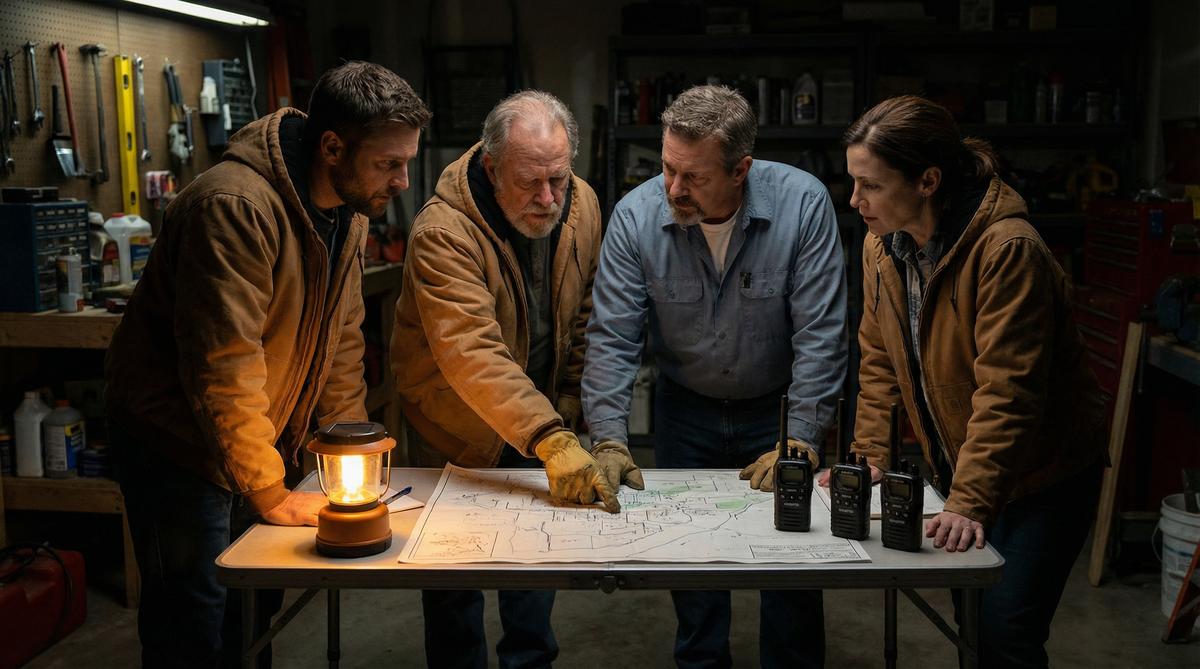
Sit down with your core group and map your immediate area.
Identify the choke points — the single road in, the blind corners, the vulnerable access routes.
Then, inventory your collective skills and resources.
Who has medical training?
Who has heavy equipment or a generator?
Who has a deep pantry or water purification capabilities?
You are not pooling your resources into a commune.
You are simply understanding what capabilities exist within a 500-yard radius of your home.
Step 4: Implement Layered Early Warning
You cannot defend against what you cannot see.
Establish a layered early warning system that extends beyond your front porch.
Use solar-powered, wireless driveway alarms placed at the natural choke points of your street.
If a vehicle or group approaches at 2:00 AM, you want to know before they reach your driveway.
Coordinate with your neighbors to ensure overlapping fields of view with security cameras.
Information is time, and time is the ultimate tactical advantage.
Step 5: Define the Escalation Protocol
What happens when the alarm trips?
You need a clear, pre-agreed protocol.
Who investigates?
Who stays back to protect the families?
How do you signal an all-clear versus a critical emergency?
Create a simple code word system for your radios.
Practice it.
A plan that has never been tested is just a theory.
The Path to Resilience
This is not about living in fear.
It is about living with absolute clarity.
When you accept that the cavalry is not coming, you stop waiting to be rescued.
You become the cavalry.
Building a neighborhood defense network does more than just secure your perimeter.
It builds genuine human connection.
It transforms strangers who happen to live near each other into a cohesive, resilient unit.
This is how human beings survived for thousands of years before we outsourced our safety to the state.
We relied on our tribe.
We relied on our neighbors.
When you take control of your own security, the anxiety of the daily news cycle fades away.
You are no longer a passive observer of the collapse.
You are an active architect of your own resilience.
You sleep better at night because you know exactly who has your back, and they know you have theirs.
True sovereignty begins the moment you realize you are entirely responsible for your own survival.
And true strength is found when you combine your sovereignty with others who share your resolve.
The Blueprint for Independence
Security is just one pillar of a truly sovereign life.
To completely insulate yourself from the fragility of the modern system, you must build independence across every aspect of your existence.
When the supply chains fracture and the grocery store shelves go bare, you cannot eat your security plan, which is why you must master the art of growing your own calories with the 4ft Farm Blueprint.
Defending your perimeter requires the right equipment, and you can find the essential off-grid gear and tactical tools you need at Homesteader Depot.
To stay ahead of the threats before they reach your neighborhood, you need actionable intelligence and advanced preparedness strategies from the Self Reliance Report.
Understanding the macroeconomic forces and political failures driving this collapse is critical, and you can track the real data the mainstream media ignores at American Downfall.
Physical security means nothing if your body fails you, so you must optimize your natural vitality and physical resilience through Seven Holistics.
And when the medical supply chain breaks down alongside the police force, you must know how to maintain your family’s well-being with the strategies found at Freedom Health Daily.
The system is breaking.
Do not wait for it to shatter completely.
Build your network today.