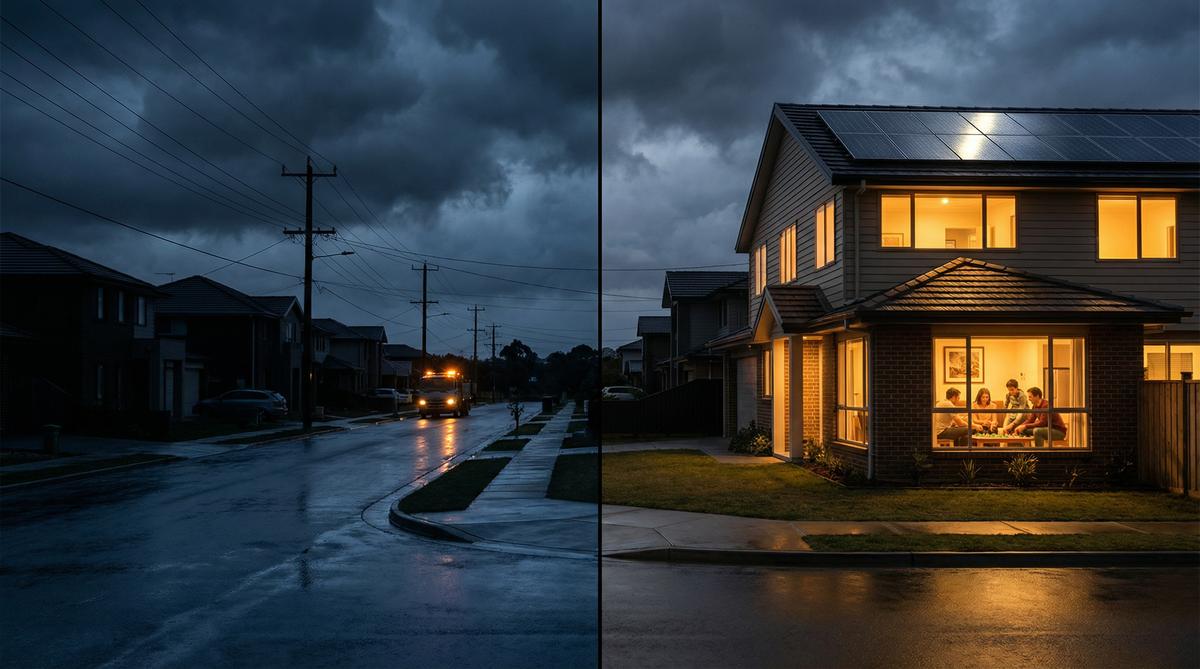
The American power grid is quietly collapsing under its own weight.
And you are the one paying for its failure.
Right now, the average household is paying over 5% more for electricity than just one year ago.
In some states, that number has skyrocketed by 20% to 30%.
Utility companies are demanding massive rate hikes just to keep the lights on, passing the cost of their own mismanagement directly to the consumer.
In Arizona, they are pushing for a 16% residential rate hike starting in 2026, which will add hundreds of dollars to the average annual bill.
In Michigan, they want a $423 million rate increase to fund a so-called “reliability plan” that should have been implemented a decade ago.
But despite these soaring costs, the grid has never been more fragile.
You are paying premium prices for a third-world power supply.
The Texas grid is currently cited as the highest risk in the nation, buckling under the surging demand from AI data centers and extreme weather events that it was never designed to handle.
In California, mysterious blackouts are rolling across the state as experts warn of escalating cyber-attack vulnerabilities from foreign adversaries.
And according to a recent report, geomagnetic disturbances and routine grid stress are already costing the U.S. economy $10 billion every single year.
The system is breaking down in real-time. If you want to understand the full scope of what happens when the grid fails, read our guide on how to harden your home against an EMP attack — it covers the threat landscape in detail.
Transformers are aging out, transmission lines are overloaded, and the regulatory bodies in charge are asleep at the wheel.
And the government’s only solution is to charge you more for a service that is becoming less reliable by the day.
The standard advice for energy independence used to be simple: let the government subsidize your solar panels.
That era is officially over.
The federal 30% residential solar tax credit ended on December 31, 2025, pulling the rug out from under millions of homeowners who were planning to make the switch.
And new tariffs on imported solar components have sent installation costs through the roof, making traditional grid-tied solar an elite luxury rather than a practical solution.
Solar installations dropped by 14% last year as the industry reeled from these sudden policy changes.
Now, more than half of businesses plan to raise prices by at least 15% over the next six months to cover these new tariffs, meaning the cost of entry is only going to climb higher.
If you wait for a government handout to secure your power supply, you will be waiting in the dark.
Relying on the traditional utility model is a fatal mistake.
They operate on a “self-regulating” standard where utility companies vote to minimize their own protection costs, prioritizing shareholder dividends over infrastructure security.
They refuse to harden the grid against EMPs, solar flares, or cyber threats because it cuts into their profit margins.
They know that when the system fails, the government will bail them out.
When the grid goes down, they lose money. But you lose everything.
Your food spoils in the refrigerator, destroying hundreds of dollars of carefully stored provisions.
Your medical devices stop working, putting vulnerable family members at immediate risk.
Your home security systems go blind, leaving your property exposed when law enforcement is overwhelmed.
Your communication with the outside world goes silent, cutting you off from critical emergency information.
You cannot outsource your family’s survival to a utility company that can’t even keep the lights on during a routine winter storm.
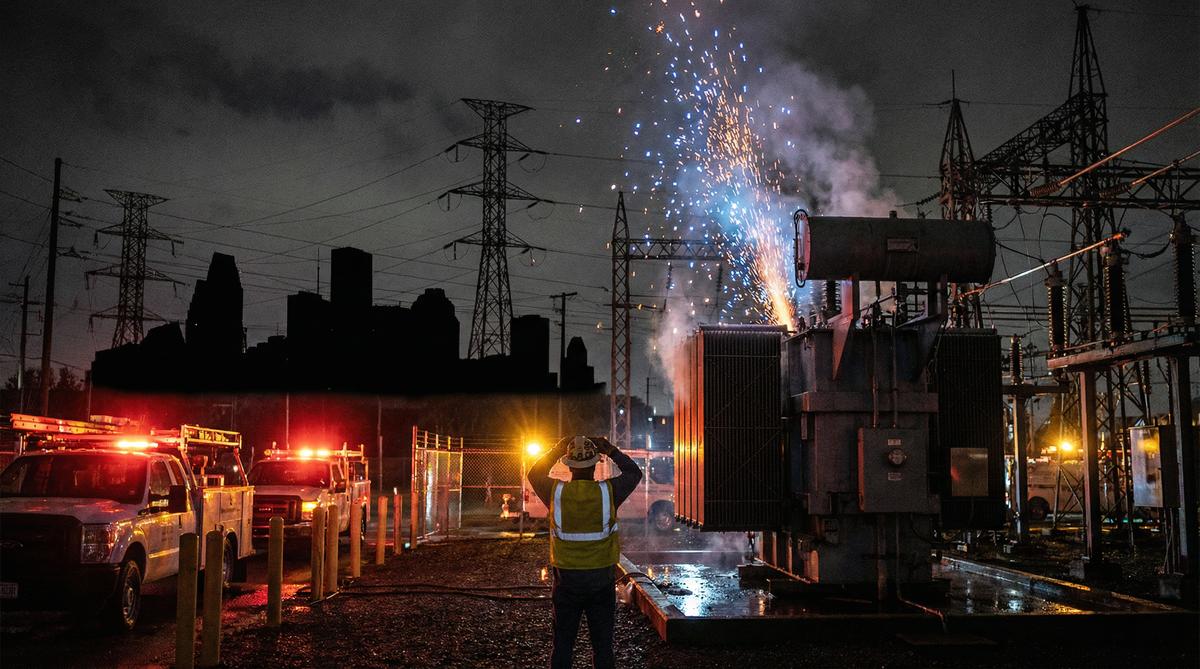
The window to secure affordable, independent power is closing rapidly.
But there is a practical solution that doesn’t require a $30,000 loan, a second mortgage, or a government subsidy.
You need to build an entry-level, off-grid DIY solar backup system.
This is not about powering a 4,000-square-foot mansion with central air conditioning and a heated pool.
This is about securing the critical infrastructure of your home so that you can survive a prolonged outage without missing a beat.
You need a system designed to keep your food cold, your water pumping, and your communications online.
Right now, despite the tariffs, you can still source DIY solar components for roughly $1.20 to $1.80 per watt if you know where to look and are willing to assemble them yourself.
A basic 1kW to 2kW emergency backup system can be built for $1,500 to $3,000.
This is a fraction of the cost of a full-home installation, which now averages between $15,000 and $30,000 when you factor in labor and contractor markups.
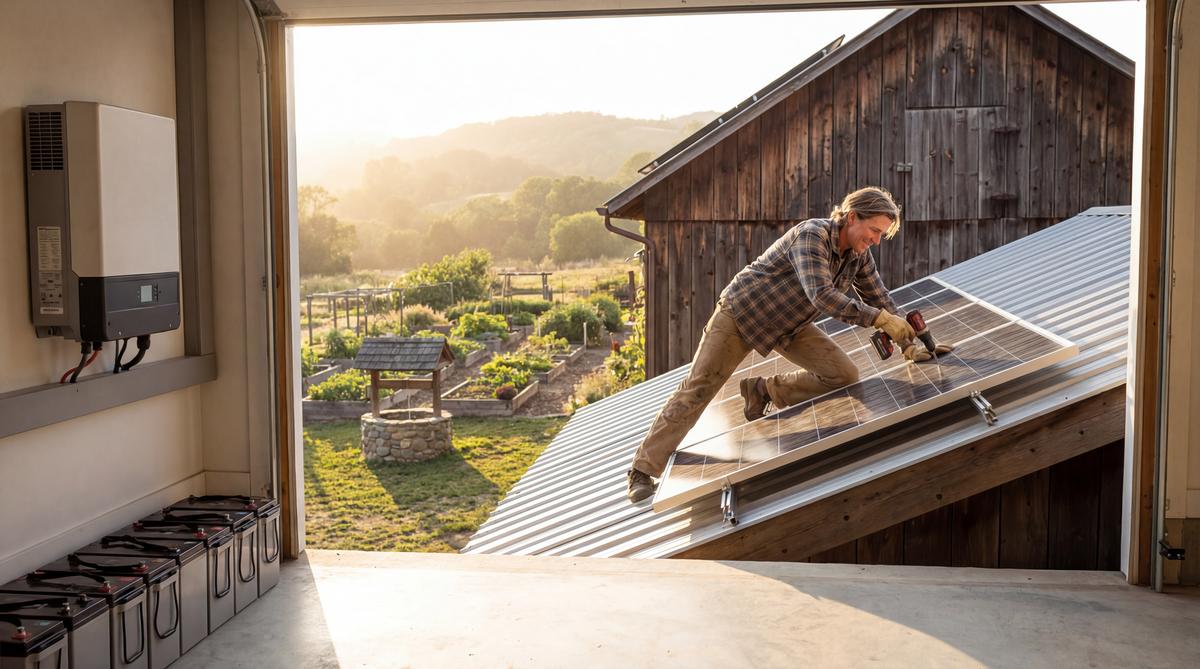
Start with the core components: monocrystalline solar panels, an MPPT charge controller, a LiFePO4 (Lithium Iron Phosphate) battery bank, and a pure sine wave inverter.
Focus your power budget on the absolute essentials.
A modern chest freezer draws surprisingly little power once it reaches its target temperature, often requiring less than 100 watts to maintain the freeze.
LED lighting and radio communications require minimal wattage — and if you want to go deeper on your complete off-grid communications plan, we’ve covered exactly what equipment you need and how to set it up., allowing you to keep your home illuminated and stay informed with a tiny fraction of your daily power budget.
A well pump might need a significant surge of power to start, but runs efficiently once engaged, meaning you only need to run it for a few minutes a day to fill your pressure tank.
By isolating these critical circuits and powering them independently, you create an unbreakable core of survival infrastructure.
You bypass the utility company entirely.
You bypass the fragile, interconnected grid that is vulnerable to cascading failures.
You become your own power company.
This is not just about surviving a blackout or weathering a winter storm.
This is about reclaiming your sovereignty from a system that views you as nothing more than a captive revenue stream.
Every watt of power you generate yourself is a watt they cannot tax, regulate, or shut off when it suits their political agenda.
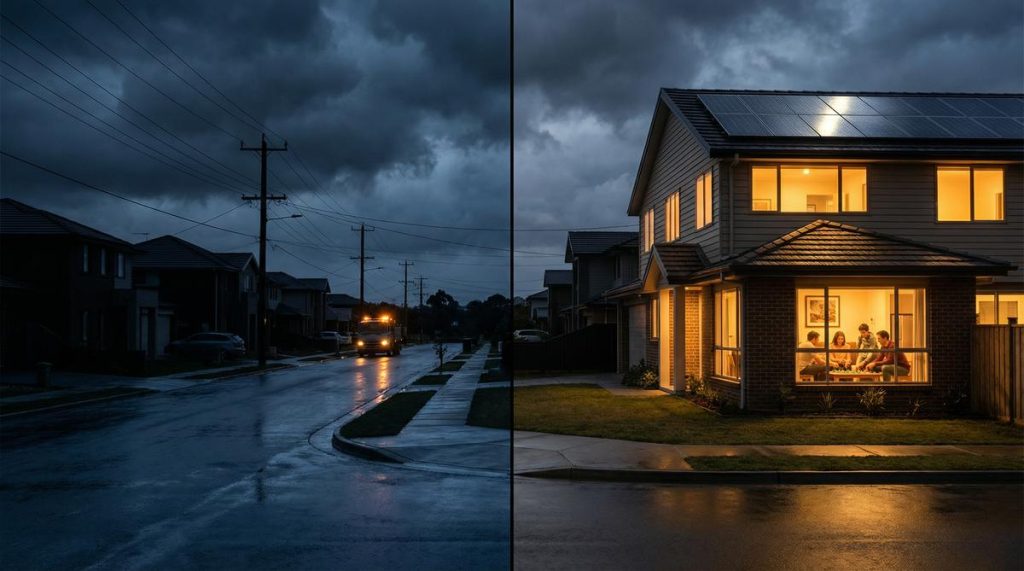
When the next winter storm hits and the utility company issues a rolling blackout warning, your lights will stay on.
When the next round of rate hikes is approved by the state commission, your household budget will remain untouched.
You are not a victim of the collapsing grid, waiting helplessly for the power to return.
You are an architect of your own independence, actively building a firewall between your family and the chaos of the modern world.
Building a DIY solar system is a tangible, physical manifestation of self-reliance.
It requires learning new skills, understanding basic electrical principles, and taking absolute responsibility for your own infrastructure.
It means stepping outside of your comfort zone and refusing to accept the vulnerability of the status quo.
But the reward is absolute peace of mind.
You are insulating your family from the volatility of the energy market and the incompetence of utility regulators.
You are building a fortress of resilience that cannot be dismantled by a cyber attack, a solar flare, or a sudden policy change in Washington.
The grid will fail. It is a mathematical certainty.
But your home will not.
True independence requires a comprehensive approach to self-reliance.
Energy is just the foundation; it is the engine that powers the rest of your survival strategy.
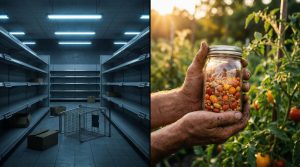
Once your power is secure, you must secure your food supply, which is why the 4ft Farm Blueprint teaches you how to grow maximum calories in minimum space, ensuring your family eats even when the grocery store shelves are empty and the supply chains freeze.
You will need the right tools to maintain your off-grid systems, and Homesteader Depot provides the essential, field-tested gear required to keep your homestead running smoothly without reliance on big-box hardware stores that will be stripped bare in an emergency.
To stay ahead of the next crisis, you need actionable intelligence, and the Self Reliance Report delivers the strategic foresight necessary to anticipate supply chain failures, economic shocks, and civil unrest before they hit your community.
Understanding the economic forces driving these utility rate hikes is critical, which is why American Downfall provides the unvarnished truth about the political and financial decay threatening your wealth, helping you protect your assets from inflation and confiscation.
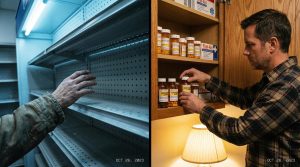
Physical resilience is just as important as infrastructure, and Seven Holistics offers the natural health protocols you need to maintain peak vitality when the medical system is overwhelmed and prescription drugs are unavailable.
Finally, protecting your family’s well-being requires proactive strategies, and Freedom Health Daily equips you with the knowledge to achieve true health independence outside the pharmaceutical complex, ensuring you can treat common ailments without a doctor’s visit.
The time to build is now.
Secure your power.
Secure your future.