
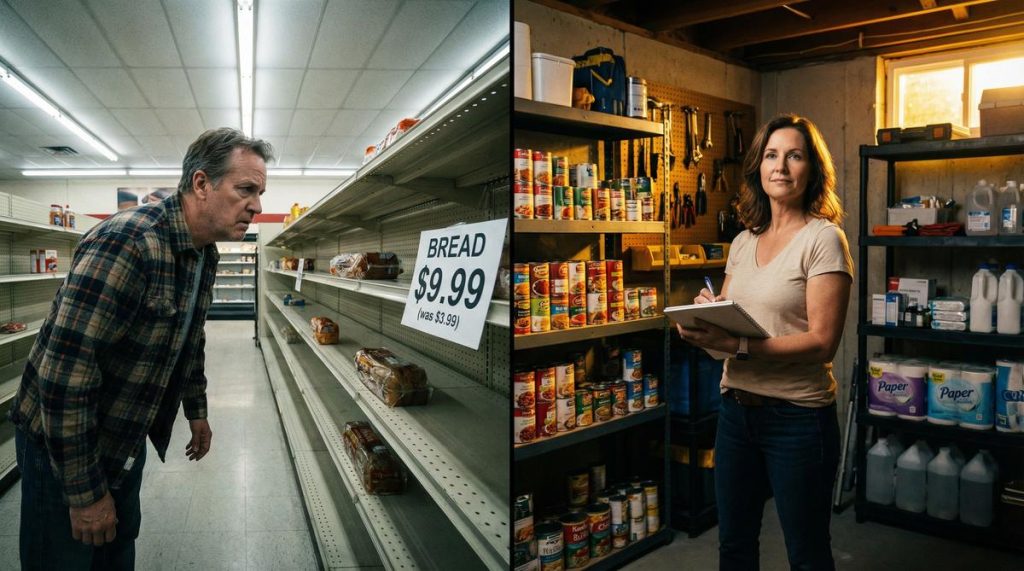
The window to protect your purchasing power is closing fast.
On April 2, 2026, the United States officially entered a new economic era.
The average effective tariff rate just hit 11.0%—the highest level since 1943.
According to the Yale Budget Lab, these new import taxes will drain up to $1,338 from the average American household this year alone.
And that is just the baseline.
For specific goods—like kitchen cabinets, tools, and electronics—the tariffs are spiking to 50%.
This is not a temporary supply chain glitch.
This is a structural repricing of the American cost of living.
When importers pay 20% to 50% more at the border, they do not absorb the cost.
They pass every single penny down to you.
Morningstar is already projecting that non-durable goods—including food, apparel, and paper products—will rise by 5.6% in 2026.
Wells Fargo has publicly urged Americans to stock up on home goods now, before the full weight of these tariffs hits the retail shelves.
If you wait until the summer to buy what you need, you will be paying a permanent premium.
The time to build your strategic household stockpile is today.
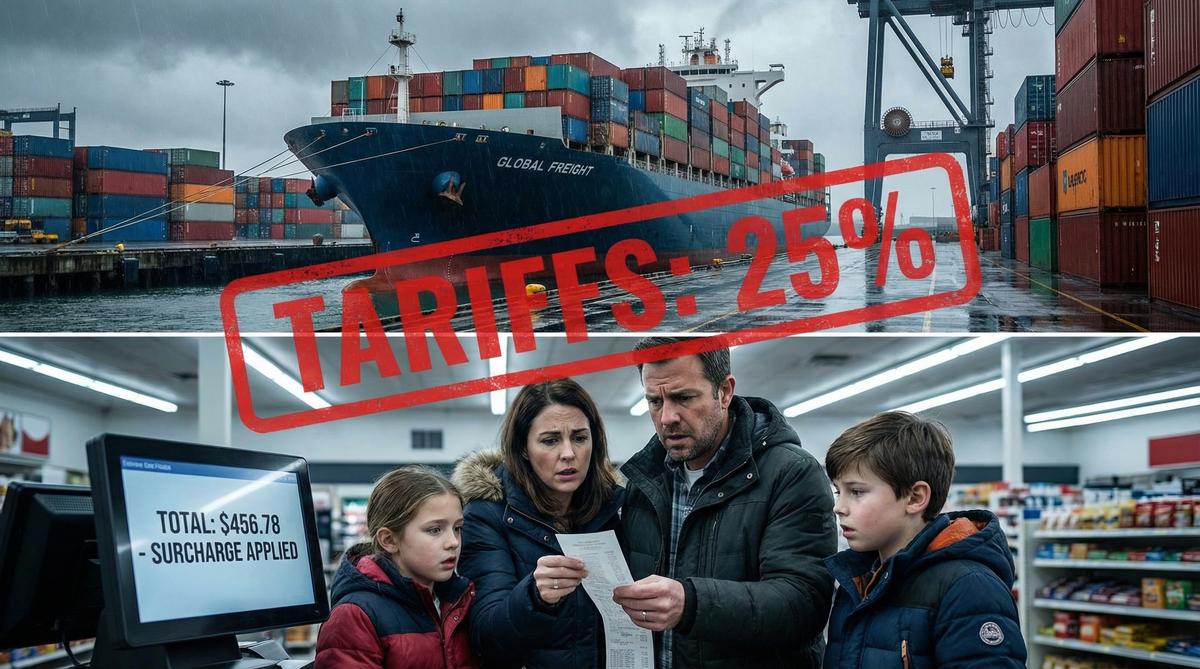
The Reality Check: Why Standard Budgeting Fails Now
Most financial advisors will tell you to stick to your budget and ride out the inflation.
That advice is mathematically flawed.
When the cost of essential goods is guaranteed to rise by double digits, holding cash in a savings account is a guaranteed loss.
Your money is losing value faster than any bank can pay you interest.
You cannot out-save a 50% tariff on the things you need to survive.
Think about the items you rely on daily.
Supportive footwear. Small kitchen appliances. Handheld power tools. Replacement parts for your refrigerator or vehicle.
These are not luxury items. They are the infrastructure of your life.
And almost all of them rely on international supply chains that are now subject to heavy taxation.
The National Retail Federation warns that athletic shoes and boots could see price increases of 10% to 20% in the coming months.
The steel and aluminum used in your power tools? Hit by targeted tariffs.
The raw materials in your daily vitamins and supplements? Subject to reciprocal duties.
If you rely on just-in-time delivery from big-box stores, you are volunteering to pay the highest possible price for your own survival.
You are letting the government and the corporations dictate your cost of living.
That is not resilience. That is dependency.
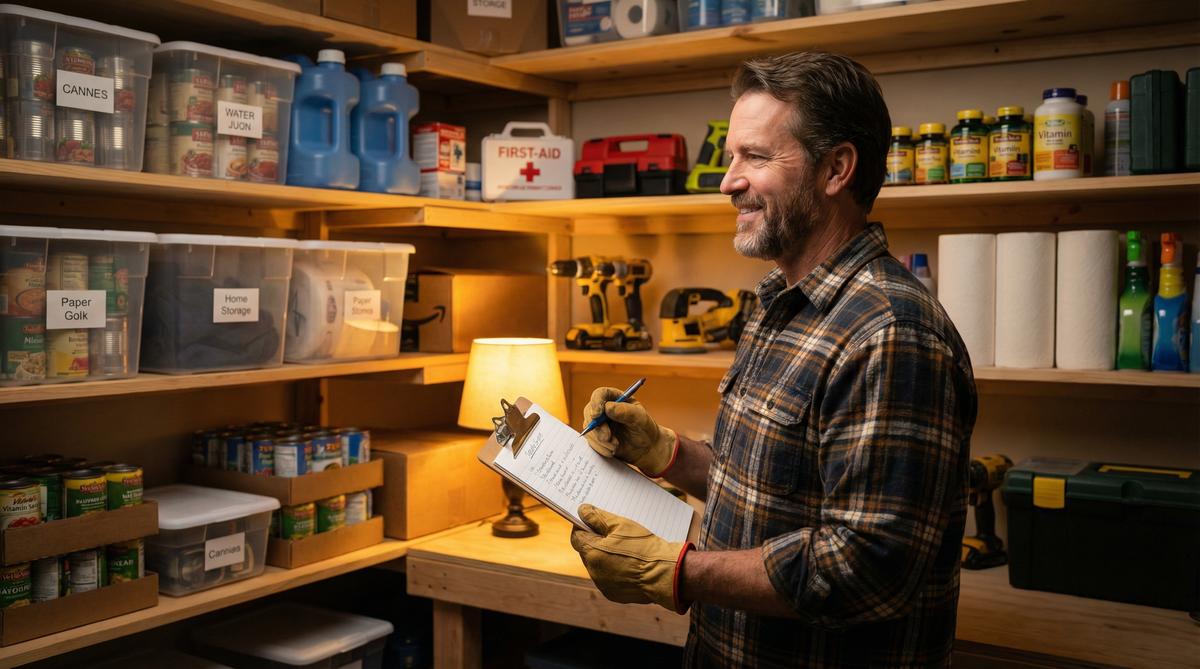
The Practical Solution: The Pre-Tariff Stockpile
The most effective way to protect your wealth right now is not to buy stocks or bonds.
It is to buy the things you know you will need, at today’s prices.
You need a strategic, room-by-room inventory plan.
1. The Health and Medical Reserve
Start with what keeps you alive.
Many active ingredients in over-the-counter medicines and daily supplements are sourced internationally.
Build a 12-month supply of your essential vitamins, pain relievers, and first-aid supplies.
Check the expiration dates, rotate your stock, and lock in your health budget for the next year.
2. The Maintenance and Repair Depot
When things break, you need the ability to fix them yourself.
Handheld power tools, drills, and saws are about to become significantly more expensive due to metal tariffs.
If you have been putting off buying a quality toolset, do it now.
Stockpile common replacement parts for your major appliances—water filters, seals, belts.
A $20 part today could cost $40 tomorrow, or worse, become entirely unavailable.
3. The Consumables Cache
Focus on the non-perishable items you use every single day.
Paper products, hygiene supplies, batteries, and cleaning concentrates.
These items do not go bad, and their prices are directly tied to the cost of transportation and raw materials.
Buy them in bulk. Store them in a cool, dry place.
Every roll of paper towels you buy today is a hedge against tomorrow’s inflation.
4. The Footwear and Clothing Buffer
Clothing and footwear are among the hardest-hit categories in the new tariff regime.
If you work on your feet, buy an extra pair of your primary work boots or supportive shoes now.
They do not become obsolete, and you will inevitably need them.
Do not wait until your current pair wears out and you are forced to pay a 20% premium.
The Path to Resilience
This is not about panic buying.
It is about strategic, calculated asset conversion.
You are converting depreciating fiat currency into tangible, useful assets.
You are taking control of your own supply chain.
When you have a year’s worth of supplies in your home, you are insulated from the chaos of the global market.
You do not have to care what the politicians do in Washington, or what the cargo ships do in the Pacific.
You have already secured your family’s needs.
That is true financial independence.
It is the peace of mind that comes from knowing you are prepared, no matter what the economy does.
You are no longer a passive consumer. You are a sovereign producer of your own security.
The Hidden Costs of Waiting
The psychological trap of inflation is the belief that prices will eventually return to “normal.”
They will not.
The 11.0% effective tariff rate is not a temporary spike. It is the new baseline.
When a manufacturer pays 50% more for the steel in a kitchen cabinet, they do not absorb that cost out of the goodness of their hearts.
They pass it to the distributor. The distributor passes it to the retailer. The retailer passes it to you.
And at every step of that chain, a profit margin is added to the new, higher base cost.
This is the compounding effect of supply chain taxation.
A $10 increase at the border becomes a $25 increase at the cash register.
If you wait for the “summer sales” to buy your essential gear, you will be buying inventory that was imported under the new tariff regime.
You will be paying the new, permanently inflated price.
The only way to win this game is to refuse to play it.
You must buy the old inventory, at the old prices, before the retailers re-price their shelves.
This is the essence of the Tariff Stockpile Strategy.
It is a race against the repricing cycle.
And the clock is ticking.
The 72-Hour Action Plan
Do not try to stockpile everything at once. That leads to decision paralysis.
Instead, execute a focused, 72-hour acquisition sprint.
Day 1: The Audit
Walk through your home with a notepad.
Open every cabinet, every closet, every tool chest.
Identify the items you use daily, weekly, and monthly.
Note the expiration dates on your medications and supplements.
Check the tread on your primary work boots.
Assess the condition of your small kitchen appliances.
Write down exactly what you need to survive and maintain your household for the next 12 months.
Day 2: The Triage
You cannot buy everything. You must prioritize.
Rank your list based on two factors: import reliance and daily necessity.
Vitamins, electronics, and steel tools go to the top of the list.
Locally sourced food and basic lumber go to the bottom.
Focus your capital on the items that are guaranteed to spike in price due to the new tariffs.
Day 3: The Acquisition
Execute the purchases.
Do not wait for the weekend. Do not wait for your next paycheck if you have the capital now.
Every day you wait is a day closer to the retail repricing cycle.
Buy in bulk where it makes sense.
Secure the high-value, high-tariff items first.
Store them properly. Rotate your stock.
You are not just buying goods; you are buying time.
You are buying the freedom to ignore the price tags for the next year.
You are building a stronghold of tangible assets that cannot be inflated away by a government decree.
That is the ultimate form of financial rebellion.
The Blueprint for Independence
Building a strategic stockpile is just the first step in insulating yourself from the collapsing system.
To truly thrive in this new economic reality, you need to build resilience across every area of your life.
If you want to escape the fragile grocery supply chain entirely, the 4ft Farm Blueprint shows you exactly how to grow a massive yield of nutrient-dense food in a space no bigger than a closet.
For the heavy-duty gear, solar generators, and off-grid tools you need before the metal tariffs make them unaffordable, Homesteader Depot is your source for practical self-sufficiency.
To stay ahead of the next supply chain shock and get actionable intelligence on what to prepare for next, you need the daily briefings from the Self Reliance Report.
Understanding the political and macroeconomic forces driving these tariffs is critical; American Downfall provides the unfiltered analysis you will not hear on the evening news.
Your physical resilience is just as important as your financial resilience, which is why Seven Holistics offers the natural, sovereign health solutions you need when the medical supply chain falters.
And to build a comprehensive strategy for lifelong vitality outside the broken healthcare system, Freedom Health Daily delivers the independent health strategies you need to stay strong.
The tariffs are here. The prices are rising.
Take action today.