


The safety valve on the American banking system has quietly been unscrewed.
While the mainstream media distracts you with endless political theater, a very real, very dangerous financial threat is metastasizing in the background.
As of the FDIC’s latest quarterly report, 59 U.S. banks are officially on the “Problem Bank List.”
These are institutions operating in unsafe or unsound financial conditions, teetering on the edge of insolvency.
Worse, the federal government just handed Wall Street a massive, unprecedented gift.
On March 19, 2026, regulators unveiled softened capital rules that will allow big banks to reduce their capital buffers by 4.8%.
That frees up billions of dollars for them to play with—but it strips away the very safeguards designed to prevent another 2008-style collapse.
At the exact same time, the FDIC rescinded its policy limiting private investor participation in failed bank acquisitions.
They are literally preparing the legal groundwork for a wave of bank failures.
If you think your money is perfectly safe just because it sits in a checking account, you are ignoring the flashing red warning lights.
The system is fragile, over-leveraged, and running out of runway.
The Reality Check: Why “Member FDIC” Isn’t a Magic Shield
We are conditioned from birth to believe that the FDIC is an impenetrable fortress.
It is not.
The Deposit Insurance Fund (DIF) balance sits at roughly $153.9 billion.
That sounds like a massive amount of money until you realize it is meant to backstop trillions in domestic deposits.
The reserve ratio is hovering around a meager 1.24%.
That means for every $100 of insured deposits, the FDIC only has about $1.24 in actual cash to cover it.
If a cascading liquidity crisis hits—like the one that took down Silicon Valley Bank in 2023—that fund will evaporate overnight.
When SVB failed, it cost the FDIC an estimated $22 billion to clean up the mess.
That was just one bank.
Now imagine a scenario where multiple regional banks face simultaneous runs.
The math simply does not work.
The government’s only solution will be to print more money to cover the shortfall.
And we all know what happens when the Federal Reserve fires up the printing presses to bail out the banks.
Your dollars lose their purchasing power.
Gold didn’t hit an all-time high of $5,589 an ounce in early 2026 by accident.
Smart money is fleeing the dollar because they see the debasement coming.
Meanwhile, over 1.1 million job cuts have been announced this year, with massive federal layoffs tied to the Department of Government Efficiency (DOGE).
Household financial stress is hitting all-time highs as the cost of living continues to outpace wages.
When people lose their jobs, they drain their savings to survive.
When millions drain their savings at once, banks face severe liquidity crunches.
Relying entirely on a fragile digital banking system in 2026 is a fatal mistake.
You are trusting institutions that view you as an unsecured creditor, not a valued client.
The Practical Solution: The 3-Tier Asset Protection Strategy
You cannot control what the Federal Reserve or Wall Street banks do.
But you have absolute control over where your wealth resides.
To survive the coming banking instability, you must decentralize your assets immediately.
Here is the exact blueprint to follow to protect your family’s financial future.
Tier 1: The 60-Day Physical Cash Reserve
You need physical cash in your physical possession.
If a bank run occurs, ATMs will be emptied in hours, and digital payment networks may freeze entirely.
Calculate your absolute bare-minimum living expenses for two months.
Include food, fuel, essential medications, and critical utilities.
Withdraw this amount in small denominations—$10s, $20s, and $50s.
During a crisis, nobody will have change for a $100 bill, and flashing large bills makes you a target.
Store this cash in a high-quality, fireproof, and waterproof home safe bolted directly to the floor or foundation.
Cost to implement: $200-$500 for a quality safe, plus your existing capital.
Tier 2: FDIC Maximization
Do not keep more than $250,000 in any single bank account.
If you have significant liquid capital, spread it across multiple institutions immediately.
Use different ownership categories (single accounts, joint accounts, trusts) to multiply your FDIC coverage limits.
Consider utilizing a MaxSafe account or a brokerage sweep program that automatically distributes your funds across a network of partner banks.
This ensures that even if one bank fails, your exposure is limited and fully insured.
Cost to implement: Free. It just requires an afternoon of administrative work.
Tier 3: Hard Asset Diversification
Cash is king during a short-term liquidity freeze, but it is a massive liability during long-term inflation.
You must convert a portion of your wealth into physical precious metals.
Gold and silver are the ultimate historical hedges against dollar debasement.
Do not buy “paper gold” or ETFs, which are just more digital promises.
You want physical coins or bars that you can hold in your hand.
A standard recommendation is allocating 5% to 10% of your net worth into physical metals.
Store half in your secure home safe for immediate access, and the other half in a private, non-bank vault facility.
Cost to implement: Varies based on spot price, but silver coins can be acquired for under $40 each.
The Path to Resilience: Becoming Your Own Central Bank
The banking system wants you dependent.
They want your money trapped in their digital ledgers so they can lend it out at a profit while paying you pennies in interest.
When you take physical possession of your wealth, you reclaim your sovereignty.
You are no longer at the mercy of a bank teller telling you that you cannot withdraw your own money.
You are no longer terrified of a weekend bank failure wiping out your life savings.
This isn’t about fear or panic.
It is about mathematical reality and taking proactive control of your destiny.
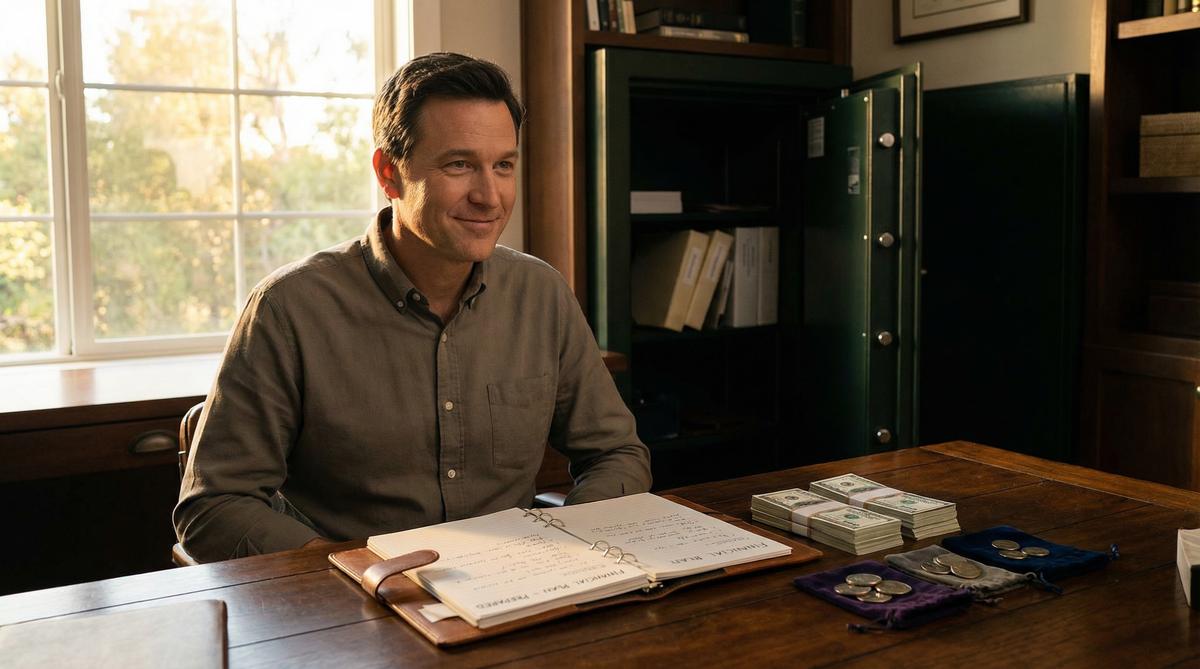
When you build a robust cash reserve and diversify into hard assets, you sleep soundly regardless of what the stock market does.
You become the central bank of your own household.
You dictate the terms of your financial survival.
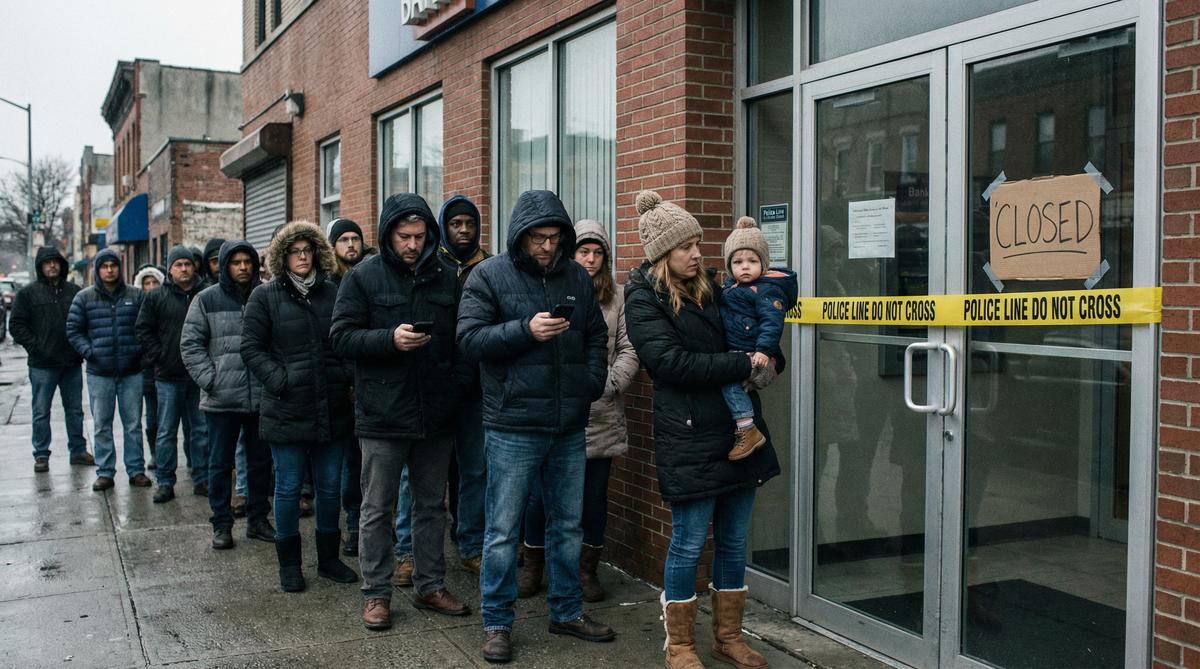
And when the next crisis hits, you won’t be standing in a panicked line outside a locked bank branch.
You will be at home, secure, prepared, and ready to weather the storm.
True wealth is not a number on a screen; it is the ability to sustain yourself when the systems fail.
The Blueprint for Independence
Financial security is just one pillar of true self-reliance.
To build a truly resilient life, you must secure every aspect of your household.
If the banking system freezes, the supply chain will follow, which is why securing your own food supply through the 4ft Farm Blueprint is no longer optional.
You’ll also need the right physical gear to protect your assets and your family, and Homesteader Depot provides the essential off-grid tools you need when standard systems fail.
For ongoing intelligence on how to navigate these economic threats, the Self Reliance Report delivers the strategic preparedness insights you won’t hear on the evening news.
To understand the deeper political maneuvers driving this banking instability, American Downfall offers the unfiltered economic analysis required to stay one step ahead.
And because financial stress takes a massive toll on your body, maintaining your physical vitality through Seven Holistics ensures you have the energy to protect what’s yours.
Finally, true independence means not relying on a broken medical system during a crisis, making the health strategies from Freedom Health Daily a critical component of your overall survival plan.