The power grid is more vulnerable today than at any point in American history.
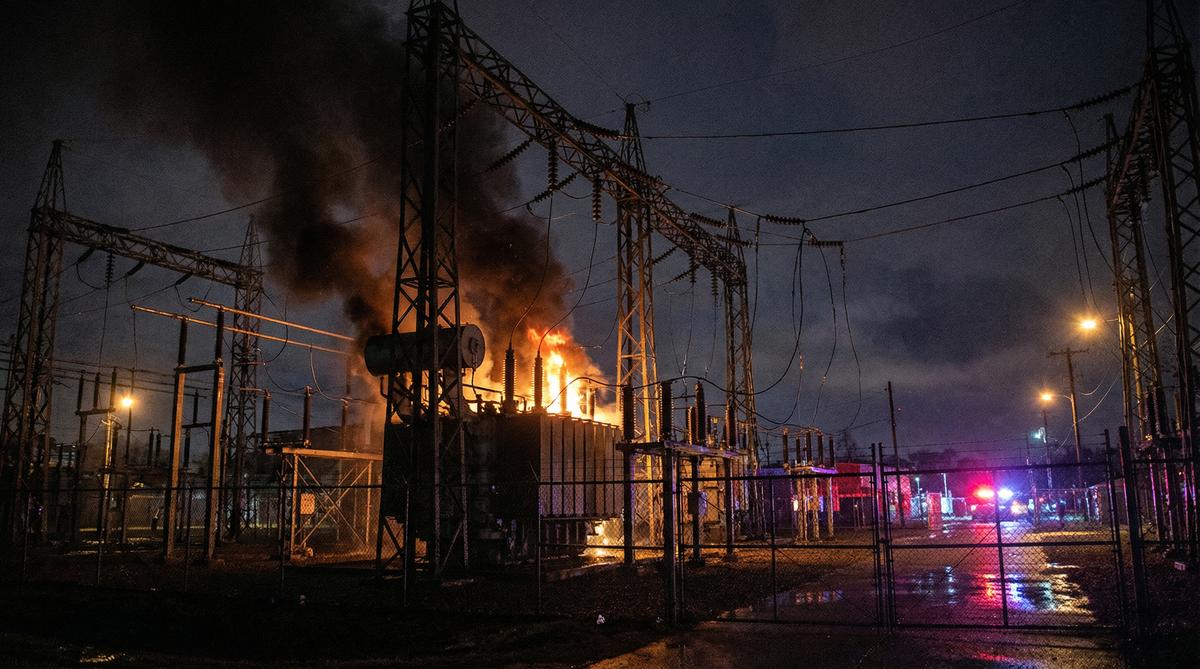
In 2023 alone, power providers reported 185 physical attacks or threats against critical grid infrastructure.
That’s a new record.
And substation attacks? They surged 50% in just two years.
We aren’t just talking about cyber threats from foreign adversaries, though those are escalating daily as global conflicts intensify.
We are talking about physical, coordinated strikes on the transformers and substations that keep your lights on, your water pumping, and your family safe.
In Moore County, North Carolina, a targeted shooting at two substations left 45,000 people in the dark.
No power. No heat. No communication.
And just recently, authorities stopped a planned drone attack on a Nashville power substation.
The threat is real, it is physical, and it is accelerating.
When the grid goes down, the silence is deafening.
Cell towers fail within hours once their backup generators run out of fuel.
Internet service providers go dark.
Your smartphone becomes nothing more than an expensive glass brick.
If you cannot communicate, you cannot coordinate.
If you cannot coordinate, you cannot survive.
The Reality Check: Why Standard Advice Fails
Most people think they are prepared because they have a battery bank and a hand-crank weather radio.
That is a fatal miscalculation.
A weather radio only lets you listen.
It does not let you call for help, coordinate with family members across town, or gather real-time intelligence from people on the ground.
And relying on the government or FEMA to restore services quickly?
Look at recent history.
During major disasters, state and federal responses are notoriously slow, bogged down by bureaucracy and logistical failures.
When the grid collapses, whether from a physical attack, a cyber strike, or an EMP (Electromagnetic Pulse), you are entirely on your own.
Even worse, the very infrastructure we rely on is aging rapidly.
The EIA projects that 12.3 gigawatts of power capacity will retire in 2025—a massive 65% jump over the previous year.
We are stretching an old, fragile system to its absolute breaking point.
When it snaps, the blackout won’t be measured in hours.
It will be measured in weeks, or even months.
Without a two-way communication strategy, you are flying blind in a very dangerous world.
You will not know if the threat is isolated to your neighborhood or if it is a nationwide collapse.
You will not know if the roads are safe to travel or if they are blocked by desperate, panicked crowds.
You will not know if your loved ones in the next town over are safe.
Information is the most valuable currency in a crisis, and without it, you are bankrupt.
The Practical Solution: Building Your Unhackable Network
You need a layered, off-grid communication system that does not rely on cellular networks, the internet, or the power grid.
Here is exactly how you build it.
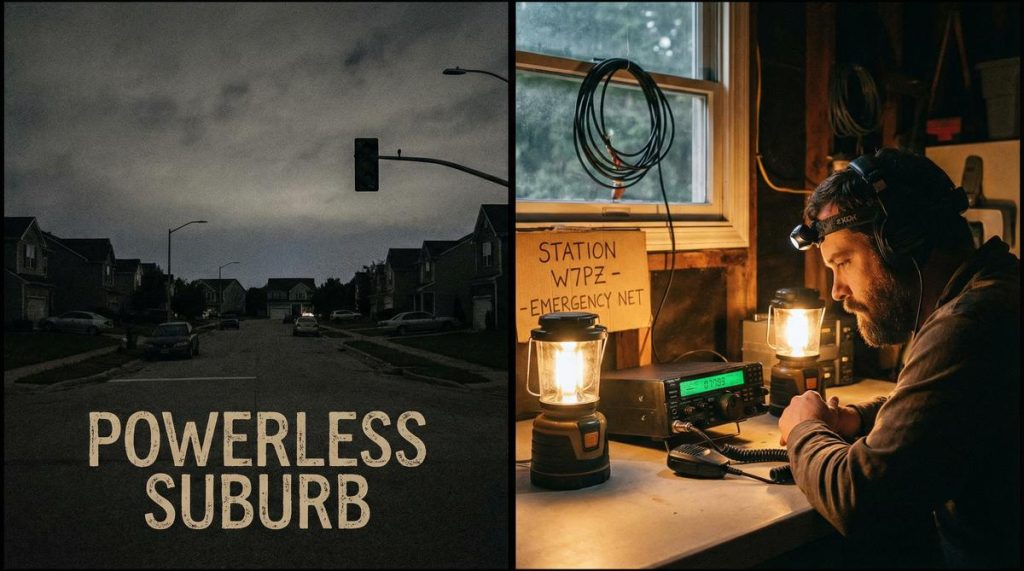
Step 1: The Foundation — Ham Radio (Amateur Radio)
Ham radio is the gold standard for grid-down communications.
There are over 3 million amateur radio operators worldwide, forming an independent, decentralized network.
When cell towers failed during recent hurricanes, it was ham radio operators who coordinated relief and supply chains.
You need a handheld dual-band (VHF/UHF) transceiver.
A reliable model like the Baofeng UV-5R or Yaesu FT-65 costs between $30 and $150.
But buying the radio isn’t enough—you must get your Technician License from the FCC to legally transmit and learn how to use it.
The license is easy to get, but the knowledge is what keeps you alive.
Once licensed, you can access local repeaters to talk across your county, or use HF (High Frequency) radios to communicate across the country or even the world.
Step 2: The EMP Shield — Building a Faraday Cage
Your radios are useless if an EMP or severe solar flare fries their internal circuits.
You must protect your backup electronics.
A Faraday cage can reduce electromagnetic radiation by 99.999%, according to IEEE standards.
You don’t need to spend thousands of dollars.
Buy a galvanized metal trash can with a tight-fitting lid.
Line the entire inside with heavy-duty cardboard or rubber matting so the metal of your devices never touches the metal of the can.
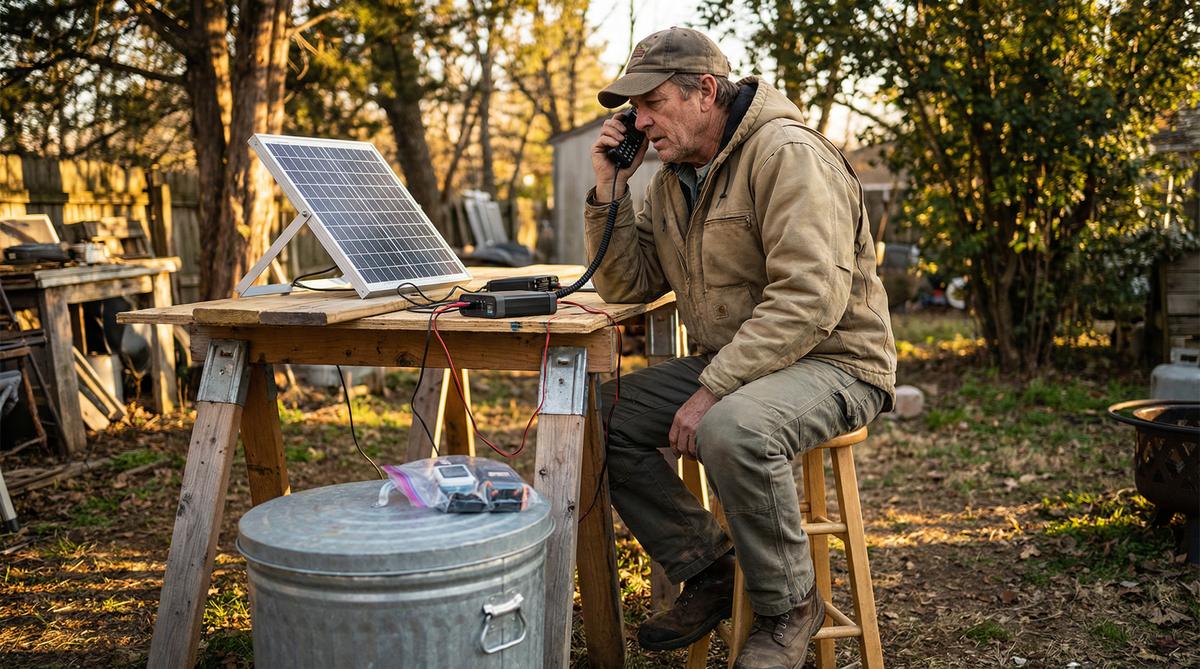
Wrap your radios, spare batteries, and solar chargers in static bags, place them inside, and seal the lid tight with aluminum tape.
Total cost: Under $60.
This simple weekend project ensures that when the pulse hits, your equipment survives.
Step 3: Local Tactical Comms — Meshtastic / LoRa Networks
For short-range, encrypted communication with your family or neighborhood watch, you need a LoRa (Long Range) mesh network.
Devices like the LilyGO T-Echo or Heltec V3 cost about $30 each.
They connect to your smartphone via Bluetooth and allow you to send text messages and GPS coordinates over radio frequencies—completely off-grid.
No cell service required.
If your community sets up a few solar-powered nodes, you can create your own private, unhackable text-messaging network covering several miles.
This is the ultimate tactical advantage for neighborhood security.
Step 4: Powering Your Network
None of this works if you cannot keep the batteries charged.
You must have a dedicated, off-grid power solution for your communication gear.
Invest in a portable solar panel (at least 21W) and a rugged power bank.
Keep these stored inside your Faraday cage alongside your radios.
When the grid fails, you will have the ability to generate your own power and maintain your communication lifeline indefinitely.
The Path to Resilience
The thought of a prolonged grid collapse is terrifying.
But fear is only useful if it drives you to action.
You do not have to be a victim of a fragile system.
By taking these steps today, you are reclaiming your sovereignty.
You are ensuring that when the lights go out and the screens go black, your family will not be isolated.
You will have intelligence.
You will have coordination.
You will have the power to protect what is yours.
Building an off-grid communication network is not just about survival; it is about independence.
It is about knowing that no matter what happens to the infrastructure around you, your lifeline remains intact.
Take the weekend. Buy the radios. Build the Faraday cage.
Turn vulnerability into absolute resilience.
You are not just preparing for the worst; you are building a foundation of strength that cannot be shaken by external forces.
When the silence falls, you will be the one who speaks.
The Blueprint for Independence
True preparedness requires a holistic approach—communications are just one pillar of a sovereign life.
If the grid goes down, the grocery store shelves will empty in hours, which is why establishing your own food supply with the 4ft Farm Blueprint is non-negotiable.
You will also need the right physical gear to maintain your property and security, and Homesteader Depot provides the essential off-grid tools you need to thrive without power.
To stay ahead of the curve on emerging threats and tactical preparedness, you must integrate the intelligence found in the Self Reliance Report into your daily planning.
Understanding the broader economic and political forces driving these grid vulnerabilities is critical, and American Downfall offers the unvarnished analysis you won’t hear on the evening news.
Physical resilience is just as important as tactical gear; optimizing your body’s natural defenses through Seven Holistics ensures you have the stamina for prolonged crises.
Finally, maintaining your family’s well-being without access to modern hospitals requires the independent medical strategies detailed at Freedom Health Daily.
The grid may fail, but you do not have to. Prepare today.