
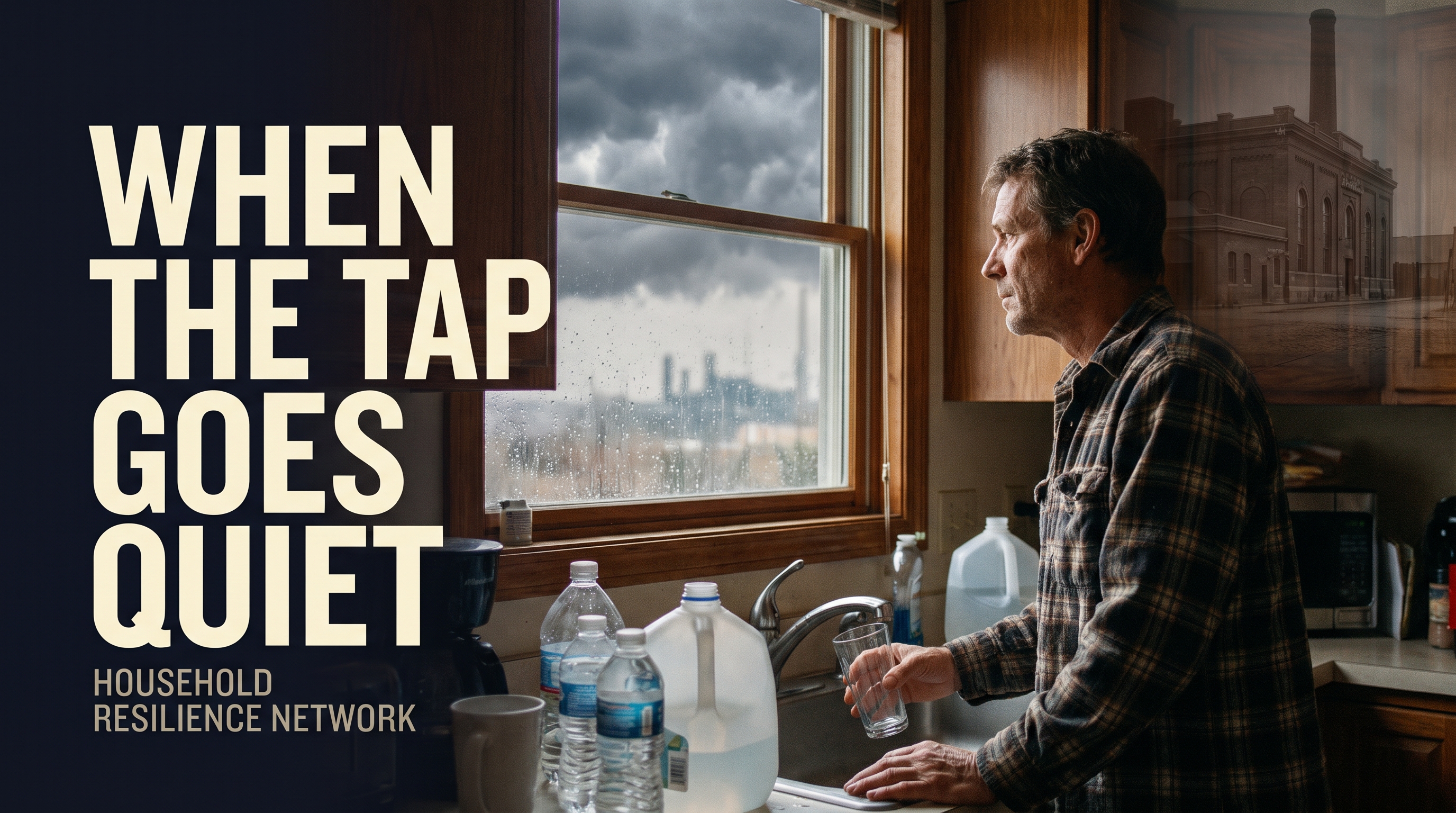
Your Daily Install connects what’s happening now with a useful pattern from the past—and one simple step you can take today to make your household more resilient.
Print the action worksheet below, fill it in, and add it to your Household Resilience Network binder.
What’s happening now?
NOAA’s October 15 winter outlook favors wetter conditions across the South and East, with warmer averages across much of the North. It is a seasonal outlook, not a forecast for your street.
A warmer winter average does not mean every day will be mild—or that power cannot fail.
Here is the household question behind the forecast: if a storm cuts electricity, what else stops with it? Your well pump is one answer. Some city water systems depend on powered pumps, too.
Finding a flashlight solves the dark room. It does not fill the next glass of water.
Has this happened before?
Go back to August 14, 2003. A huge blackout spread across parts of the Midwest and Northeast. Cleveland was among the cities that lost power.
A dark house is hard enough to deal with. In Cleveland, the problem reached beyond the outlets. The water system failed, too.
The tap does not have a power cord. The pumps that help bring water to it still need electricity.
What happened next?
The Cleveland water failure reached far beyond dark kitchens. A U.S. Department of Energy report later said water service was cut to 1.5 million people.
Across the same blackout region, Detroit had to cover the water gap while crews worked. Its mayor later told Congress that teams delivered more than 230,000 bottles of water to senior citizens within 36 hours. They brought the missing supply to people who needed it.
The pattern: fixing the first failure is only part of the job. You also have to cover what depended on it.
Many utilities have backups, so an outage does not always stop the tap. But a stored drinking-water reserve gives your household a way to meet that need while crews work.
When a warning mentions one failing service, ask: what else in our home relies on it?
Your phone is dead. Where is the answer?
You need an answer about water or food storage. But the saved page will not open.
Wouldn’t you rather reach for a book than hope the signal comes back?
Look inside The Lost Frontier Handbook. These are household skills you can keep on the shelf—and learn before you need them.
What can I do?
Count and group your drinking-water reserve today. Give it 10 minutes. CDC’s starting target is at least one gallon per person per day for three days. Two people need at least six gallons, plus extra for pets and other needs.
Check container sizes, seals and dates. Add gallons, not bottles. Put the reserve in a cool, reachable place away from sunlight, fuel and cleaners.
Record the gap and add missing water to your next grocery order. During an outage, follow your utility’s safety notices even if water still flows.
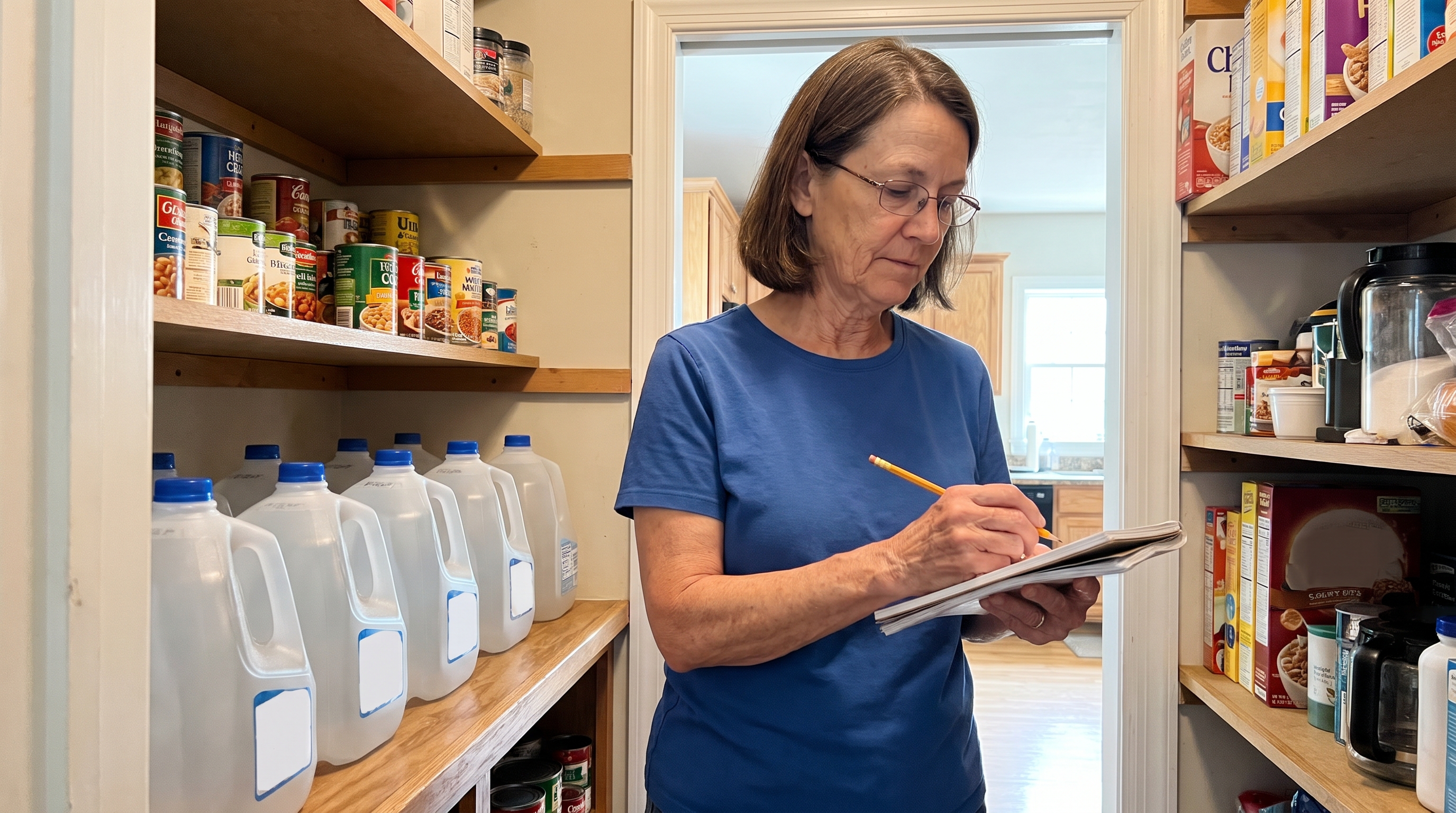
Illustrative water check. Count gallons and store the reserve where your household can find it.
My Water Backup Check
Print, fill in and file under Water. Count the gallons you have. Group the reserve and record the gap.
1. Set the target
People at home: _____ x 3 = _____ gallons
Extra for pets / other needs: _____ gallons
Our total target: _____ gallons
2. Count what is ready
Container size in gallons: _____ x _____ = _____
Container size in gallons: _____ x _____ = _____
Container size in gallons: _____ x _____ = _____
Total drinking water ready: _____ gallons
3. Put the reserve in place
☐ Seals and dates checked
☐ Cool, reachable spot; out of sunlight
☐ Away from cleaners and fuel
Reserve location:
Missing water added to order: _____ gallons
4. Keep the lesson
Next reserve check:
Our utility’s official notice source: ___________
What else stops when electricity does?
At least 1 gallon per person per day for 3 days is a starting target. Add for household needs. Follow local water safety notices.
Today’s win: your reserve is counted and grouped, and any missing gallons are on the order. You know where the next safe drink would come from.
What if some of dinner was already growing at home?
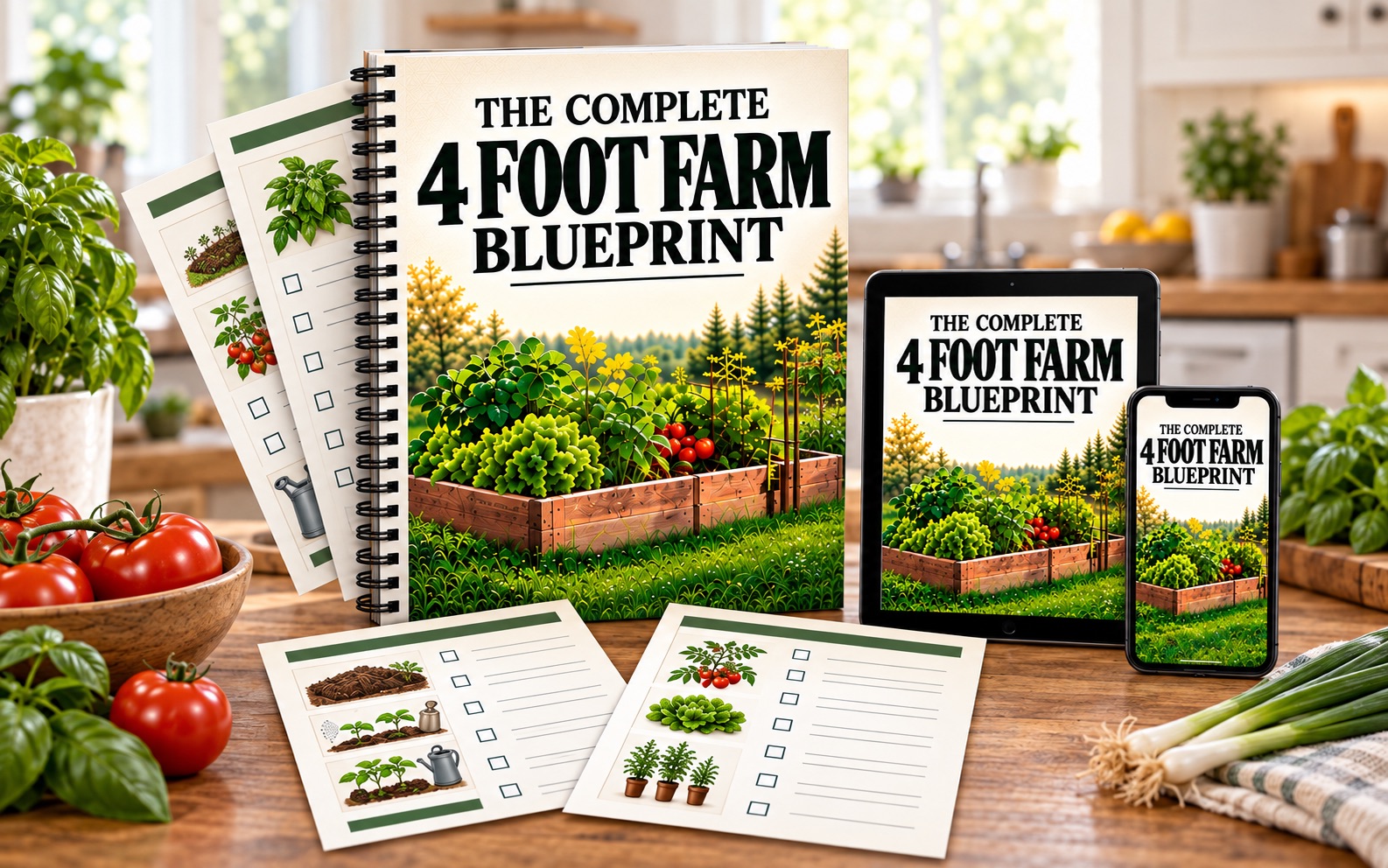
The same fresh foods keep pulling you back to the store. Greens. Herbs. Tomatoes. Each trip starts the bill all over again.
Give yourself another place to get a little of that food. Our friends at 4 Foot Farm show you how to begin in the COMPLETE Blueprint. Small spaces. Clear pictures. Indoor options with a simple grow light.
Start with one food you use. Tap below and see the first steps.
| Tap Here to See the COMPLETE Blueprint → |
Stay steady,
David Stone
Survival Stronghold
P.S. What else in your home stops working when the power does? Hit reply with one thing. Forward this to someone whose outage kit needs a water check.