
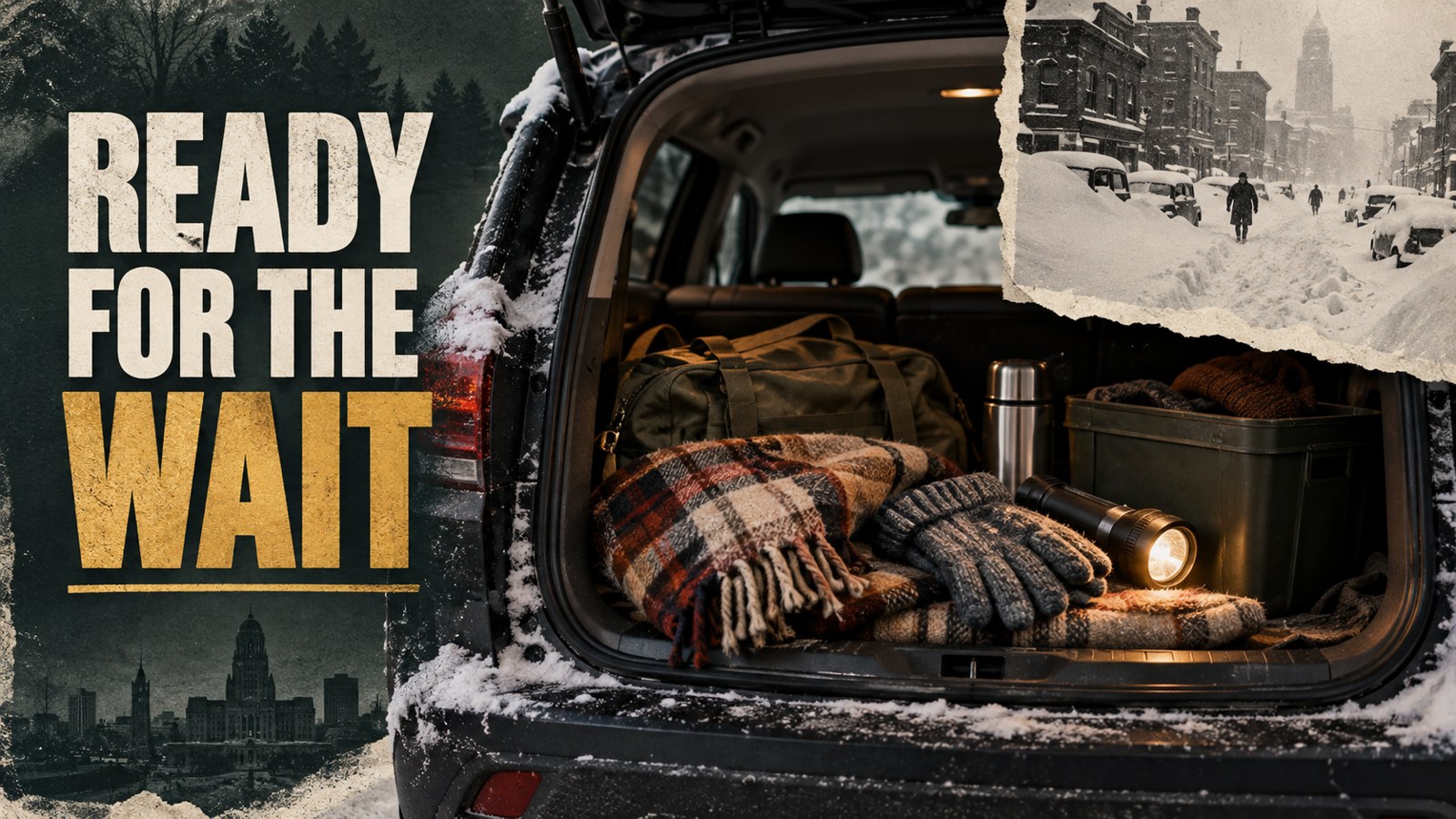
Your Daily Install connects what’s happening now with a useful pattern from the past—and one simple step you can take today to make your household more resilient.
Print the action worksheet below, fill it in, and add it to your Household Resilience Network binder.
What’s happening now?
You leave in a warm car. You expect to park near the door. So the coat stays home. That works until the trip stops going to plan.
Winter Weather Awareness Week began in New York yesterday. North Dakota’s starts today, and South Dakota’s awareness day is Wednesday. The reminder is spreading across the country as the season changes.
This is not a forecast that your next drive will turn dangerous. It is a good week to put a warm layer in the car before you need it. Cold rain and a long wait matter, too.
Has this happened before?
On January 28, 1977, wind drove snow across the Buffalo area. Roads that had been usable became blocked. Thousands of people were stranded away from home.
The problem was not just new snow falling. Powerful winds moved snow that was already on the ground. People who had expected an ordinary journey suddenly faced a long wait.
Rescue and road crews worked through conditions that made reaching people difficult. A nearby destination was not always a reachable one.
What happened next?
Eventually crews reopened routes and reached stranded travelers. The storm became a lasting example in National Weather Service winter-safety lessons.
The pattern: pack for a delay, even when the trip is short. A blanket cannot make a blizzard trip safe. Checking the forecast and postponing unsafe travel come first. A small kit covers the wait you did not expect.
Up again before the alarm?
You finally get comfortable. Then comes another bathroom trip. Follow the story behind a daily prostate-support formula.
Tap Here to Watch the Prostate-Support Story →What can I do?
Spend 10 minutes at your parked car. Put a clean, dry blanket or warm spare layer, hat, gloves and a working flashlight in an easy-to-reach bag. Choose items for the people who actually ride with you.
Check that the bag will not become a loose projectile or block controls. Add a phone charging cable that works in this car. Set a reminder to check seasonal water and food supplies, too.
Write a simple departure rule: check weather and road advice before leaving. If stranded in winter weather, stay with the vehicle and seek help; do not set off into poor visibility. Exhaust blockage and idling can cause deadly carbon monoxide—follow official safety guidance.
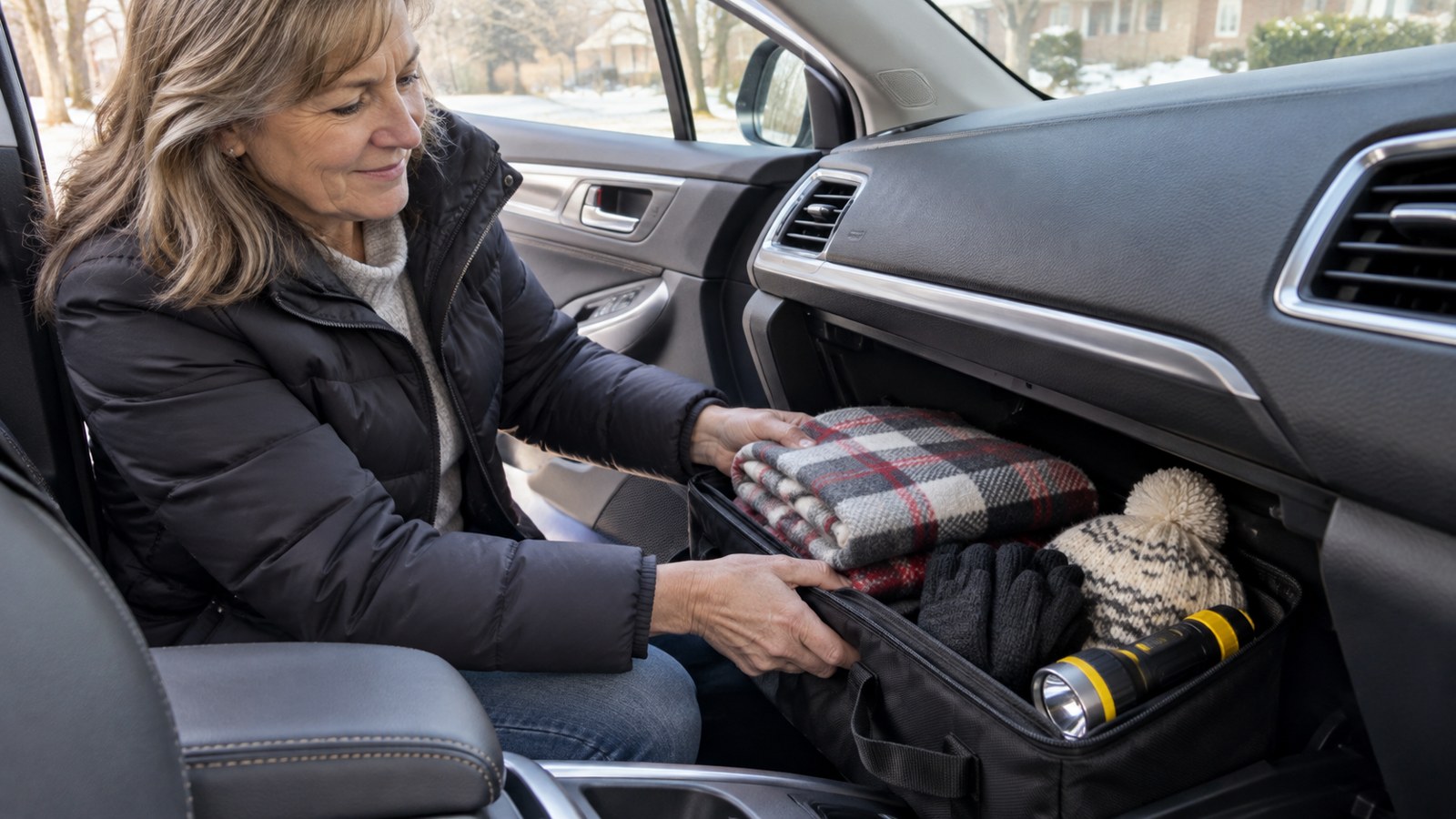
Illustrative household example. Use the worksheet for your own details.
Our Car-Wait Kit
Date: __________ File under: Travel Readiness
1. Pack for our riders
People / needs to plan for:
☐ Warm layer ☐ Hat / gloves ☐ Flashlight
2. Make it reachable
Bag location:
☐ Secured safely ☐ Cable tested
3. Decide before leaving
Official road / weather source:
Who knows our route:
4. Keep it useful
Missing item:
Next check date:
Today’s win: A warm, reachable car kit is in place, with one clear weather check before departure.
What’s for dinner if the store trip waits?
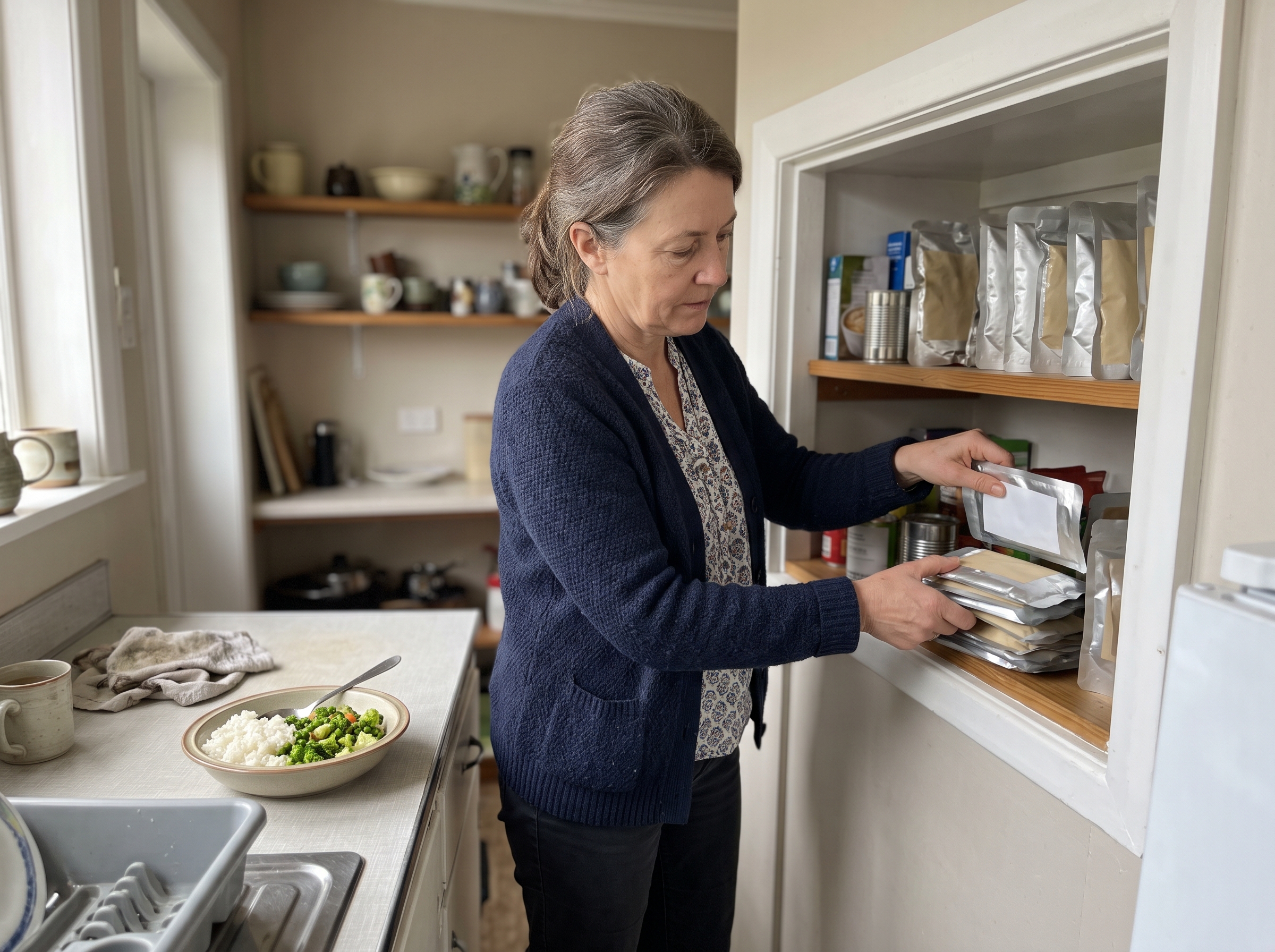
The weather can change tonight. Dinner still has to happen tomorrow.
Keep a separate food backup ready instead of counting on one more trip to the store. These long-life meals come in sealed pouches.
See the meals inside the kit—and the extra food included in the current offer.
| Tap Here to See the Food Backup → |
Stay steady,
David Stone
Survival Stronghold
P.S. What is the one thing you are glad you keep in the car? Reply with the item. Forward this to someone who says, “I’m only going around the corner.”
P.P.S. One useful next read from the Household Resilience Network: Ready Install: Check the Alarm Before the Clock Changes.