
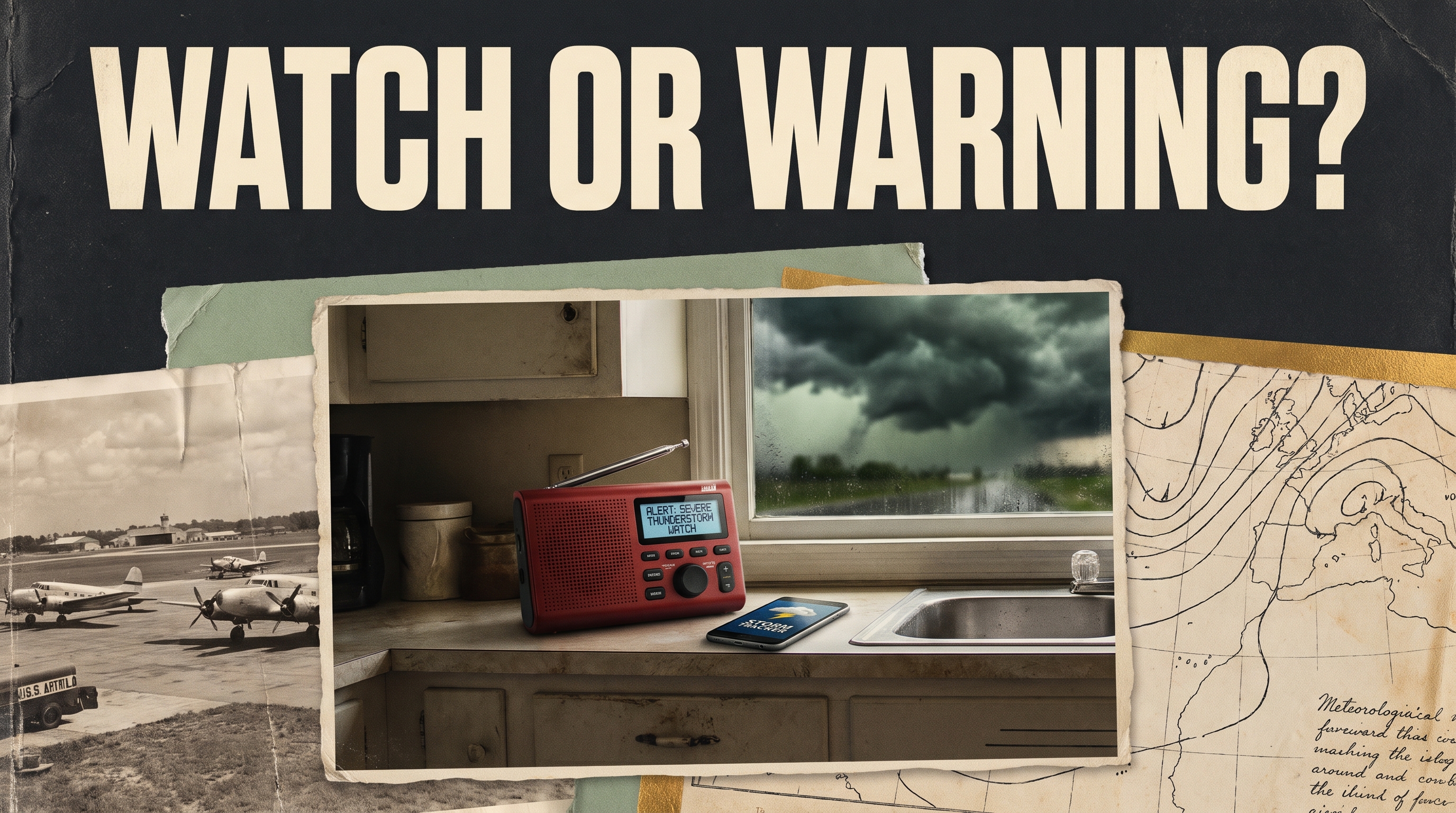
Your Daily Install connects what’s happening now with a useful pattern from the past—and one simple step you can take today to make your household more resilient.
Print the action worksheet below, fill it in, and add it to your Household Resilience Network binder.
What’s happening now?
Your phone says “watch.” Later it says “warning.” If your next move is the same for both, the alert is not doing its full job.
New York’s Winter Weather Awareness Week runs October 25–31. North Dakota’s runs this week, too. It is a good reminder even where snow is not the main concern: know what your local alerts ask you to do.
Pick one hazard that fits your home. Winter storms, floods, tornadoes and fire weather call for different actions.
Has this happened before?
A tornado hit Tinker Air Force Base in Oklahoma on March 20, 1948. Aircraft and buildings were damaged. Forecasters Ernest Fawbush and Robert Miller studied the weather pattern behind it.
Five days later, they saw similar conditions. They issued a tornado forecast for the base. Another tornado struck that day. The forecast had given the base time to prepare before the storm arrived.
What happened next?
That March 25 forecast became a milestone in tornado prediction. Looking back at a recent pattern helped forecasters recognize another dangerous setup.
The pattern: an early notice gives you time only if you use it. A watch generally means the hazard is possible; a warning means it is happening or expected. Read the alert’s local instructions.
Why put mushrooms in a heart-support blend?
You know the usual advice about the plate. This daily blend takes an unexpected turn: reishi, shiitake and other mushrooms. What is the connection?
Tap Here to Watch the Mushroom Connection →What can I do?
Take 10 minutes to choose one local hazard. Find your local National Weather Service guidance and write two steps: what you will prepare during a watch, and what you will do when warned.
For a winter storm watch, that might mean changing a trip before roads worsen. A tornado warning calls for shelter right away. Do not use one shelter rule for every hazard.
Check two ways to receive alerts, such as phone emergency alerts and a weather radio or local broadcast. Check settings; do not trigger a false emergency alert as a test.
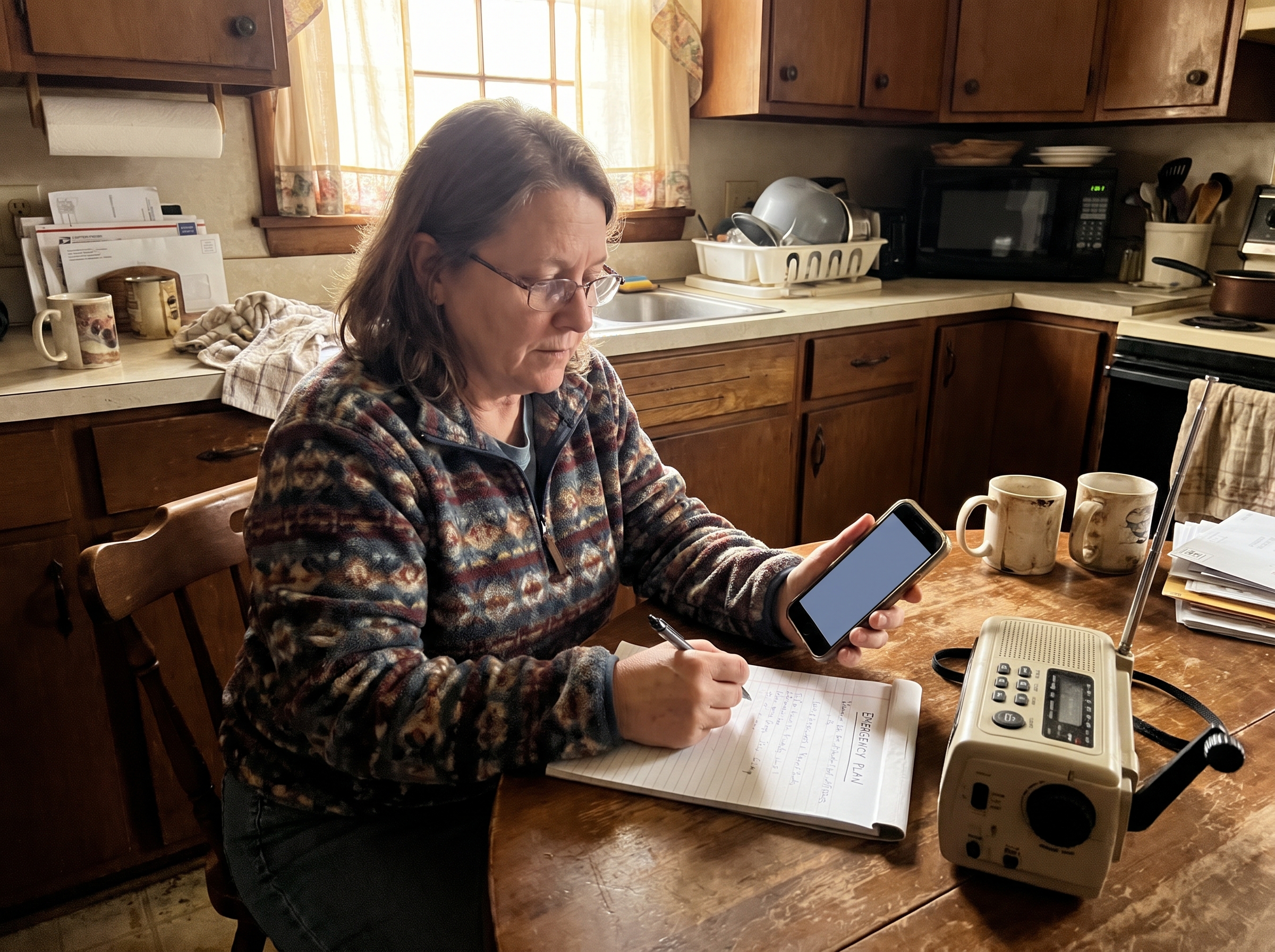
Illustrative household example. Use the worksheet for your own details.
My alert-to-action card
Date: __________ File under: Weather readiness
1. One local hazard
Hazard I am planning for:
Official local guidance checked:
2. Two different moves
During a watch, I will:
When warned, I will:
Who needs help taking that step:
3. Hear the notice
First alert source:
Second alert source:
Settings checked on:
Today’s win: One hazard now has a prepare step, an act step and two alert sources.
Your saved page won’t load. Now what?
The phone is dead. Your question about food or water is still there.
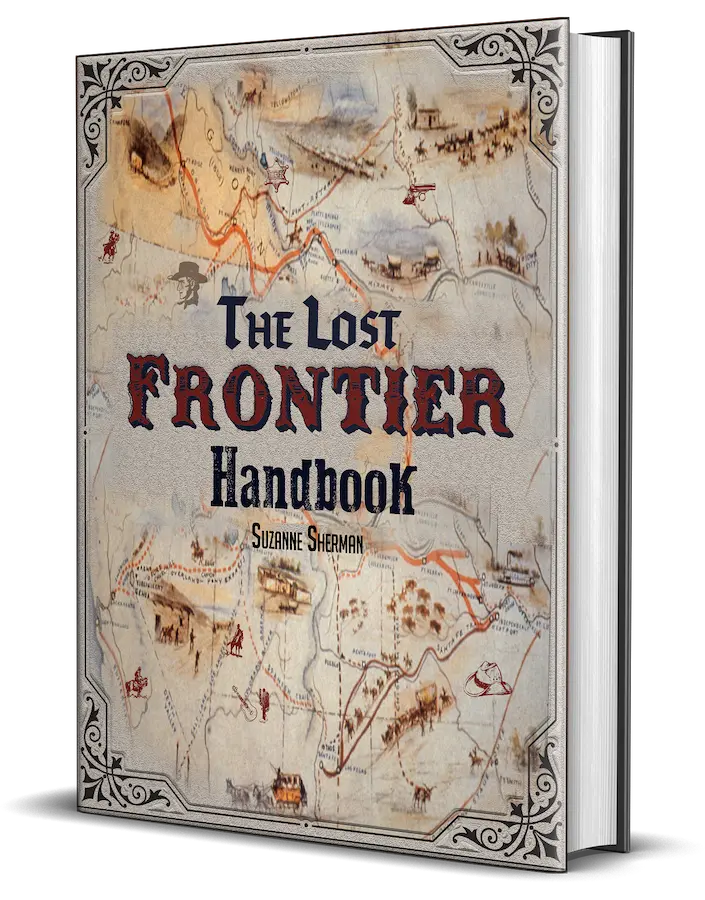
Keep practical household know-how on paper. The Lost Frontier Handbook brings food-growing, preserving and other old skills into one illustrated guide.
Which of those skills would be useful in your home? Tap below and look inside.
| Tap Here to Look Inside the Handbook → |
Stay steady,
David Stone
Survival Stronghold
P.S. Which alert term has confused you before? Reply with it. Share the finished card with the people who need to use it.
P.P.S. A food backup does not all have to sit in sealed packages. Our friends at 4 Foot Farm show you how to start growing a little of what you eat, in the space you already have. Tap Here to See the COMPLETE Blueprint →