
Your Daily Install connects what’s happening now with a useful pattern from the past—and one simple step you can take today to make your household more resilient.
Print the action worksheet below, fill it in, and add it to your Household Resilience Network binder.
What’s happening now?
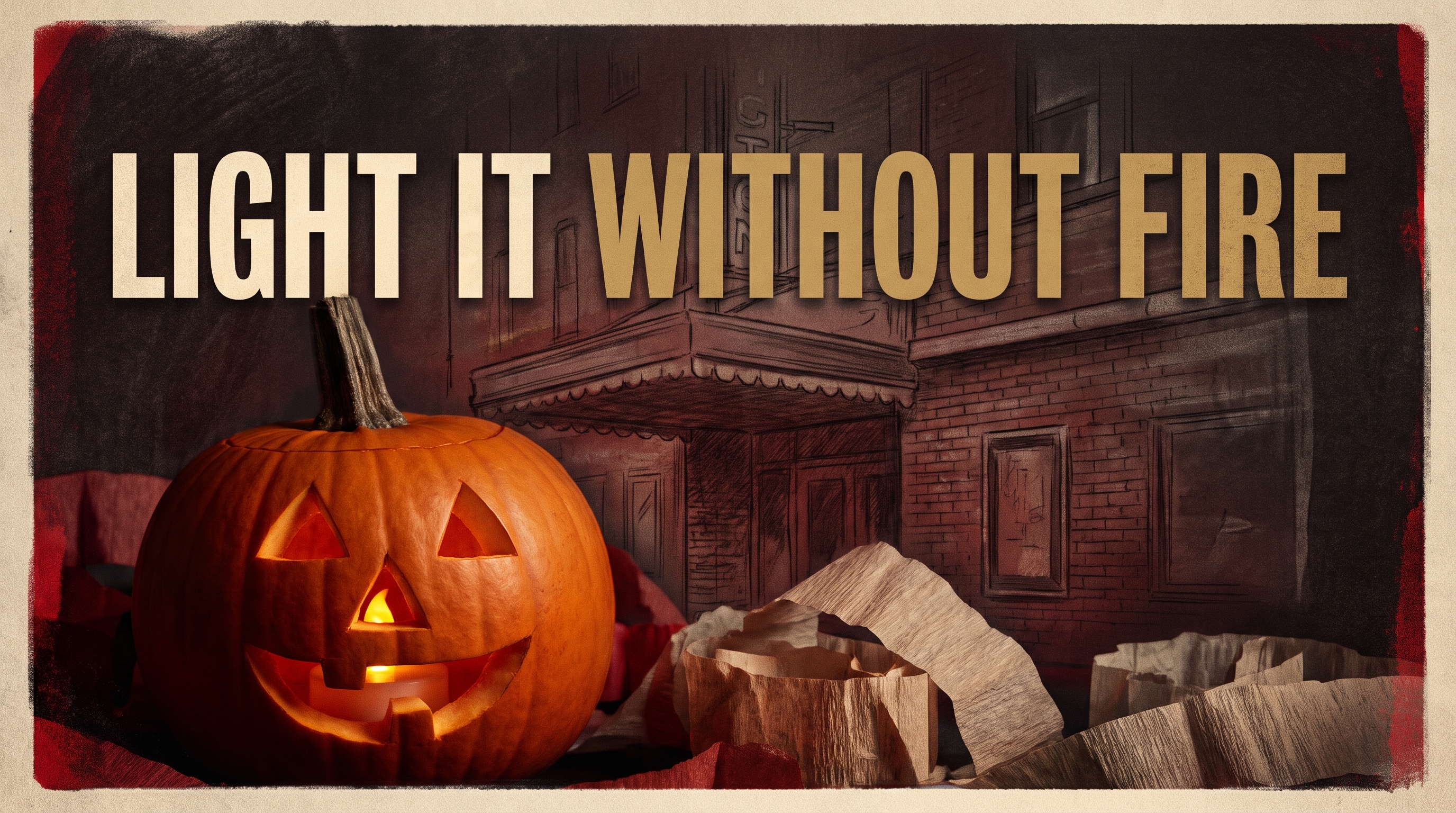
The pumpkin looks good. So does the paper web behind it. A real candle makes the whole scene glow—and adds a flame beside things that burn.
Halloween falls on Saturday this year. Before guests and children arrive, the National Fire Protection Association recommends a battery light or glow stick inside a jack-o’-lantern.
You can keep the look and remove the open flame. That is a small change with a clear purpose.
Has this happened before?
On November 28, 1942, people packed Boston’s Cocoanut Grove nightclub for a night out. Decorative palms, cloth and other materials helped a fire spread through the club.
The exact source of ignition has been disputed. What followed is clear: fire moved fast, and several unsafe conditions left people with little time to escape.
Decorations had been treated as scenery. Once fire reached them, they became part of the danger.
What happened next?
The investigations called for stronger fire protections, including limits on flammable materials and better exits. The lesson reached far beyond that one building.
The pattern to notice is how small risks join up. A home pumpkin is not a crowded nightclub. But a flame beside dry paper is still a link you can remove before a busy evening.
Same scoop. Same bag. What is in it?
You read the labels on your food. But the dog’s bowl gets filled on autopilot. Why does this dog-nutrition video begin with the color of ordinary kibble? Press play.
Tap Here to Watch the Dog-Food Story →What can I do?
Give one decoration area 10 minutes. Replace the pumpkin’s candle with a battery light. Put the removed candle away. Check that paper, fabric and dried decorations are away from heaters, lamps and other heat sources.
Keep cords and decorations out of walking paths. If the light uses coin batteries, secure the battery cover and keep loose batteries away from children and pets.
Ask one simple question before people arrive: could a coat, hand or pet knock this into a heat source? Move the setup if the answer is yes.
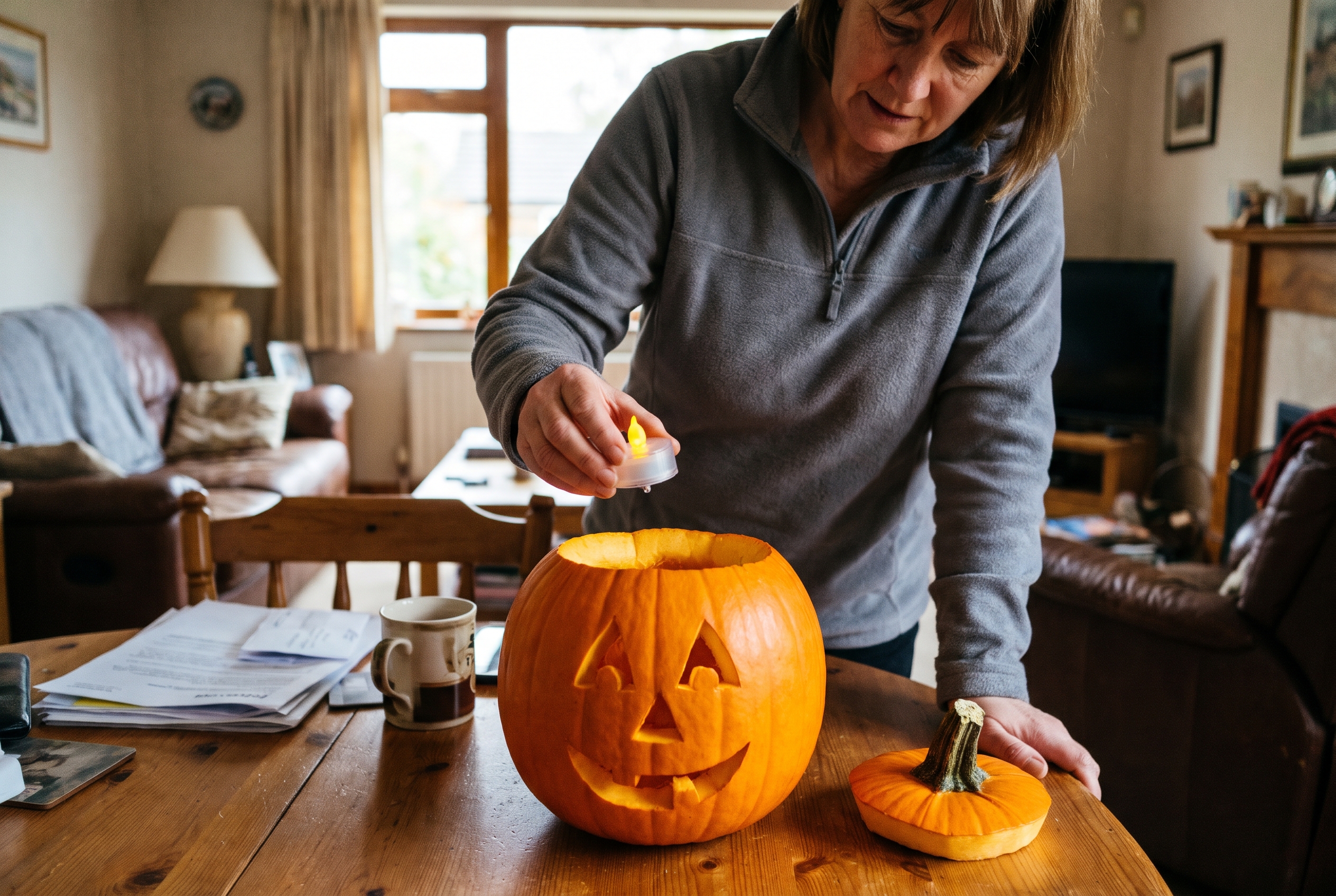
Illustrative household example. Use the worksheet for your own details.
My Halloween Light Swap
Date: __________ File under: Fire Prevention
Break the chain
Display checked:
☐ Flame removed. ☐ Battery cover secure.
Nearby heat source or loose decoration:
Finish before guests arrive
What I moved:
Final check time / person:
☐ Walking path clear. ☐ Loose batteries put away.
Today’s win: One display keeps its glow without an open flame in the middle of it.
What if the next fresh handful came from home?
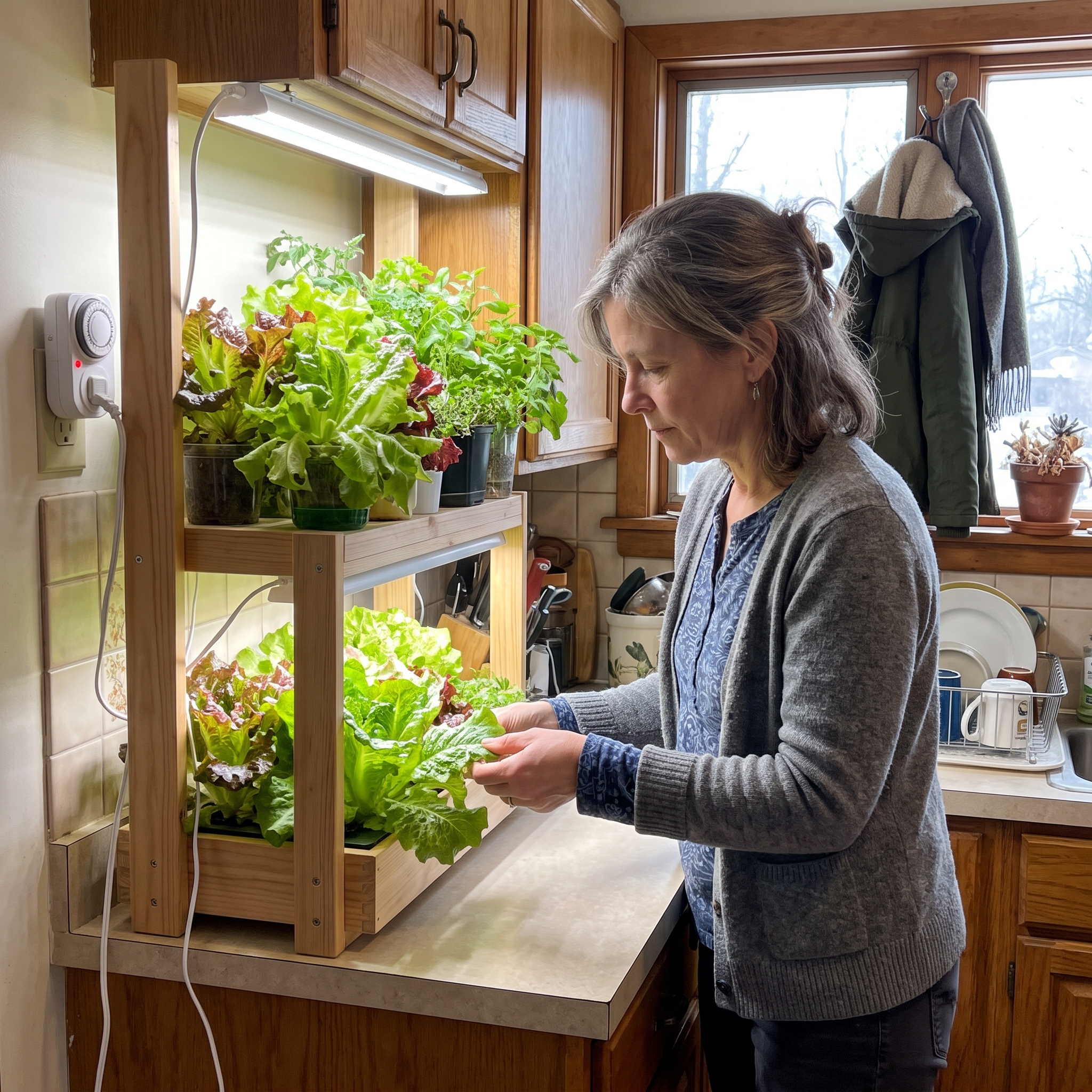
You do not want another expensive hobby. You want food you can pick and use.
The COMPLETE Blueprint shows how to start small, indoors or out. See the setup, choose a food you enjoy and follow the steps in pictures.
What could you grow in the space you already have? Take a look before another grocery run.
| Tap Here to See the COMPLETE Blueprint → |
Stay steady,
David Stone
Survival Stronghold
P.S. What do you use to light your pumpkins? Reply with your simple setup. Pass this on before someone starts decorating Saturday.
P.P.S. A food backup does not all have to sit in sealed packages. Our friends at 4 Foot Farm show you how to start growing a little of what you eat, in the space you already have. Tap Here to See the COMPLETE Blueprint →