
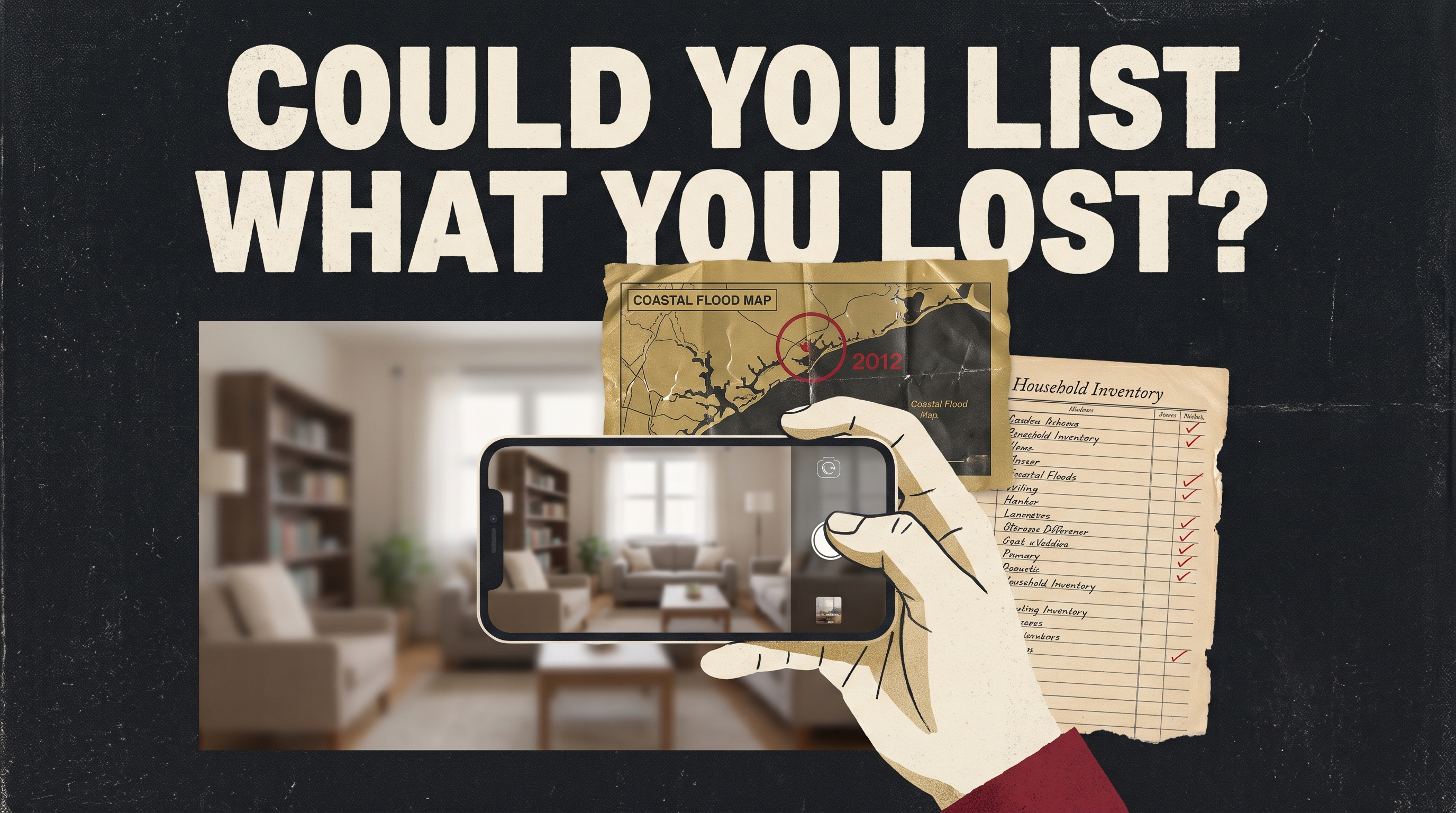
Your Daily Install connects what’s happening now with a useful pattern from the past—and one simple step you can take today to make your household more resilient.
Print the action worksheet below, fill it in, and add it to your Household Resilience Network binder.
What’s happening now?
Close your eyes and list everything in the living room. Not just the sofa. The books. The lamps. What was in that cabinet?
Today is the anniversary of Sandy’s October 29, 2012 landfall near Brigantine, New Jersey. It is a useful reminder that recovery has a paperwork side, too. You may need to describe what you owned after the thing itself is gone.
Make a private record of one room while nothing is wrong. This is a calm-weather job, not something to do during an evacuation.
Has this happened before?
On that evening in 2012, Sandy drove coastal water into communities across the Northeast. Streets, basements and buildings that people knew well were suddenly part of a flood zone.
The National Weather Service documented record surge, including a gauge at Sandy Hook that stopped reporting as water rose. Forecasts and maps could describe the broad event. They could not list what had been in every household’s drawers.
After the water went down, a different set of tasks began. Owners had to sort damage, find records and ask what their policies covered. The emergency had moved from getting safe to proving and rebuilding.
A household photo taken before the loss could hold details memory would struggle to supply afterward.
What happened next?
The storm led to major rebuilding and changes in flood-risk planning. Recovery still depended on each home’s damage, records and coverage.
Save the details before you have to remember them. Photos can help show what you owned. Your policy decides what is covered. Make the record now, then ask your insurer about any gaps.
What food have you been walking past?
That little yellow flower in the yard may deserve a closer look before you pull it out. This wild-food guide starts with plants people often overlook. See the photos, look-alike warnings and food uses inside.
Tap Here to Look Inside the Wild-Food Guide →What can I do?
Spend 10 minutes recording one room. Take a slow video or clear photos. Open cabinets only where safe. Note the make and model of a few important items. Keep receipts you already have.
Save a private backup somewhere you can reach if the phone or house is lost, such as a secured online account or trusted off-site storage. Check that you can find it. Keep passwords and account numbers out of view.
Write down the next room for another day. If danger is happening now, leave as instructed. Never stay to make an inventory.
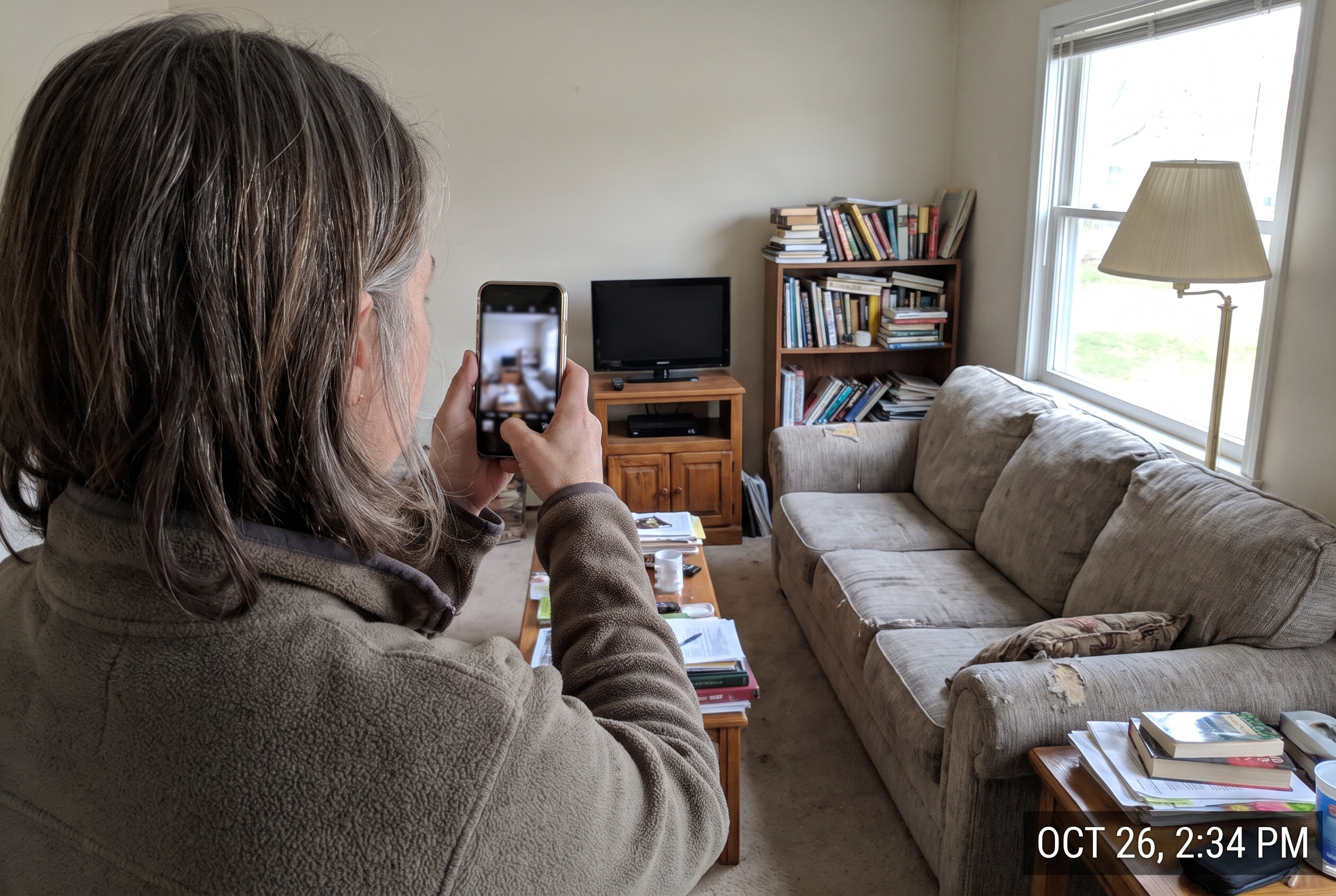
Illustrative household example. Use the worksheet for your own details.
My One-Room Record
Date: __________ File under: Household Recovery
Record it now
Room / date recorded:
Important item / model noted:
☐ Photos clear ☐ Useful receipts saved
Keep a second copy
Private backup location:
☐ I checked I can find the backup.
Next room / date:
Today’s win: One room has a record stored beyond the room itself.
Dinner’s coming. Skip another takeout bill.
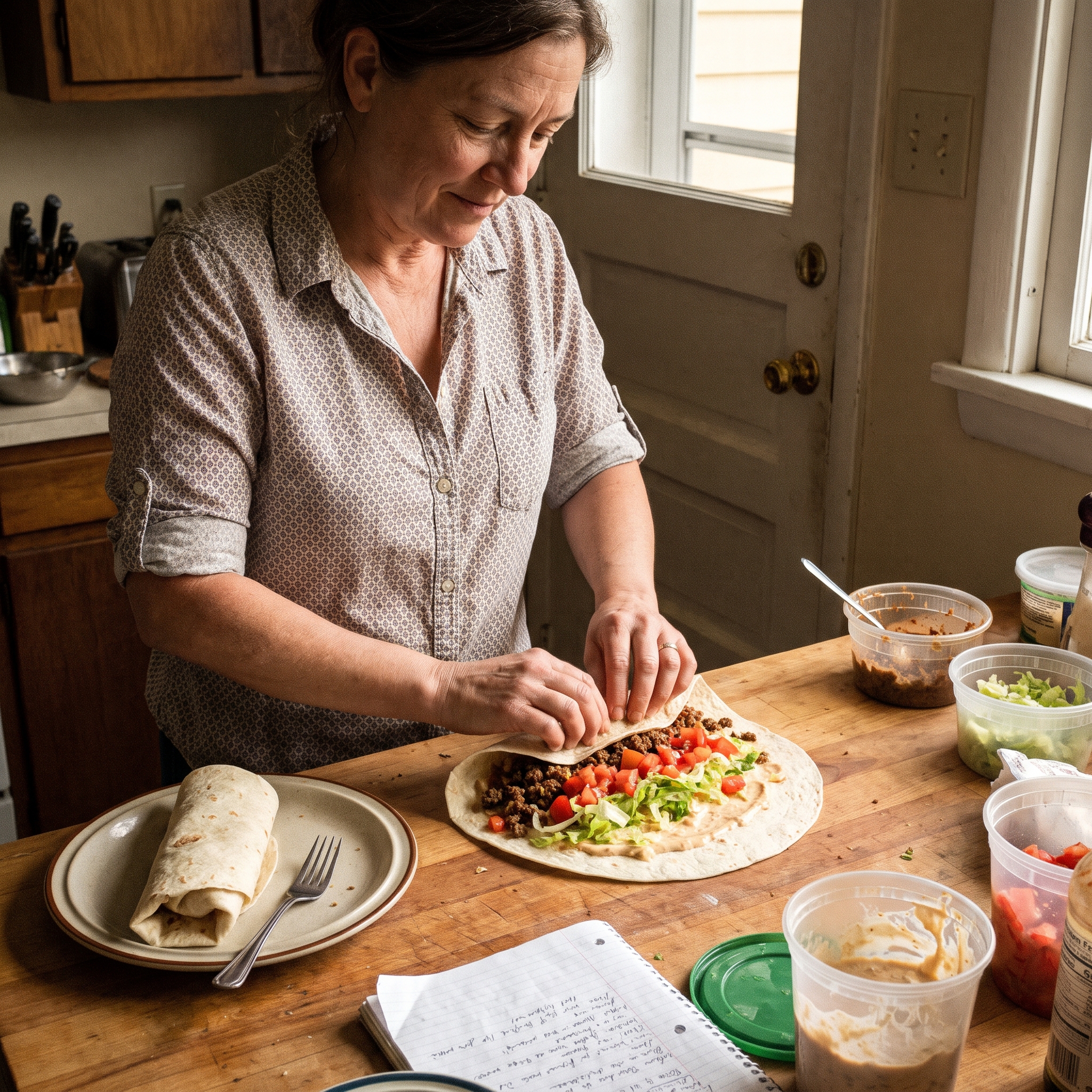
You have food in the kitchen. You just need a meal you want to make from it.
Keep the favorite meals. Spend less making them at home. The Household Playbook brings together restaurant-style recipes, ways to use fresh food before it goes bad, and practical household guides.
What could you make before spending again? Take a look inside.
| Tap Here to Look Inside the Household Playbook → |
Stay steady,
David Stone
Survival Stronghold
P.S. Which room would be hardest to list from memory? Hit reply with the room. Forward this to someone who has been meaning to make a home inventory.
P.P.S. Want one part of the food bill closer to your own control? Our friends at 4 Foot Farm show the small-space steps, with indoor options. Start with a food you already like to eat. Click Here to See the COMPLETE Blueprint →