
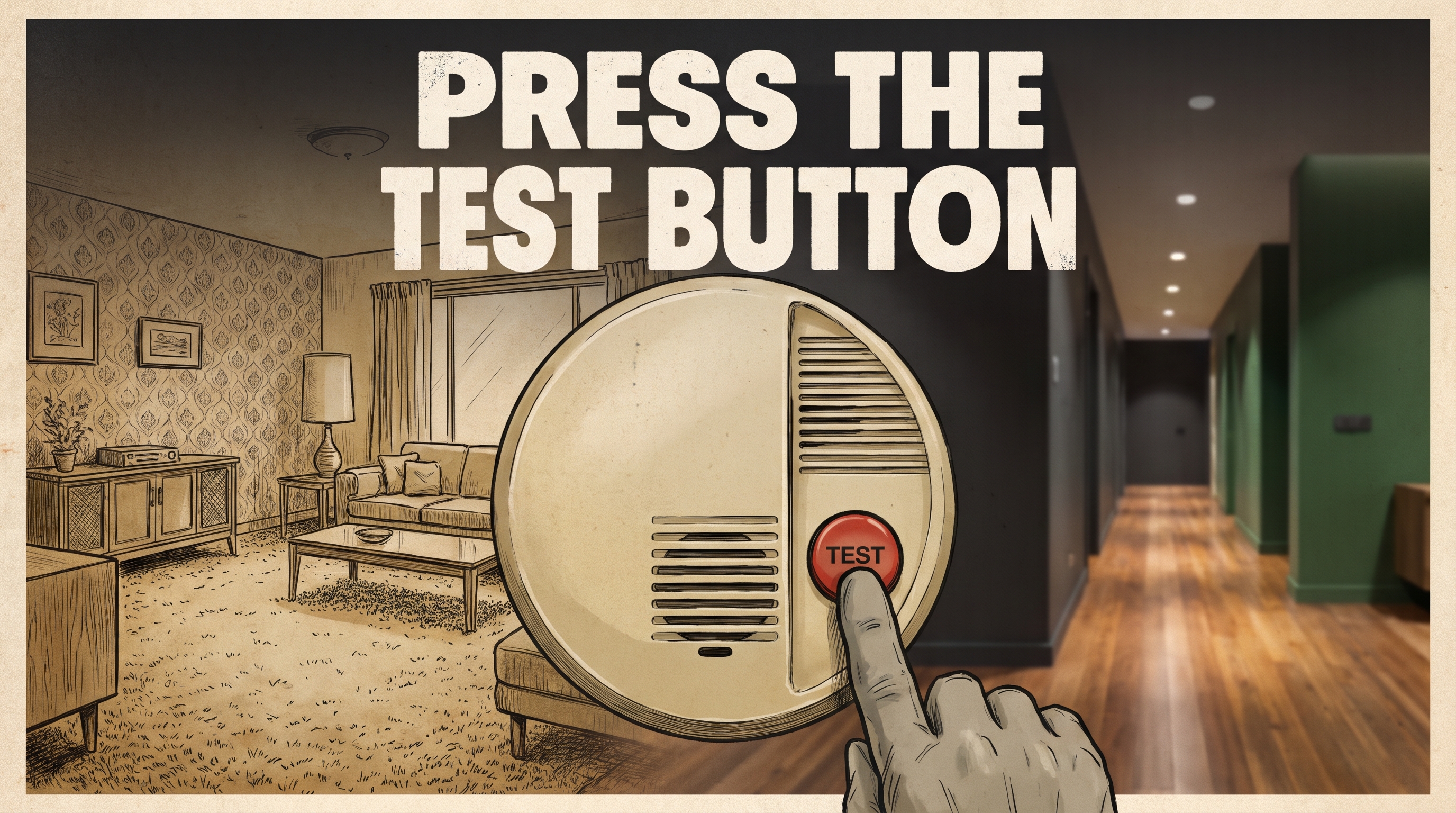
Your Daily Install connects what’s happening now with a useful pattern from the past—and one simple step you can take today to make your household more resilient.
Print the worksheet below, fill it in, and add it to your Household Resilience Network binder.
What’s happening now?
You pass it every day. A little white disc on the ceiling. When did you last hear it work?
Today’s clock change is a useful reminder to check smoke alarms. U.S. Fire Administration guidance calls for testing them monthly and replacing smoke alarms when they reach 10 years old.
A box on the ceiling is not the same as a working warning. Use the test button and the maker’s instructions.
Has this happened before?
In the 1960s, home smoke alarms were rare. Researchers studied how detectors could give families earlier warning, and practical household alarms became more widely available.
NIST records a sharp change: homes with smoke alarms rose from about 10% in 1975 to at least 92% in 2000. A safety tool that once looked unusual became an ordinary part of a home.
But installing one did not end the job. A battery can run down. An alarm can age. The home can look prepared while a small maintenance task has been missed.
What happened next?
Widespread alarms gave more households a way to hear a warning early. The next step was keeping those alarms working and making sure people knew what to do when they sounded.
Count what works, not just what is mounted. A short test turns an assumption into a useful answer. A failed test gives you a specific repair or replacement task.
Been pulling up this yellow flower?
You call it a weed. Someone who knows wild plants stops for a closer look. See the food-identification skill behind that second glance.
TAP Here to Watch the Foraging Lesson →What can I do?
Take 15 minutes to check your smoke alarms. Tell everyone first, then use each alarm’s test button as the instructions direct. Use safe access; ask for help rather than climbing on furniture.
Check the manufacture date. Replace a smoke alarm at 10 years, or sooner if its instructions require it. Replace ordinary batteries as directed. A sealed 10-year battery alarm is replaced as a unit when needed; do not try to open it.
Check that you have alarms inside bedrooms, outside sleeping areas and on every level. Note missing or failed units. In a rental, tell the landlord promptly. Do not disable an alarm to stop a nuisance sound.
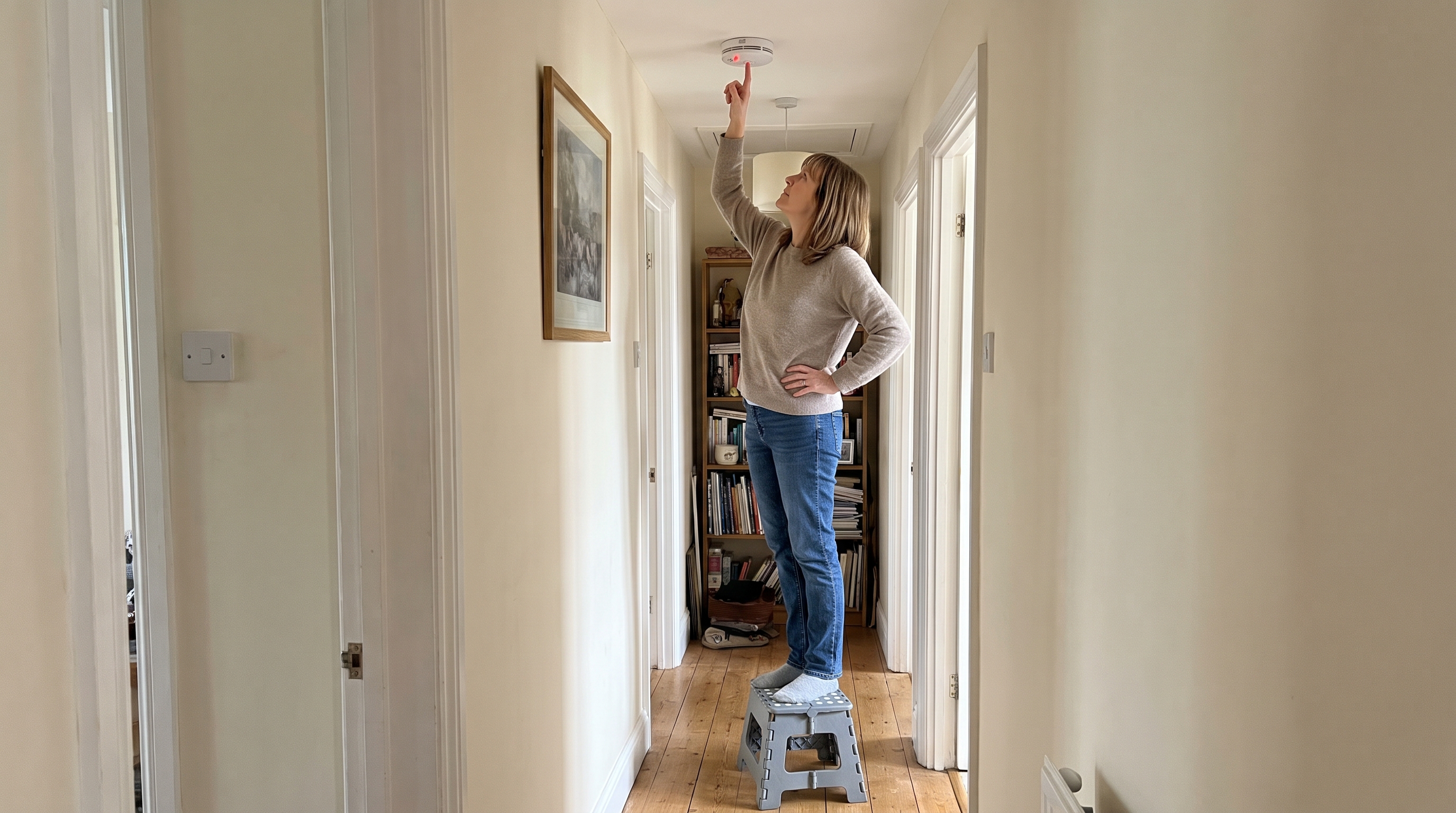
Illustrative household example. Fill in your own details below.
My Smoke-Alarm Test Record
Date: __________
File under: Fire Readiness
Test and date
Room / test result:
Manufacture date / replacement due:
☐ Safe access ☐ Help needed
Finish the job
Missing / failed alarm:
Action / person responsible:
Next monthly test date:
Today’s win: The alarms have a recorded test result, with a clear next step for anything missing or too old.
One more part of your household worth a backup.

A working alarm helps protect the home. A small fresh-food supply adds another useful layer of control.
Your modern Victory Garden can begin with one food in one small spot. Clear pictures show what to do, with container and indoor options for colder months.
The COMPLETE Blueprint helps you skip the guesswork that turns a small start into an expensive project.
Use the VIP link for over 80% off the complete digital Blueprint and both bonuses. Start with a food your household will actually eat.
| TAP Here for Your Modern Victory Garden → |
Stay steady,
David Stone
Survival Stronghold
P.S. How many smoke alarms did you test? Hit reply with the number. Forward this reminder to one person who changed the clock but has not checked the alarms.
P.P.S. Want the short route to the COMPLETE small-space food-growing Blueprint? PRESS Here to See the Starting Plan →