
There is water in the kettle. Some in the ice tray. A bottle in the car.
But how much safe drinking water is actually set aside for the household? Until you count it, “we have some” is only a guess.
SPONSORED · 4 FOOT FARM BLUEPRINT
Water is one backup. What about a little food close to home?
Start small with something you already eat. The COMPLETE 4 Foot Farm Blueprint includes indoor and small-space growing options, with pictures to guide the setup. See the Modern Victory Garden and choose your first manageable food project.
| TAP Here for the COMPLETE Blueprint → |
Tonight’s Install
One useful change for the home you already have. Print the worksheet below and add it to your Household Resilience Network binder.
ACTION BRIEF
Time: 15 minutes
Do: Count the unopened drinking water already stored and mark the gap.
Win: a gallon total, a household target, and a safe storage spot are written down.
What’s happening now?
It is Winter Weather Preparedness Week in Missouri, November 2–6. This morning’s freezer lesson was about keeping food cold. This is a separate job: drinking water if normal service stops.
CDC recommends at least one gallon per person per day for three days, with extra for pets and some health or climate needs.
When the river stopped water from reaching the tap
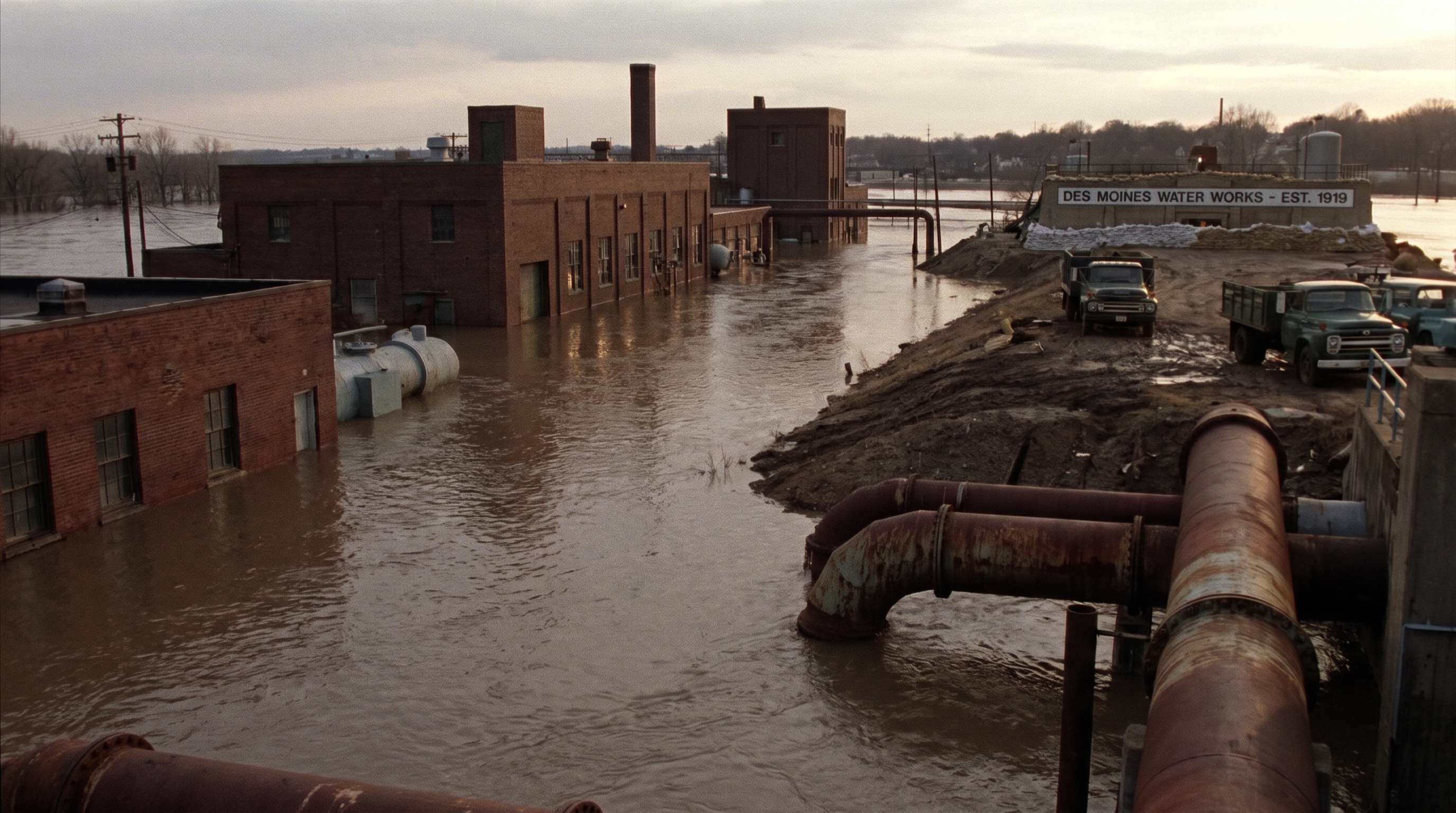
Illustrative historical reconstruction.
On July 11, 1993, floodwater entered the Des Moines Water Works treatment plant. The city had rivers full of water. Yet the system that made water usable and delivered it to homes had been overwhelmed.
The utility’s history records eleven days without water service and eighteen without potable water. Federal reports describe the restoration stages slightly differently. The important distinction is the same: getting water back into pipes and confirming it safe to drink were separate steps.
A household could not solve that problem merely by looking at the river. Water being present in the landscape was not the same as safe water arriving at the kitchen sink. Treatment, power, equipment, and distribution all mattered.
The 1993 flood was not a winter storm. We should not claim that every cold spell will produce the same failure. This is a comparison about dependence on a system, not a forecast for your town.
It also shows why a short reserve has a limited but real purpose. Stored water can meet an immediate need while public guidance and repairs catch up. A small reserve does not replace a utility or make a family ready for every length of outage.
For tonight, bring the scale down to one shelf. Count containers that are actually suitable for drinking. Do not count an unknown jug in the garage as though its contents are certain.
Then compare what you have with a clear target. A written gap is easier to fix than a vague feeling that the house is probably ready.
The lesson from Des Moines is not to fear every rain. It is to distinguish water around you from safe water you can use.
Why did a Maya city need more than a reservoir?
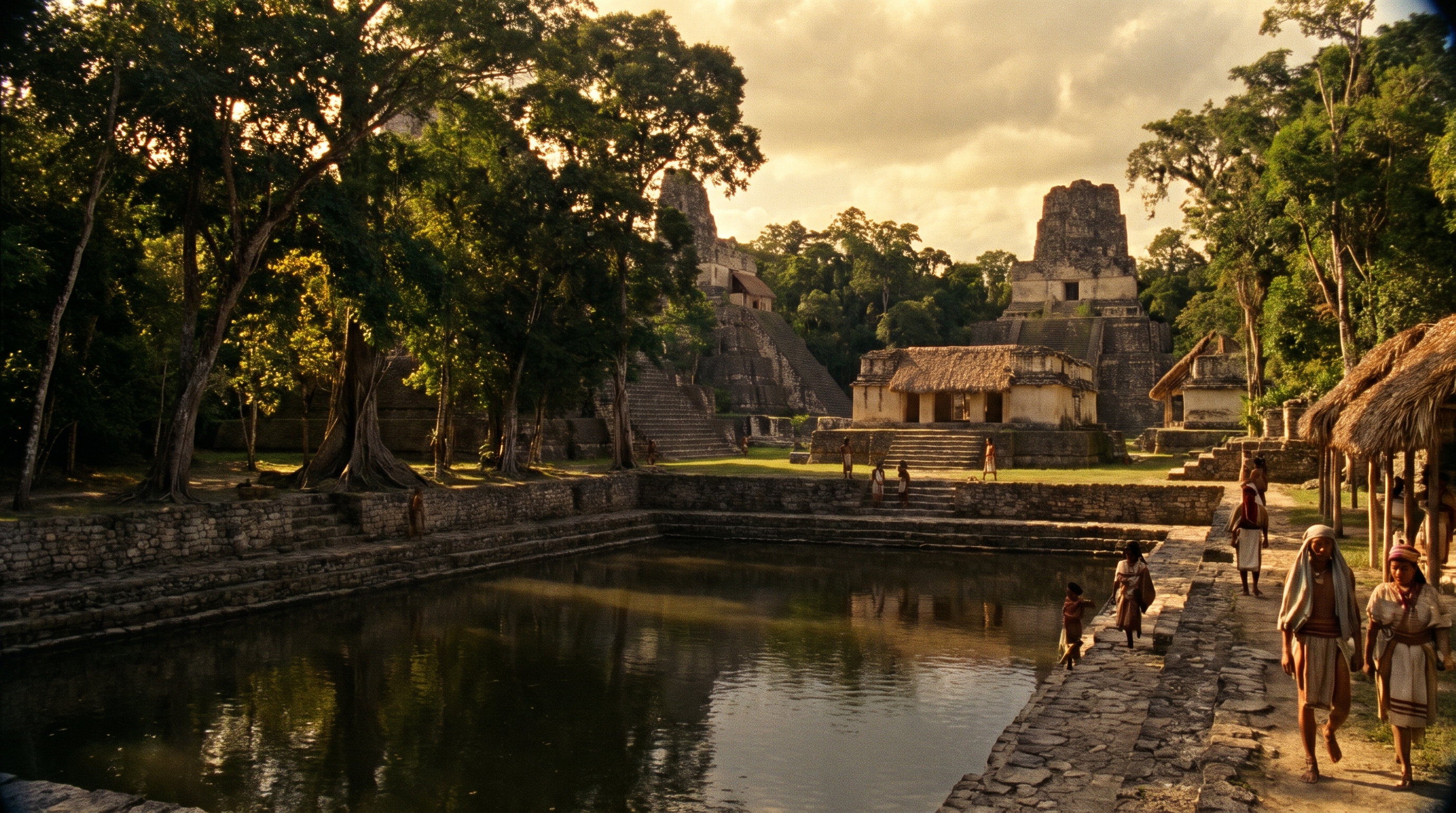
Illustrative historical reconstruction.
At Tikal, in what is now Guatemala, Maya residents stored water in reservoirs. One of those reservoirs, Corriental, held evidence of a remarkable filter system. Researchers reported the discovery in 2020.
They found quartz and zeolite in the reservoir sediments. The materials had been brought from outside the immediate city area. The published study places the system’s use across a long period, beginning more than two thousand years ago.
The finding changes the picture of a reservoir as nothing more than a hole that catches rain. Water management could include selecting materials and protecting water quality, not simply collecting a larger amount.
Other research at Tikal found pollution in some reservoirs. That is an important limit. A city could have large stored supplies and still face problems with the quality of particular sources.
More water did not automatically mean better water.
This is not a recipe for making your own filter with garden gravel. The ancient construction, local conditions, and archaeological evidence do not certify a household treatment method today.
Our narrow lesson is to keep quantity and safety as separate questions. How much do you have? What is it?
How was it stored? Can the container be trusted for the use you intend?
CDC identifies unopened, commercially bottled water as the safest and most reliable emergency source. That gives you a straightforward place to begin an inventory.
Tonight, a small row of sound containers with known contents is more useful than a large collection of mystery jugs.
The Maya reservoir reminds us that a reserve is a system to care for. It is not a pile of liquid to forget until the day it is needed.
SPONSORED · The Lost Frontier Handbook
The how-to is saved. Your phone is dead.
You remember saving the steps. Now the screen is black. Put food, water, and household skills on paper you can open without a charger. Which skill would you want first?
| PRESS Here to Look Inside the Handbook → |
THE PATTERN TO KEEP
Across BOTH examples, having water nearby was different from having safe water ready for use.
What can I do tonight?
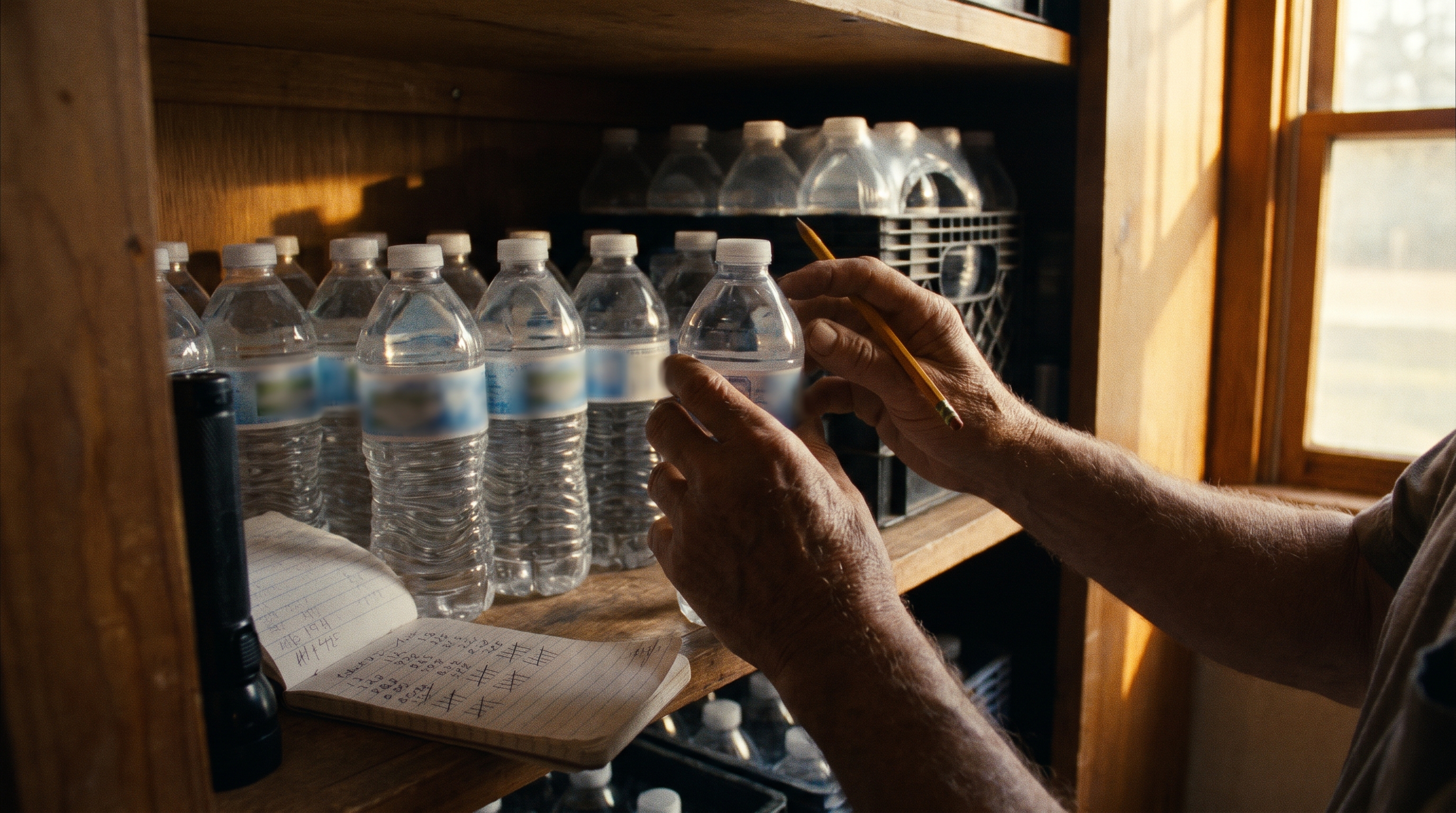
Count unopened commercially bottled drinking water in the home. Read each container’s volume and total the gallons. For a starting target, multiply household members by three gallons; consider the extra needs CDC lists.
Store supplies cool, out of direct sun, and away from chemicals. Follow the bottler’s storage and date guidance. If you find a gap, write the next amount to add.
Do not count freezer ballast as a separate ready-to-drink reserve.
HOUSEHOLD RESILIENCE NETWORK · BINDER WORKSHEET
Count the Water You Can Drink
Date: __________________
People in household
Starting three-day target
Unopened gallons stored
Next amount to add and storage spot
Status Check
Win: a gallon total, a household target, and a safe storage spot are written down.
SPONSORED · 4Patriots
What could you keep running in a blackout?
Your phone is fading. The fridge has gone quiet. A rechargeable power station gives chosen devices another source of power. Could this one cover the essentials you would miss first?
The takeaway
Count the unopened drinking water already stored and mark the gap. Keep the change small enough to finish, and leave a record you can check again.
Stay steady,
David Stone
Survival Stronghold
Prepare a little. Stand stronger.
P.S. What did your count come to? Reply with gallons and household size. Forward this to someone whose “water plan” is still a few bottles scattered around.
One more useful read: Find the right cold tire-pressure target →
P.P.S. · 4 FOOT FARM BLUEPRINT
Start with one food your household already eats. See the $7 Black Friday Blueprint offer →
NWS: current preparedness week
CDC: emergency drinking water
Des Moines Water Works: history
Federal account: 1993 flood
University of Cincinnati: Tikal
Scientific Reports: reservoir study
Images are illustrative reconstructions, not archival photographs.