
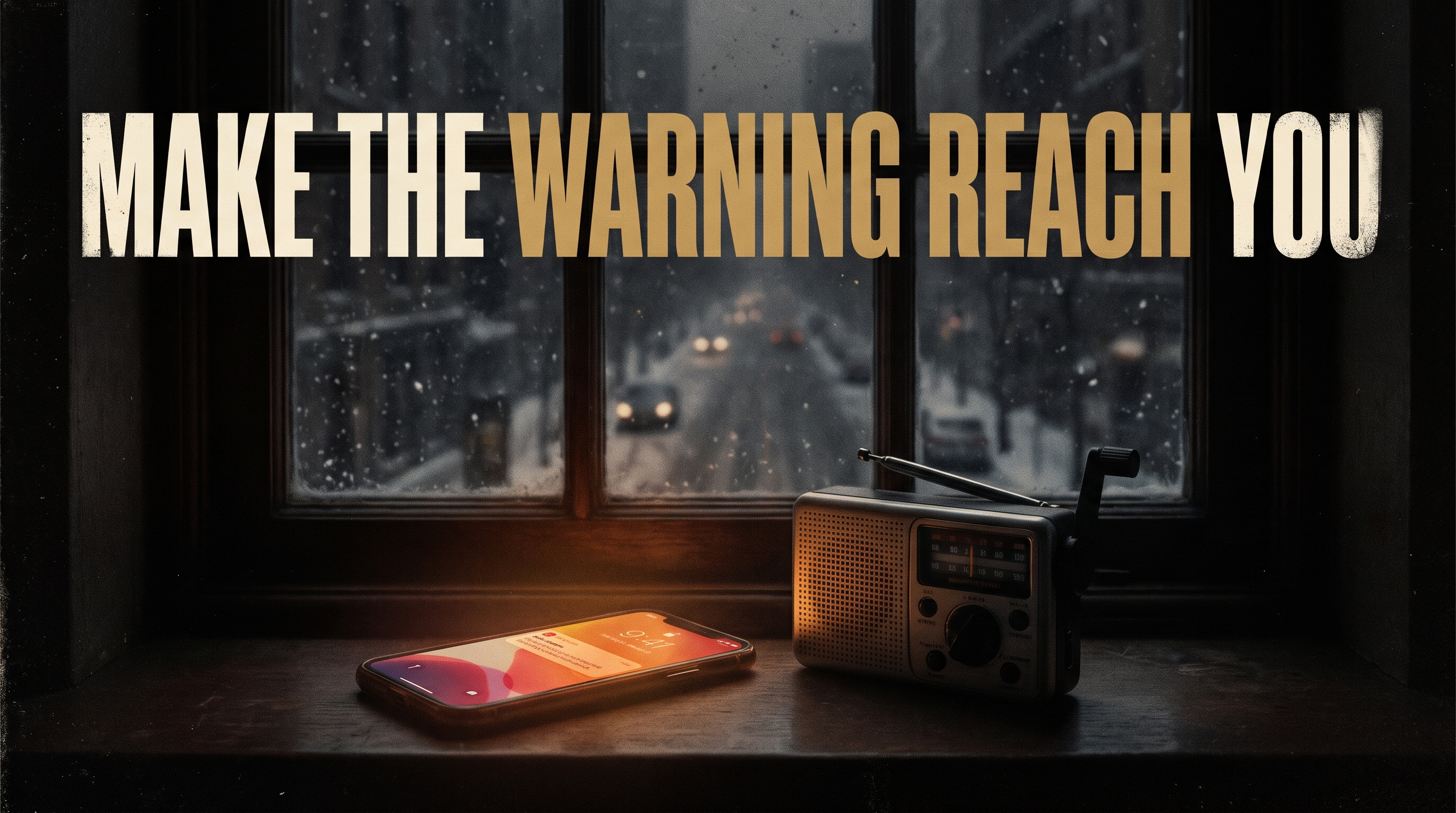
You check the forecast at dinner and put your phone down. Hours later, the risk changes. The forecast was easy to find. The question is whether the warning can find you.
Today’s check takes about 10 minutes.
Which light would you want back first?
After a blackout, a charged station can power selected everyday devices. Check which outlets and charging options you would use.
| See the 2200X Setup → |
Today’s Install
Print the worksheet, fill it in, and add it to your Household Resilience Network binder.
Action brief
Time · About 10–15 minutes
Cost · Use what you already have
Win · You have two named warning routes and know where to find them.
What’s happening now?
The National Weather Service’s Indiana winter safety campaign starts November 8. It is a good time to check how you receive urgent weather alerts where you live. A warning on an app you have to open is useful while you are looking. A phone alert or properly set weather radio can reach you while you are doing something else.
Has this happened before?
After a tornado outbreak, a new way into the house
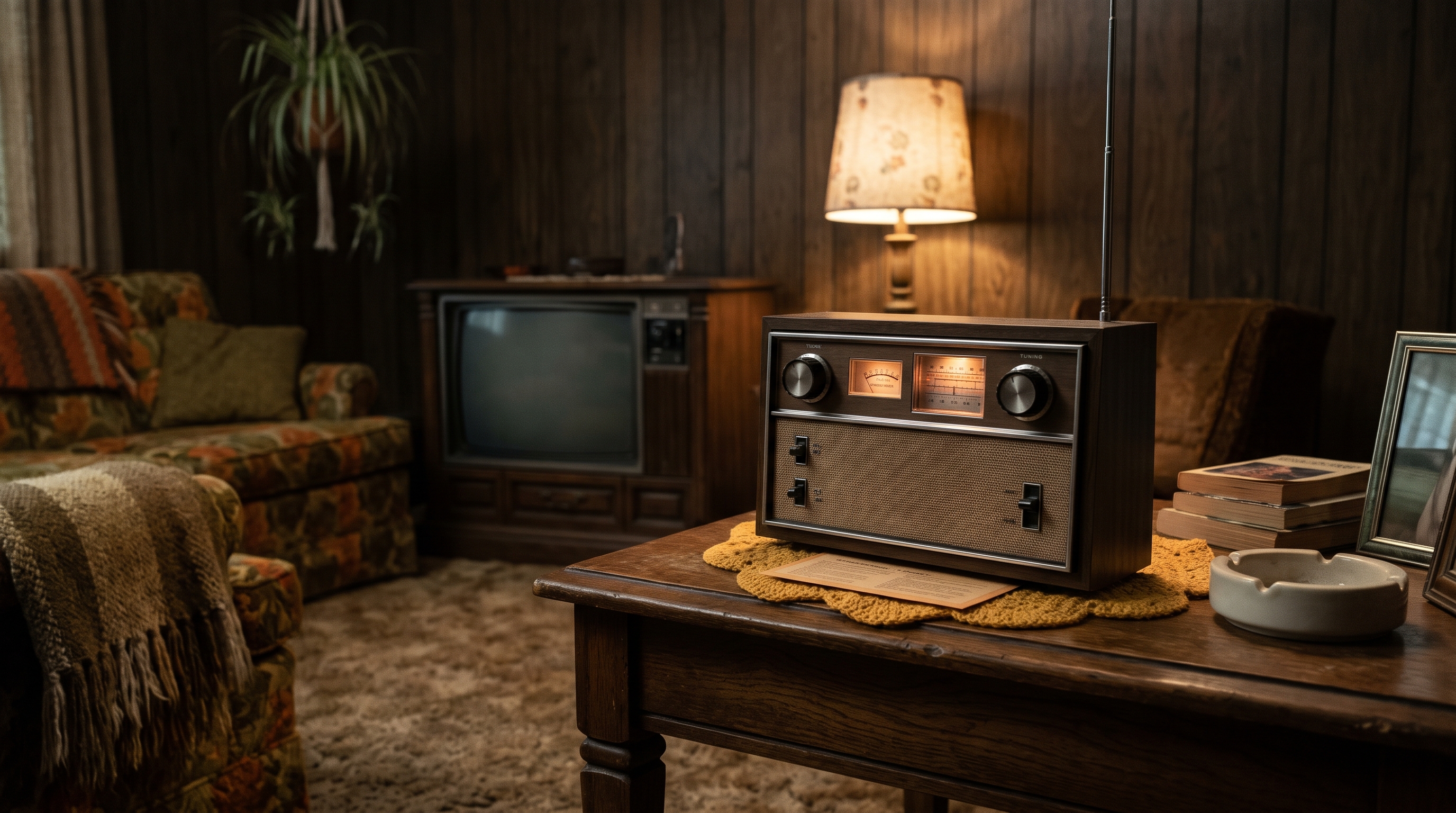
On April 3 and 4, 1974, a large group of tornadoes crossed parts of the United States. The storms hit communities from Indiana down to Georgia and beyond. The National Weather Service later reviewed how warnings moved from people who knew about the storms to people who needed to act.
A forecast office could issue a warning. It still had to travel to the right people. Many households depended on what was playing on television or radio, a siren they might or might not hear indoors, or someone else who called. The delivery route mattered as much as the message when time was short.
The outbreak helped drive a major expansion of NOAA Weather Radio. A receiver made for weather broadcasts could use an alert tone to call attention to a warning. Later equipment could narrow certain alerts to a smaller area when set up correctly. That made it possible to get a warning without listening to the regular broadcast all day.
A radio still has to be in range, powered, and set correctly. People who buy one and leave it in the box have bought a tool. They have not put a warning route in place. Those are two different jobs.
The lesson for a winter night is that a warning has a last step. It has to reach the person who can get the family moving. Look at your own route and ask which part might fail when you are asleep, the power is out, or the phone is charging in another room.
What happened next?
A warning works only when the right people can receive it and know what it means.
What would you keep powered when the room goes dark?
Pick an everyday item like a lamp or phone charger. The video follows a different approach to setting up backup power for a house.
| Watch the Backup-Power Video |
What can I do?
Choose a primary source and a second way to hear urgent local warnings. A county alert service or a properly set NOAA Weather Radio can be a second path.
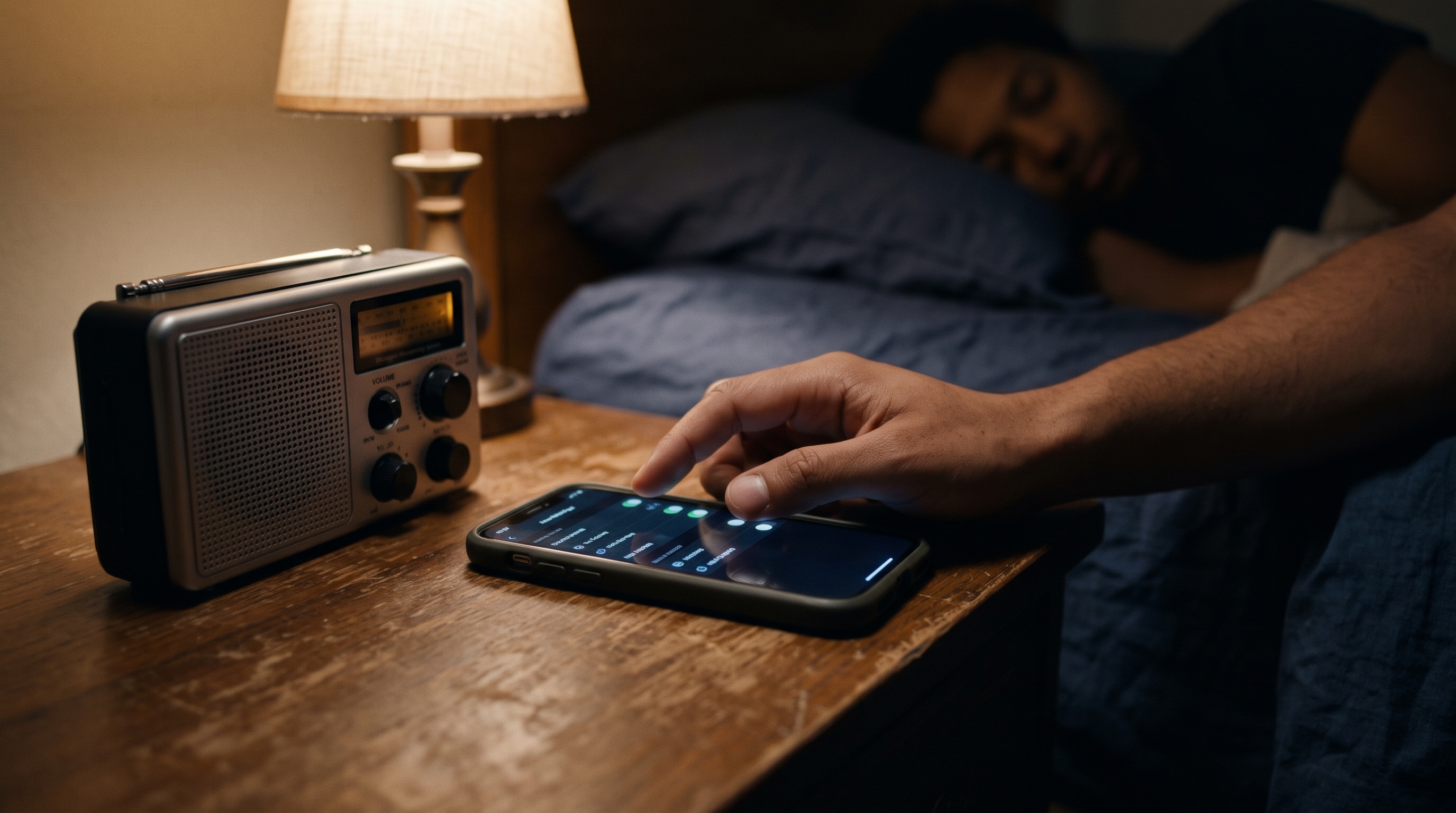
1. Open your phone’s settings and check that available emergency alerts are enabled.
2. Choose a second local alert source. If you use a weather radio, check the channel, county settings, and backup batteries according to its manual.
3. Write down where both devices will be at bedtime. Tell someone else which alert source to check.
My Winter Alert Plan
☐ I finished the check or set a date for the next step.
Status check. You have two named warning routes and know where to find them.
Takeaway. Give the warning a way to reach you.
Stay steady,
David Stone
Survival Stronghold
P.S. Which device would wake you first if a warning came tonight? Hit reply and tell me. If this would help a friend, forward it to them.
P.P.S. Two useful next reads:
What fresh food could you grow beside your backup supplies?
Pick one ingredient you buy on repeat. The Modern Victory Garden shows ways to start in a container, on a patio, or indoors.
| See the Modern Victory Garden → |