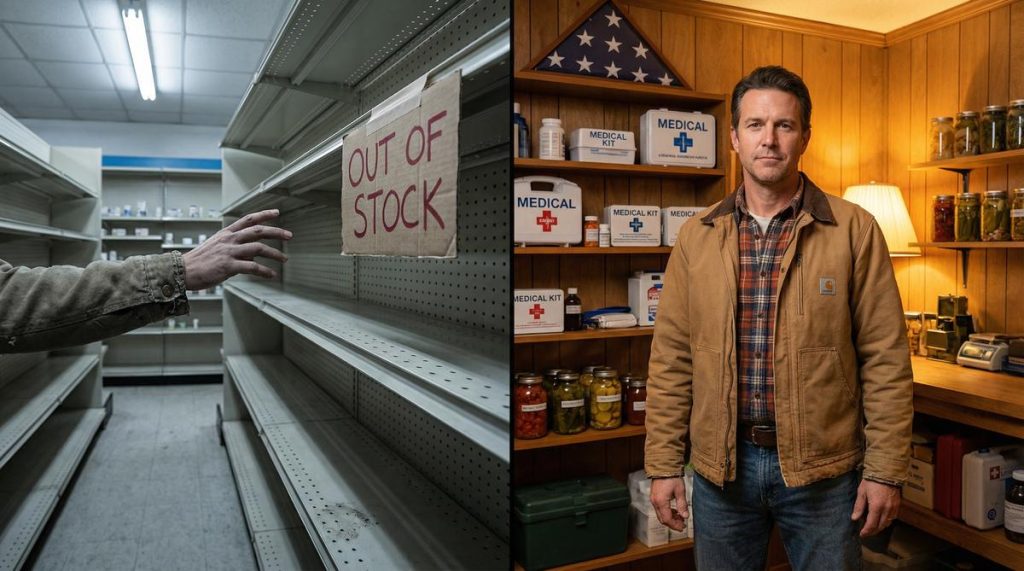
The clock is ticking on America’s medicine supply.
On April 2, 2026, the White House dropped a hammer on the global pharmaceutical supply chain.
A new Executive Order imposed a 100% tariff on patented pharmaceutical imports.
The goal is to force manufacturing back to the United States. That is a noble long-term strategy.
But in the short term? It is a mathematical guarantee of supply shock.
Here is the terrifying reality the mainstream media is ignoring: 88% of the active pharmaceutical ingredients (APIs) used in American drugs are manufactured overseas.
Mostly in China and India.
The tariffs hit large companies on July 31. They hit smaller companies on September 29.
Generic drugs are temporarily exempt, but the administration explicitly stated that exemption will be “reassessed in one year.”
The supply chain is already buckling.
As of early 2026, the FDA was tracking over 250 active drug shortages.
A recent survey published in the JAMA Network Open revealed that 88% of primary care physicians are already dealing with drug shortages that affect their patients.
One in five patients is experiencing delayed care or forced medication changes.
In 2% of cases, physicians reported that a patient died because they couldn’t access their medication.
That is happening before the 100% tariffs take effect.
When the July 31 deadline hits, the fragile just-in-time delivery system that stocks your local pharmacy is going to shatter.
Prices will double overnight.
Shelves will empty.
And if you rely on the grid to keep you healthy, you will be entirely out of luck.
The Reality Check: Why Standard Medical Advice is a Death Trap
The standard advice from the medical establishment is to “talk to your doctor” and “keep a 30-day supply of your prescriptions.”
That advice is a death trap in a systemic supply crisis.
Your doctor cannot prescribe medicine that does not exist.
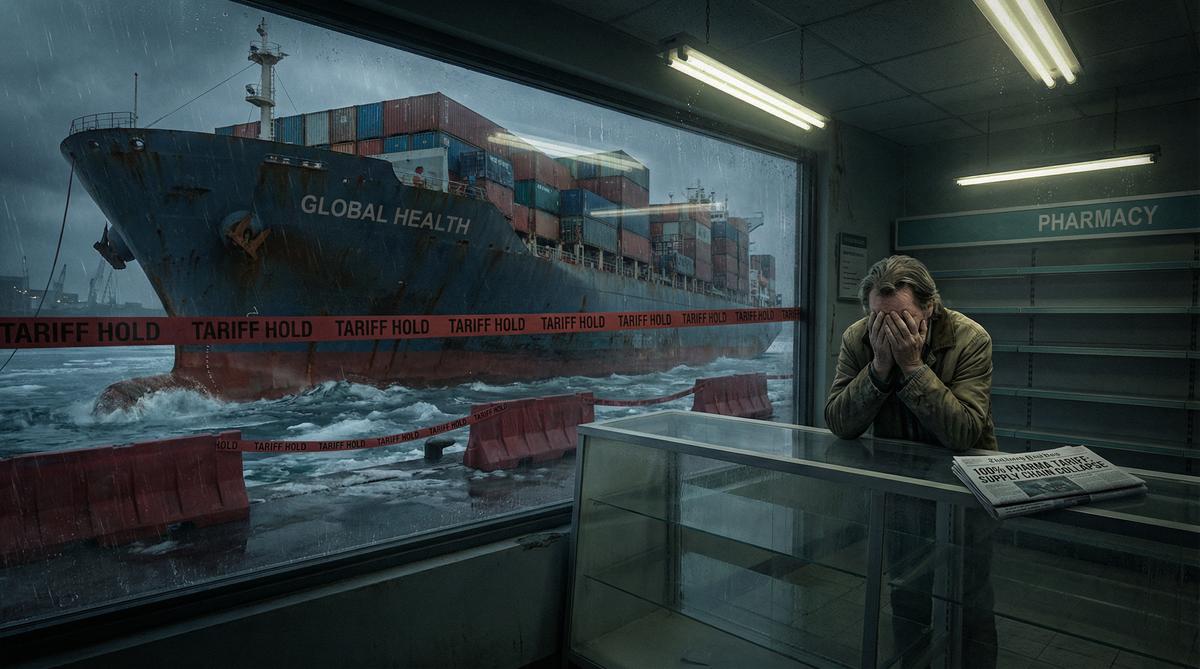
Your pharmacist cannot dispense pills that are sitting in a shipping container in Shanghai, blocked by a 100% tariff wall.
And a 30-day supply is a joke when it takes five years to build a new pharmaceutical manufacturing plant in the United States.
We are facing a multi-year gap between the implementation of these tariffs and the actual onshoring of drug production.
During that gap, the government will prioritize hospitals, military, and connected elites.
The average citizen will be left fighting over whatever scraps make it to the local CVS.
If you think FEMA or the CDC is going to deliver your blood pressure medication or emergency antibiotics when the supply chain freezes, you are living in a fantasy.
You must become your own first responder.
You must build an off-grid medicine cabinet that does not rely on a functioning global supply chain.
The Practical Solution: Building the 1-Year Off-Grid Medicine Cabinet
You cannot wait until July to start stockpiling. You must act now, while the supply chain is still limping along.
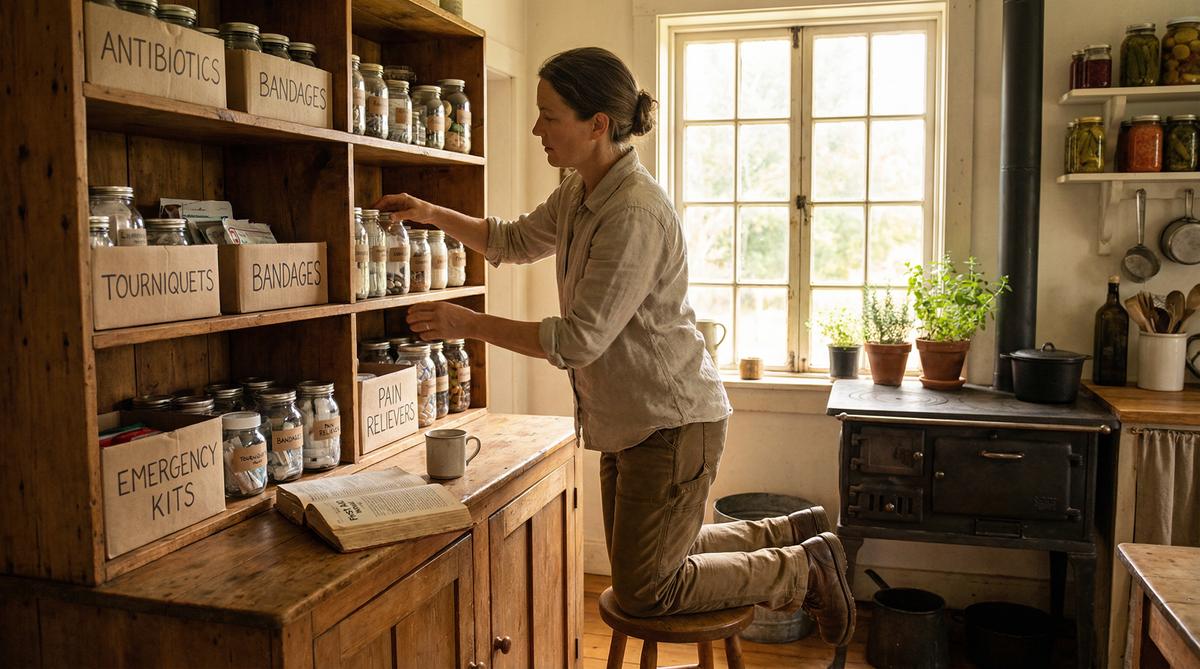
Here is the exact blueprint for building a resilient, off-grid medical supply that will keep your family alive when the pharmacies go dark.
Step 1: Secure Emergency Antibiotics
In a grid-down or supply-shock scenario, a simple cut can become a lethal infection. You need broad-spectrum antibiotics.
Do not rely on fish antibiotics — that is a dangerous myth.
Use legal, doctor-approved services like Jase Medical or Contingency Medical to legally acquire a “Jase Case” or similar emergency antibiotic kit.
These kits typically include Amoxicillin, Azithromycin, Ciprofloxacin, Doxycycline, and Metronidazole.
Cost: Approximately $260 – $300.
Step 2: The Core OTC Stockpile
You need a massive supply of over-the-counter medications to manage pain, fever, and basic illness without a doctor.
Buy in bulk from warehouse stores (Costco, Sam’s Club) or online.
Pain/Fever: 1,000+ count bottles of Ibuprofen (Advil) and Acetaminophen (Tylenol).
Allergies: 500+ count bottles of Diphenhydramine (Benadryl) and Loratadine.
Digestive: Loperamide (Imodium) and Bismuth subsalicylate. Diarrhea is a leading cause of death in disaster scenarios due to dehydration.
Topical: Triple antibiotic ointment, hydrocortisone cream, and burn gel.
Cost: Approximately $150.
Step 3: Trauma and Bleed Control
Pills won’t stop a hemorrhage. You need a dedicated trauma kit.
Tourniquets: Buy genuine North American Rescue CAT tourniquets. Do not buy cheap knockoffs — they will snap when you need them most. Get at least four.
Hemostatic Gauze: QuikClot or Celox to pack deep wounds and stop arterial bleeding.
Pressure Dressings: Israeli bandages or similar compression dressings.
Chest Seals: HyFin vent chest seals for penetrating chest trauma.
Cost: Approximately $200.
Step 4: Chronic Medication Buffering
If you rely on daily medication — blood pressure, insulin, thyroid — you are the most vulnerable.
Talk to your doctor immediately. Explain that you are traveling extensively and need a 90-day or 180-day advance prescription.
Pay out of pocket using GoodRx if your insurance refuses to cover the advance supply.
Store all medications in a cool, dark, dry place. Heat and humidity destroy drug efficacy faster than time.
The Path to Resilience: Sovereignty Over Your Health
The coming pharmaceutical shock is terrifying if you are dependent on the system.
But if you take action today, it is simply a logistical hurdle you have already solved.
True resilience means severing your reliance on fragile, globalized supply chains.
It means looking at a 100% tariff announcement not with panic, but with the calm confidence of someone who is already prepared.
When the pharmacy shelves empty in August, the unprepared will panic.
They will flood the emergency rooms. They will beg the government for help.
You will not be among them.
You will be at home, secure in the knowledge that you have the supplies, the skills, and the foresight to protect your family.
Health sovereignty is the ultimate form of freedom.
You cannot control what happens in Washington, Beijing, or the global shipping lanes.
But you have absolute control over what is in your medicine cabinet right now.
Take that control. Build your stockpile. Become ungovernable.
The Blueprint for Independence
Your medical stockpile is just one pillar of a truly resilient life. To survive the coming economic and supply chain shocks, you must build independence across every aspect of your existence.
If the pharmaceutical supply chain is breaking, the food supply chain is next — which is why the 4ft Farm Blueprint is essential for establishing total food sovereignty in your own backyard.
You cannot rely on fragile grids to keep your medical supplies temperature-controlled; you need the off-grid tools and infrastructure available at Homesteader Depot to build a truly self-sufficient homestead.
For continuous, actionable intelligence on navigating these supply shocks and protecting your family, the Self Reliance Report provides the tactical strategies you need.
To understand the deeper political and economic forces driving these tariffs and how to shield your wealth from the fallout, read the unvarnished analysis at American Downfall.
True health independence starts from within; optimize your physical vitality and natural immunity with the protocols from Seven Holistics so you rely less on the medical system in the first place.
And for daily, uncensored strategies on maintaining your health sovereignty outside the mainstream medical establishment, join the community at Freedom Health Daily.