Pharmaceutical Independence: How to Build a Home Medicine Supply When the Drug Chain Breaks
The American medical system is running on fumes.
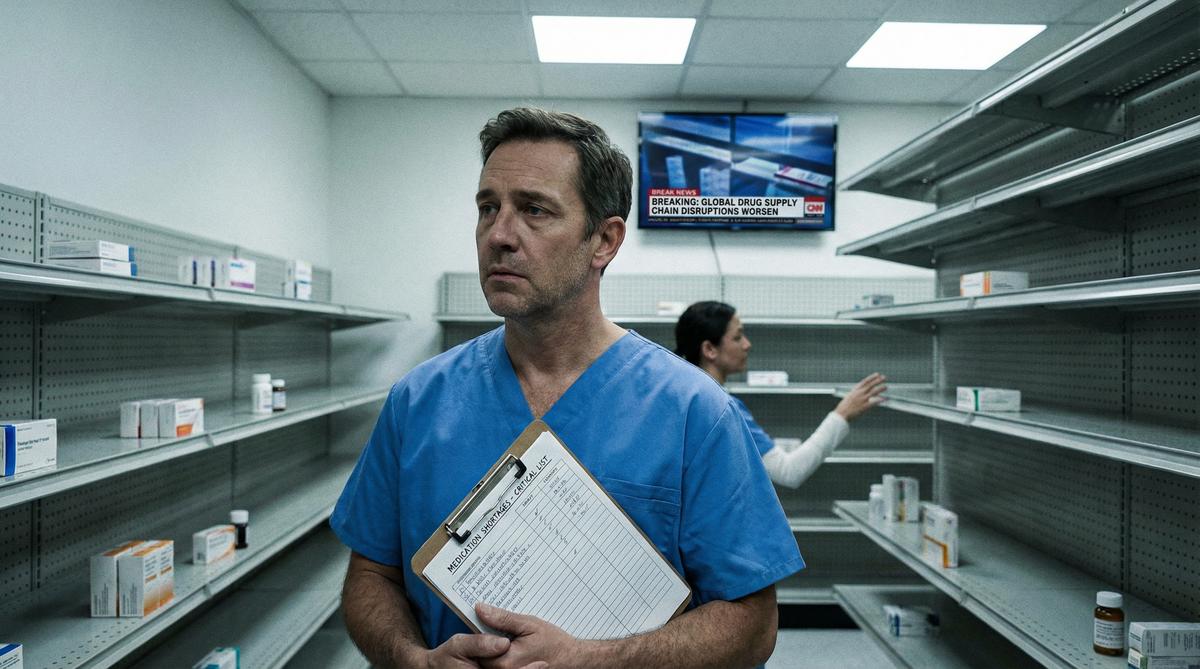
At the end of 2025, the American Society of Health-System Pharmacists reported a staggering 216 active drug shortages.
That number is historically high, and it is costing U.S. hospitals nearly $900 million a year just in labor to manage the chaos.
But the real threat isn’t just a temporary disruption in supply.
The real threat is who controls the supply.
Right now, nearly 700 essential medicines used in the United States contain at least one chemical sourced exclusively from China.
Up to 50% of all U.S. generic drugs rely on Chinese key starting materials.
And when you consider that over 90% of all prescriptions filled in America are generics, the math becomes terrifying.
We have outsourced our survival to a foreign adversary.
This isn’t a conspiracy theory; it was the subject of a House Select Committee hearing just days ago on March 18, 2026.
Experts testified that China’s leverage isn’t just in finished pills—it’s in the chemical inputs required to make them.
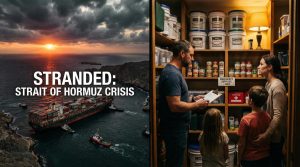
If the supply chain breaks—whether from a shipping crisis in the Strait of Hormuz, a geopolitical conflict, or deliberate weaponization—the pharmacy shelves will empty in days.
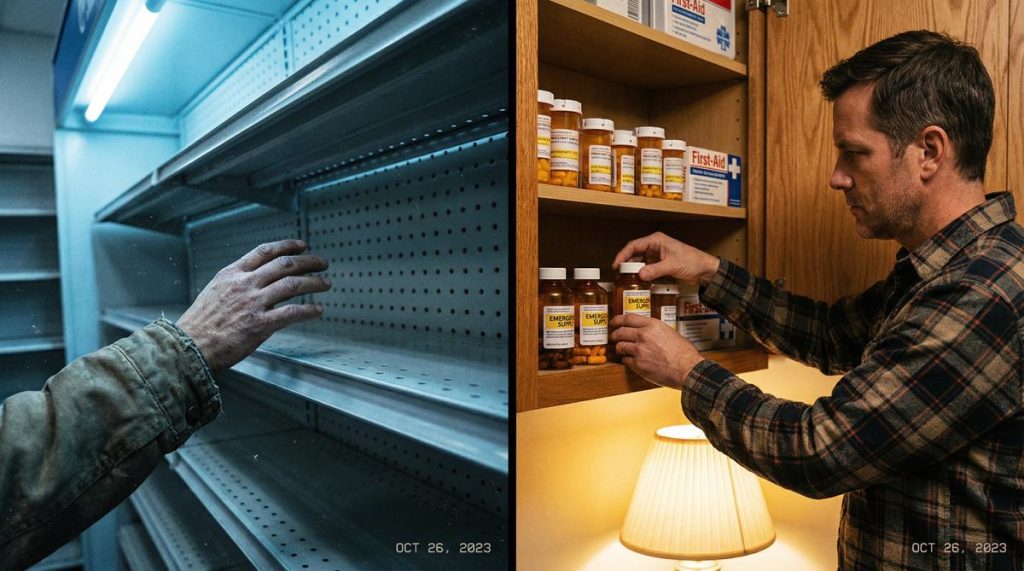
And when they do, your health insurance card will be completely worthless.
The Reality Check: Why Standard Advice Fails
If you ask the government how to prepare for a medical emergency, the advice is dangerously inadequate.
FEMA recommends keeping a three-day supply of medications.
The CDC suggests a seven-to-ten-day backup.
That is a joke.
A geopolitical supply chain disruption won’t last three days. It will last months, if not years.
When the system cracks, you cannot rely on hospitals to save you.
They are already spending nearly a billion dollars a year scrambling to find basic injectables and antibiotics.
They do not have a buffer stock for you.
Worse, the pharmaceutical middlemen—the Pharmacy Benefit Managers (PBMs)—have been caught marking up specialty generics by hundreds or thousands of percent.
They are extracting billions in excess revenue while the actual supply of life-saving drugs grows more fragile by the day.
If you are waiting for the government or the medical establishment to protect your family’s health, you are making a fatal mistake.
You must become your own primary care provider of last resort.
The Practical Solution: Building Your Medical Stockpile
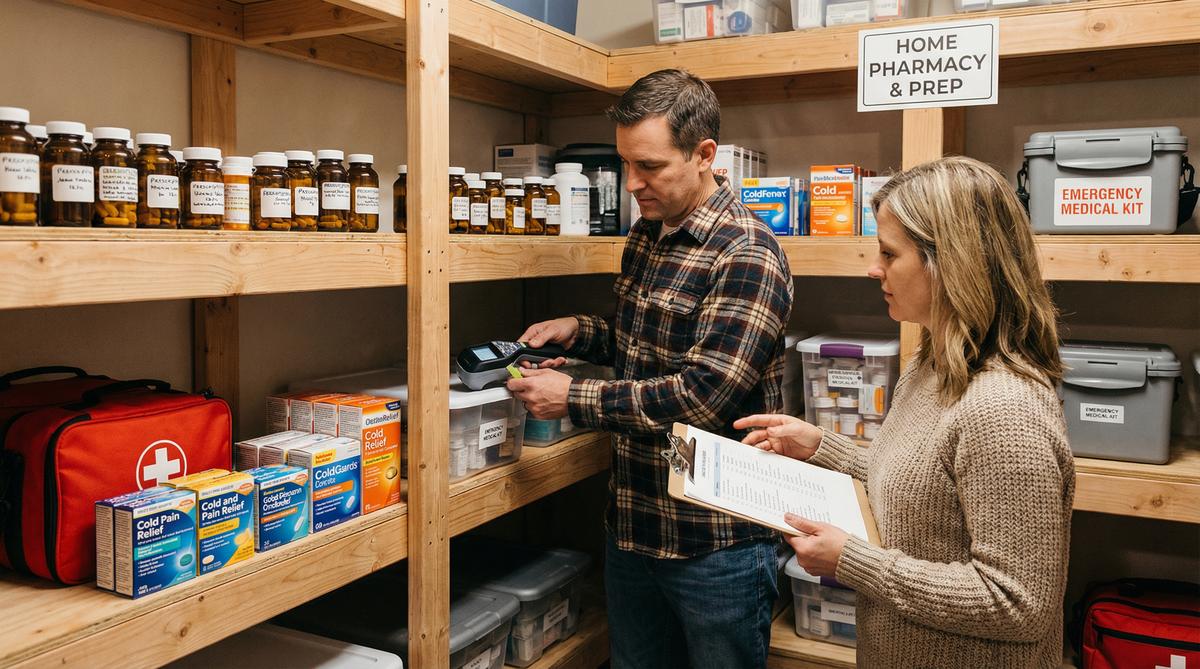
You do not need a medical degree to build a robust, life-saving home pharmacy.
You just need a strategy, a small budget, and the willingness to act before the panic buying begins.
Here is the exact blueprint for building a 90-day pharmaceutical fortress.
Tier 1: The OTC Foundation
Start with the basics. You can acquire this entire tier for under $200 at any big-box store.
Buy in bulk. You want 500-count bottles, not travel sizes.
You need Acetaminophen for fever and pain management. When a severe fever spikes and there is no hospital to visit, this simple over-the-counter pill becomes a critical life-saving tool.
You need Ibuprofen for severe inflammation and joint pain. If you are forced into heavy physical labor during a crisis, managing inflammation will be the difference between staying mobile and becoming a liability.
Stock up on Diphenhydramine (Benadryl) for severe allergic reactions and as an emergency sleep aid. An unexpected allergic reaction without access to an EpiPen requires immediate, aggressive antihistamine intervention.
Get Loperamide (Imodium) because in a grid-down scenario, waterborne illnesses and diarrhea are lethal. Dehydration from gastrointestinal distress is one of the leading causes of death in disaster zones.
Add electrolyte packets for rapid rehydration. Water alone is not enough when the body is rapidly losing fluids; you must replace sodium, potassium, and magnesium to prevent organ failure.
Round it out with topical antibiotic ointments, 1% hydrocortisone cream, and antifungal creams. Minor cuts and scrapes can quickly turn into systemic infections if left untreated in an unsanitary environment.
Tier 1.5: The Natural and Herbal Backup
Do not ignore the power of natural medicine when the synthetic supply chain fails.
Stockpile colloidal silver for its well-documented antimicrobial properties.
Keep high-quality oil of oregano on hand; it is a potent natural antibacterial and antifungal agent.
Store activated charcoal to treat accidental poisoning or severe gastrointestinal distress.
And keep raw, medicinal-grade Manuka honey for advanced wound care and burn treatment when conventional ointments run out.
Tier 2: The Prescription Emergency Supply
This is where most people fail, but it is actually the easiest problem to solve.
First, ask your doctor for a 90-day supply of your daily maintenance medications. Most insurance plans actually prefer this and will approve it via mail-order pharmacies.
Second, request a “vacation override” to get an extra month ahead on your refills.
But what about emergency antibiotics?
You cannot wait until you have a severe infection to try and find Amoxicillin when the pharmacies are empty.
Services like Jase Medical now offer complete emergency antibiotic kits prescribed by board-certified physicians.
For around $290, you can legally acquire a stockpile of essential antibiotics including Amoxicillin-Clavulanate, Azithromycin, Ciprofloxacin, Doxycycline, and Metronidazole.
These cover everything from respiratory infections and pneumonia to bite wounds and severe urinary tract infections.
If you tried to buy these individually without insurance, it would cost you over $800.
Tier 3: The Storage Protocol
Medications degrade rapidly when exposed to heat, light, and humidity.
Never store your stockpile in a bathroom medicine cabinet. The constant temperature fluctuations and moisture from showers will destroy the efficacy of your pills in a matter of months.
Keep your supplies in a cool, dark, dry location—ideally between 60 and 77 degrees Fahrenheit.
A dedicated, waterproof, and airtight container stored in a basement or interior closet is the optimal solution.
Keep everything in its original container with the labels intact. You do not want to be guessing dosages or expiration dates in the middle of a high-stress medical emergency.
Rotate your stock using the “first in, first out” method. When you buy a new bottle of ibuprofen, put it at the back of the shelf and use the oldest bottle first.
And remember: FDA extended shelf-life studies have proven that most solid-form pills retain 80% or more of their potency for one to five years past their printed expiration date.
The expiration date is often just the date until which the manufacturer guarantees 100% full potency, not the date the drug becomes toxic or useless.
(Note: This rule generally applies to solid pills and capsules, not liquid medications, insulins, or biologicals, which degrade much faster and require strict temperature control.)
The Path to Resilience
Looking at the fragility of our medical supply chain can be overwhelming.
It is terrifying to realize how dependent we are on fragile global networks for our most basic survival needs.
But fear is not a strategy. Action is.
Every bottle of ibuprofen you buy, every antibiotic you secure, and every skill you learn is a declaration of independence.
You are taking back control from a system that views you as a consumer rather than a citizen.
You are building a wall of protection around your family that no supply chain shock can breach.
When the pharmacy doors lock and the panic sets in, you will not be standing in line begging for help.
You will be at home, secure, prepared, and capable.
Pharmaceutical independence is not just about having pills in a box.
It is about the profound peace of mind that comes from knowing you can handle whatever comes next.
The Blueprint for Independence
True resilience requires a comprehensive approach to survival, health, and wealth.
If you want to secure your food supply alongside your medical stockpile, the 4ft Farm Blueprint will show you how to grow nutrient-dense calories in any space.
For the essential gear and tools required to maintain your property when the grid fails, Homesteader Depot has the rugged equipment you need.
To stay ahead of the escalating threats to our supply chains and infrastructure, the intelligence briefings at Self Reliance Report are mandatory reading.
When you need to understand the political and economic forces driving these shortages, American Downfall provides the unfiltered analysis the mainstream media ignores.
Because true medical independence starts with a strong immune system, Seven Holistics offers the natural protocols to keep your body resilient before disaster strikes.
And for daily, actionable strategies to maintain your physical vitality outside the traditional medical system, Freedom Health Daily is your ultimate resource.