Stagflation Survival: How to Protect Your Purchasing Power When Inflation and Unemployment Hit at the Same Time
The war dividend is here, and it is called stagflation.
On April 2, 2026, Bank of America economists quietly ripped up their economic forecasts for the year.
They didn’t just adjust the numbers.
They changed the entire vocabulary of the American economy.
The new reality is a 50-basis-point hit to economic growth, pushing GDP down to a stagnant 2.3 percent.
Simultaneously, they raised headline inflation expectations to 3.6 percent.
And they are bracing for oil to sit at $100 a barrel for the rest of the year.
This is not a normal recession.
This is the exact opposite of the normal economic trade-off.
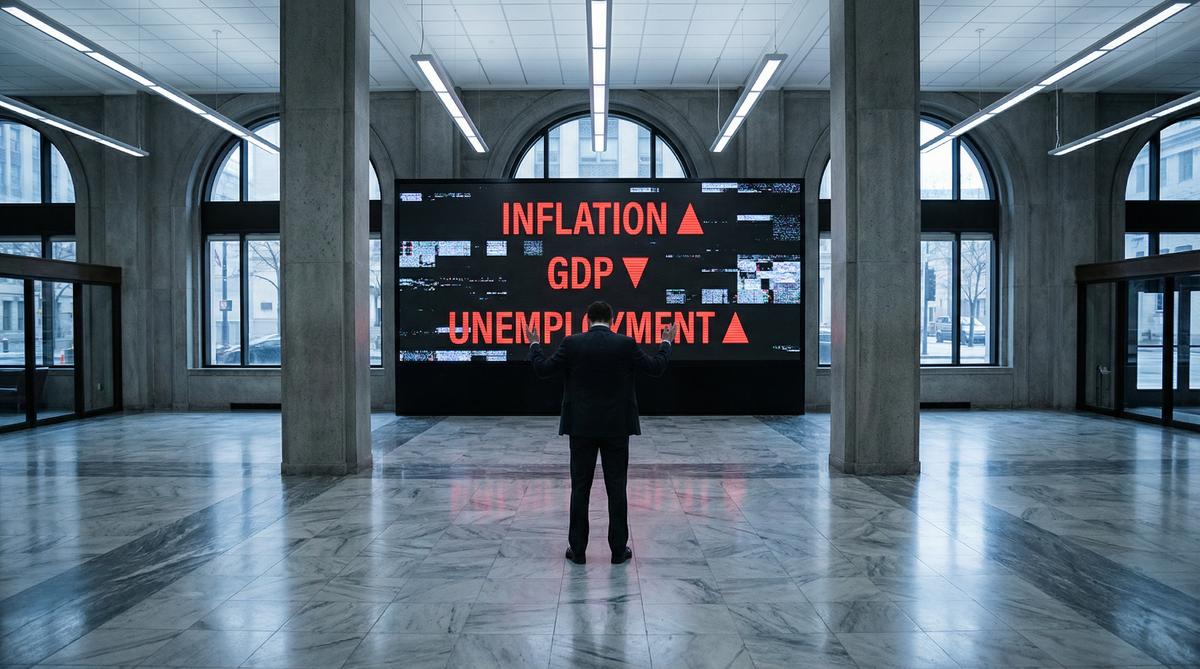
This is stagflation—the simultaneous combination of stagnant economic growth, high unemployment, and persistent, grinding inflation.
It is the Federal Reserve’s absolute worst nightmare.
And it is about to become yours if you are not prepared.
The Reality Check: Why Standard Financial Advice Is Now a Trap
If you ask a traditional financial advisor what to do during a recession, they will tell you to hold cash and buy bonds.
If you ask them what to do during inflation, they will tell you to buy stocks.
But what do you do when both happen at the same time?
Standard financial advice completely breaks down in a stagflationary environment.
During a normal recession, the Federal Reserve cuts interest rates to stimulate the economy and encourage hiring.
During an inflationary spike, the Federal Reserve raises interest rates to cool down the economy and stop prices from rising.
Right now, the Fed is trapped.
If they cut rates to save the weakening labor market—which just saw a massive downward revision of 92,000 jobs in February—they will pour gasoline on the inflation fire.
If they raise rates to fight the energy shock caused by the Strait of Hormuz conflict, they will push an already fragile economy into a deep, painful contraction.
They cannot save your job, and they cannot save your purchasing power.
They are paralyzed.
You are entirely on your own.
The 1970s taught us exactly what happens next.
Cash savings evaporate as inflation eats away at their value month after month.
Long-term bonds get crushed as yields fail to keep up with the rising cost of living.
And traditional equities suffer as corporate profit margins are squeezed by skyrocketing input costs and collapsing consumer demand.
Relying on the government to fix this is a fatal mistake.
Relying on traditional Wall Street portfolios is financial suicide.
You need a completely different playbook.
The Practical Solution: Hard Assets and Tangible Independence
To survive stagflation, you must stop thinking in terms of paper wealth and start thinking in terms of tangible utility.
You must move your resources out of fragile, centralized systems and into hard assets that hold intrinsic value regardless of what the Federal Reserve does.
Step 1: Secure Physical Precious Metals
During the stagflation of the 1970s, gold and silver were the ultimate safe havens.
They are not investments in the traditional sense; they are financial insurance policies.
When the purchasing power of the dollar collapses, the nominal price of precious metals rises to compensate.
You do not need to be a millionaire to start.
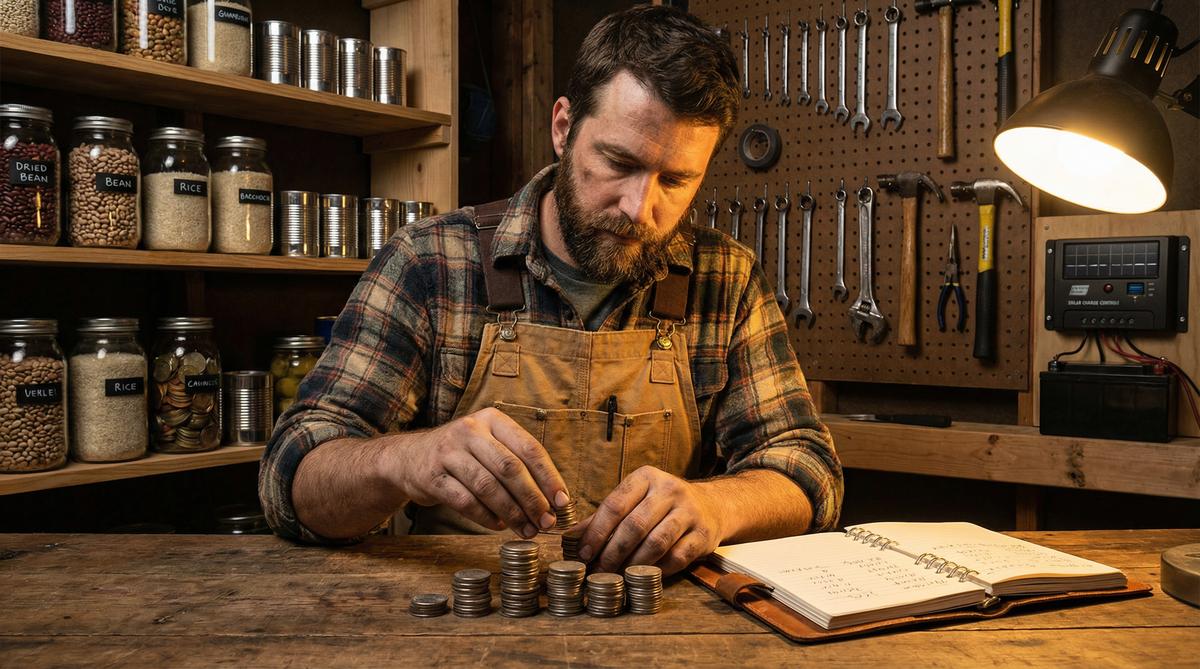
Begin by acquiring physical silver coins—specifically pre-1965 US dimes and quarters, known as “junk silver.”
These are highly recognizable, easily divisible, and perfect for localized barter if the digital financial system experiences disruptions.
Step 2: Invest in Productive Capacity
The best hedge against inflation is not a financial product.
It is the ability to produce what you consume.
When you grow your own food, you are effectively locking in your grocery prices at today’s costs.
Every tomato, potato, and egg you produce is one less item you have to buy with depreciating dollars.
Invest in high-quality seeds, durable gardening tools, and soil amendments now, before supply chain shocks drive their prices out of reach.
Step 3: Stockpile Essential Consumables
Inflation is a tax on future purchases.
The simplest way to avoid that tax is to make those purchases today.
Identify the non-perishable goods your family consumes on a regular basis: rice, beans, medical supplies, hygiene products, and ammunition.
Buy them in bulk now.
A 50-pound bag of rice purchased today is immune to next month’s price hikes.
This is not hoarding; this is rational economic behavior in an inflationary environment.
It is a guaranteed return on investment equal to the rate of inflation.
Step 4: Develop Barter-Capable Skills
When unemployment rises and cash becomes scarce, the underground economy thrives.
Your ability to repair a small engine, purify water, or provide basic medical care becomes a highly valuable currency.
Skills cannot be taxed, they cannot be inflated away, and they cannot be confiscated.
They are the ultimate stagflation-proof asset.
The Path to Resilience: From Victim to Sovereign
Stagflation is terrifying if you are dependent on the system.
If you rely on a corporate paycheck to buy overpriced groceries shipped from three thousand miles away, you are highly vulnerable.
But if you take action now, this economic crisis becomes an opportunity to build true sovereignty.
You do not have to be a victim of macroeconomic forces beyond your control.
By converting depreciating paper currency into hard assets, productive capacity, and tangible skills, you are building a fortress around your family.
You are stepping out of the fragile, interconnected web of global supply chains and into a localized, resilient reality.
This is about more than just surviving an economic downturn.
It is about reclaiming your independence.
It is about looking at a chaotic world and knowing that, no matter what happens in Washington or Wall Street, your family will be fed, sheltered, and secure.
The system is breaking down.
That is not a reason to panic.
It is a reason to build.
The Blueprint for Independence
The time for passive observation has passed. The economic indicators are flashing red, and the window to prepare is closing rapidly. You must take decisive action to insulate your family from the coming stagflationary shock.
Your first priority must be securing your food supply against skyrocketing grocery prices. The 4ft Farm Blueprint provides the exact framework you need to start producing high-yield, nutrient-dense food in any space, effectively opting out of the fragile agricultural supply chain.
To build this productive capacity, you need reliable, durable equipment that won’t fail when you need it most. Homesteader Depot is your source for the essential off-grid gear and heavy-duty tools required to turn your property into a self-sufficient stronghold.
But physical tools are only part of the equation; you also need the strategic intelligence to deploy them effectively. The Self Reliance Report delivers the critical preparedness strategies and tactical insights necessary to navigate the complex challenges of a grid-down or economically paralyzed environment.
Understanding the macroeconomic forces driving this crisis is equally important for protecting your wealth. American Downfall provides the unfiltered political and economic analysis you need to anticipate the government’s next moves and position your assets accordingly.
As the traditional medical system becomes increasingly strained and expensive, maintaining your physical vitality is a crucial component of your overall resilience. Seven Holistics offers the natural health protocols and foundational wellness strategies required to keep your body operating at peak performance without relying on pharmaceutical supply chains.
Finally, true independence means taking complete ownership of your medical preparedness. Freedom Health Daily equips you with the health independence strategies and alternative care knowledge necessary to handle emergencies when professional medical care is unavailable or unaffordable.
The system will not save you. It is time to save yourself.