
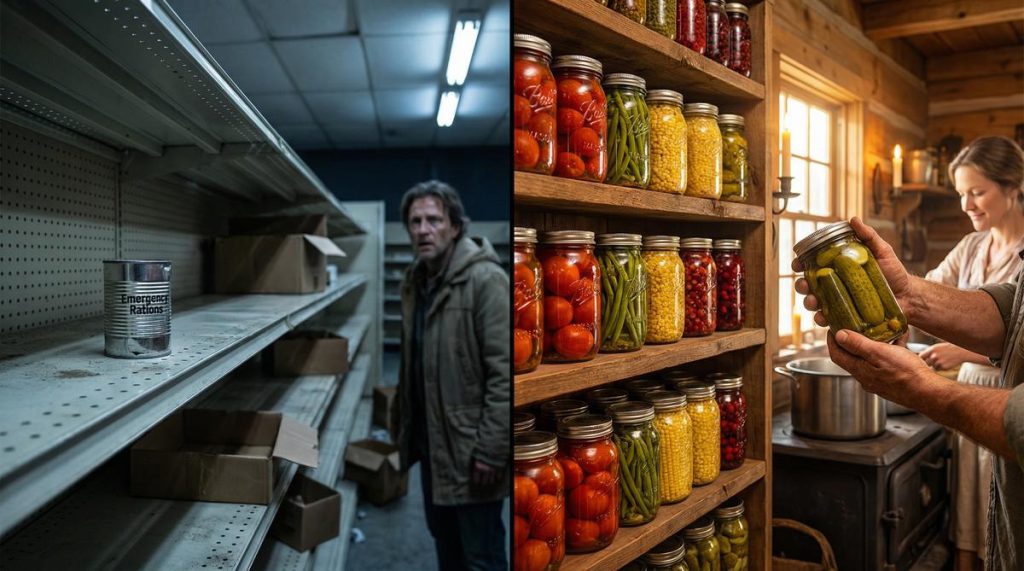
The numbers are no longer just warnings—they are a mathematical certainty.
By the end of 2026, global food prices are projected to surge by an additional 12% to 18%, according to the latest predictive models from Helios AI.
This isn’t a slow, creeping inflation that you can simply budget around.
This is a structural fracture in the global food supply chain, and it is happening right now.
The Persian Gulf fertilizer crisis and the ongoing blockade in the Strait of Hormuz have created a dangerous, unavoidable bottleneck.
The UN’s Food and Agriculture Organization (FAO) just issued a stark warning: global fertilizer prices could average 15% to 20% higher in the first half of 2026 alone.
When farmers can’t afford fertilizer, crop yields collapse.
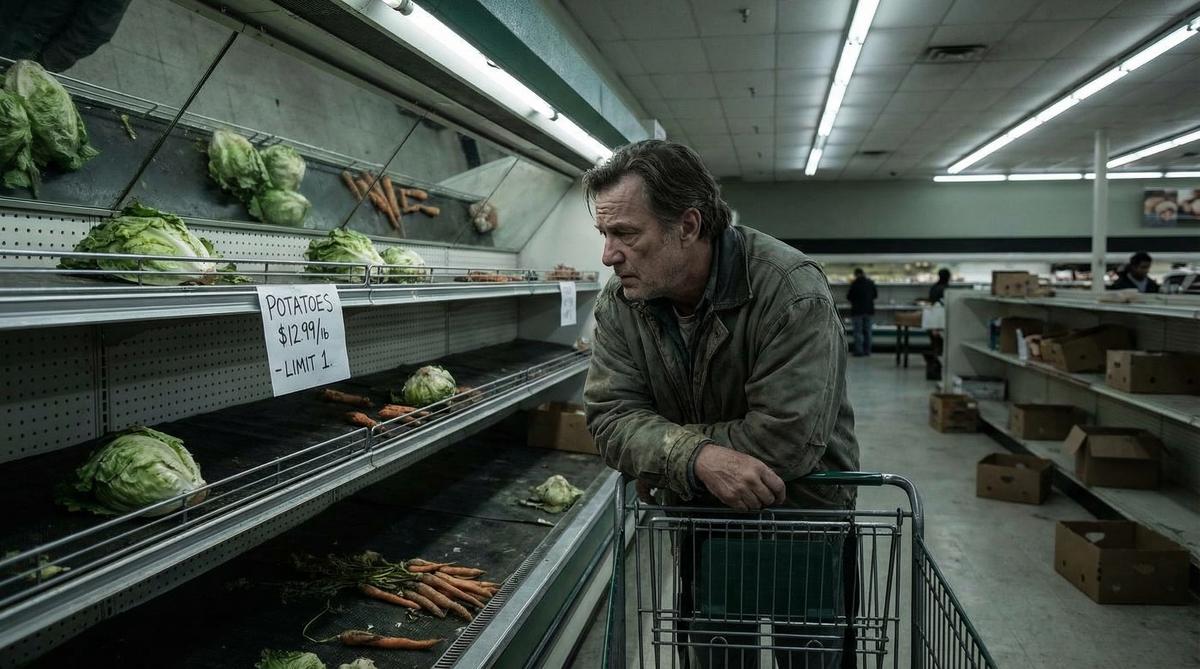
When yields collapse, the cost of everything on your grocery store shelf skyrockets.
The USDA’s March 2026 Food Price Outlook already predicts a 10.1% increase in beef prices and a 9.8% spike in sugar and sweets.
But those are conservative government estimates designed to prevent panic.
The reality on the ground, at the checkout counter, is much harsher.
We are watching the systematic devaluation of the dollar collide with a global agricultural crisis.
If you are relying on the supermarket to feed your family, you are entirely at the mercy of a fragile, failing system.
You are outsourcing your survival to a just-in-time delivery network that is currently breaking under the weight of geopolitical conflict and economic mismanagement.
The era of cheap, abundant, on-demand food is over.
If you haven’t already, read our companion guide on building a seed vault for long-term food sovereignty — it pairs directly with the preservation strategy below.
The window to prepare is closing rapidly.
The Reality Check: Why Stockpiling Isn’t Enough
Most people react to food inflation and supply chain threats by panic-buying.
They rush to the big box stores and clear out the pasta, the rice, and the canned goods.
They stack boxes of processed food in their garage and think they are secure.
But hoarding store-bought food is a temporary band-aid on a permanent wound.
It doesn’t solve the root problem: you are still fundamentally dependent on the industrial food complex.
When your stockpile runs out—and it will run out faster than you think—you are right back where you started.
You will be forced back into the marketplace, paying hyper-inflated prices for whatever scraps are left on the shelves.
Worse, store-bought canned goods are loaded with preservatives, excessive sodium, and industrial chemicals.
They are designed for shelf life, not for human vitality.
They will keep you alive in a crisis, but they will not keep you healthy, strong, or capable of defending your family.
And what about freeze-drying?
It is an incredible technology, and freeze-dried food can last for decades.
But a quality home freeze dryer costs upwards of $3,000, not including the electricity required to run it for 24 to 36 hours per batch.
That is a massive barrier to entry for the average family trying to survive an economic squeeze.
Furthermore, freeze dryers require a stable, uninterrupted power grid.
If the grid goes down, your $3,000 machine becomes a useless metal box.
True food sovereignty doesn’t come from buying more—it comes from preserving what you have, independently of the grid.
You need a system that works when the power goes out.
You need a method that costs pennies on the dollar, not thousands of dollars upfront.
You need the ancient, battle-tested skills of home canning and lacto-fermentation.
These are the skills that kept our ancestors alive through depressions, world wars, and famines.
They are the ultimate hedge against a collapsing currency and a broken supply chain.
The Practical Solution: Building Your Decentralized Pantry
You don’t need a massive off-grid compound or a bunker to secure your food supply.
You just need the right knowledge, a few basic tools, and the willingness to take action.
Let’s break down the two most powerful, cost-effective methods for long-term food preservation that you can start using in your kitchen today.
Method 1: Water Bath and Pressure Canning
Canning is the ultimate financial hedge against inflation. (For the macro picture of why inflation is accelerating, see our deep dive on the stagflation survival blueprint.)
It allows you to lock in today’s prices for tomorrow’s meals.
When tomatoes are cheap and abundant in the summer, you buy in bulk—or better yet, harvest them from your own garden.
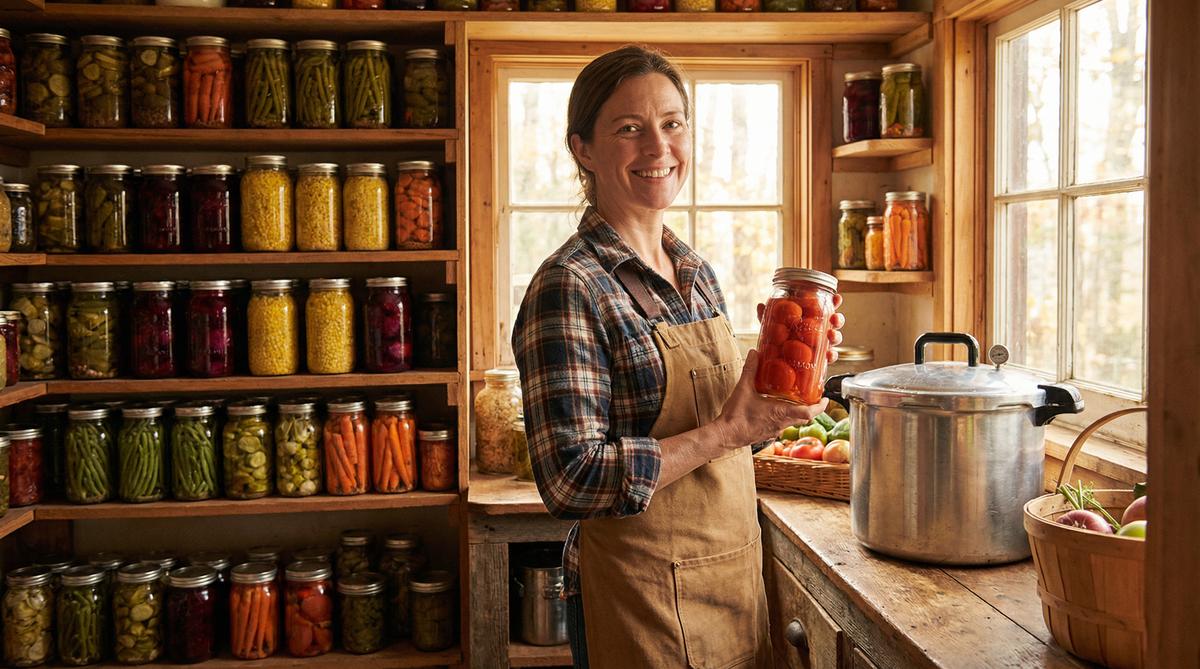
You process them, seal them in glass jars, and store them on your shelves.
Two years later, when grocery store prices have doubled or tripled, you are still eating organic tomatoes at last year’s cost.
For high-acid foods like fruits, jams, jellies, and pickles, a simple water bath canner is all you need.
A basic water bath starter kit costs between $20 and $90.
It is literally just a large pot with a rack to hold the jars off the bottom, preventing them from breaking.
The boiling water kills the bacteria and creates a vacuum seal that locks out oxygen.
But for low-acid foods like meats, poultry, beans, and heavy vegetables, water bath canning is not enough.
To safely preserve these foods and eliminate the risk of botulism, you must use a pressure canner.
A pressure canner reaches temperatures of 240°F, far hotter than boiling water, destroying all harmful spores.
A reliable pressure canner runs between $90 and $350.
Yes, it is an investment, but it pays for itself the very first time you preserve a bulk purchase of meat before a major price spike.
Imagine buying 50 pounds of beef directly from a local rancher and safely storing it on a shelf, requiring zero electricity to keep it fresh.
Properly canned food, stored in a cool, dark place, will easily last 1 to 5 years.
It is a tangible asset that retains its value regardless of what the stock market or the Federal Reserve does.
Method 2: Lacto-Fermentation
If canning is the workhorse of the decentralized pantry, fermentation is the secret weapon.
Lacto-fermentation is the oldest form of food preservation in human history.
It requires zero electricity, zero heat, and zero specialized equipment.
All you need is salt, water, and vegetables.
When you submerge vegetables in a saltwater brine, you create an environment where harmful, putrefying bacteria cannot survive.
Instead, beneficial lactobacillus bacteria—which are naturally present on the surface of all plants—thrive.
These bacteria consume the natural sugars in the vegetables and produce lactic acid.
The lactic acid acts as a natural preservative, keeping the food safe to eat for months.
Fermented foods like sauerkraut, kimchi, and fermented carrots will last 3 to 12 months in a cool environment like a root cellar, basement, or refrigerator.
But the benefits of fermentation go far beyond simple preservation.
Fermentation doesn’t just preserve your food—it actively increases its nutritional value.
The process creates powerful probiotics, enzymes, and highly bioavailable vitamins.
In a grid-down scenario, or a period of severe economic hardship, maintaining your gut health and immune system is absolutely critical.
You cannot afford to get sick when medical supplies are scarce and hospitals are overwhelmed.
Fermented foods are nature’s original medicine, providing the robust immune support that processed, store-bought foods destroy.
The Path to Resilience: Taking Back Control
The mainstream headlines are designed to make you feel powerless.
They want you to look at the surging prices, the broken supply chains, and the geopolitical chaos, and feel nothing but fear.
They want you dependent on government handouts and corporate supply lines.
But fear is a useless emotion.
Action is the only antidote to anxiety.
When you learn to can your own food, you stop being a passive consumer.
When you start fermenting your own vegetables, you step outside the fragile industrial system.
You become a producer.
You become sovereign.
Every jar of food you seal is a declaration of independence.
It is a tangible, physical asset that cannot be inflated away by central banks, taxed by politicians, or disrupted by global conflicts.
You are building a localized economy right in your own pantry.
You are taking the power back from the mega-corporations and putting it directly into your own hands.
This isn’t about preparing for the end of the world.
It is about insulating your family from the very real, very present economic shocks happening right now.
It is about ensuring that no matter what happens to the dollar, or the grid, or the grocery store, your family will eat.
The time to learn these skills is not when the shelves are empty and the panic sets in.
The time to build your decentralized pantry is today.
Start small. Buy a water bath canner. Ferment a single jar of cabbage.
Master the skills now, while you still have the luxury of making mistakes.
The Blueprint for Independence
Securing your food supply is just the first step in a comprehensive strategy for total self-reliance.
True independence requires a holistic approach to your wealth, your health, and your homestead.
If you want to stop buying produce altogether and start growing your own survival garden, the 4ft Farm Blueprint shows you exactly how to generate massive yields in minimal space, turning even a small backyard into a food-producing engine.
To equip your home with the essential tools for off-grid living and food preservation, Homesteader Depot has the rugged, reliable gear you need to build your decentralized pantry.
For ongoing, tactical intelligence on navigating the collapsing economy and building a resilient lifestyle, the Self Reliance Report delivers actionable strategies straight to your inbox every week.
To understand the macroeconomic forces driving these food shortages and how to protect your assets from inflation, American Downfall provides the unfiltered political and financial analysis the mainstream media ignores.
Because a robust food supply is useless without a strong body to defend it, Seven Holistics offers natural, alternative health solutions to keep you vital and resilient in any crisis.
And to ensure you maintain your medical independence when the traditional healthcare system falters, Freedom Health Daily provides the critical strategies for senior health and policy navigation.
The system is breaking, but you don’t have to break with it.
Start canning. Start fermenting. Start building.
Your stronghold awaits.