
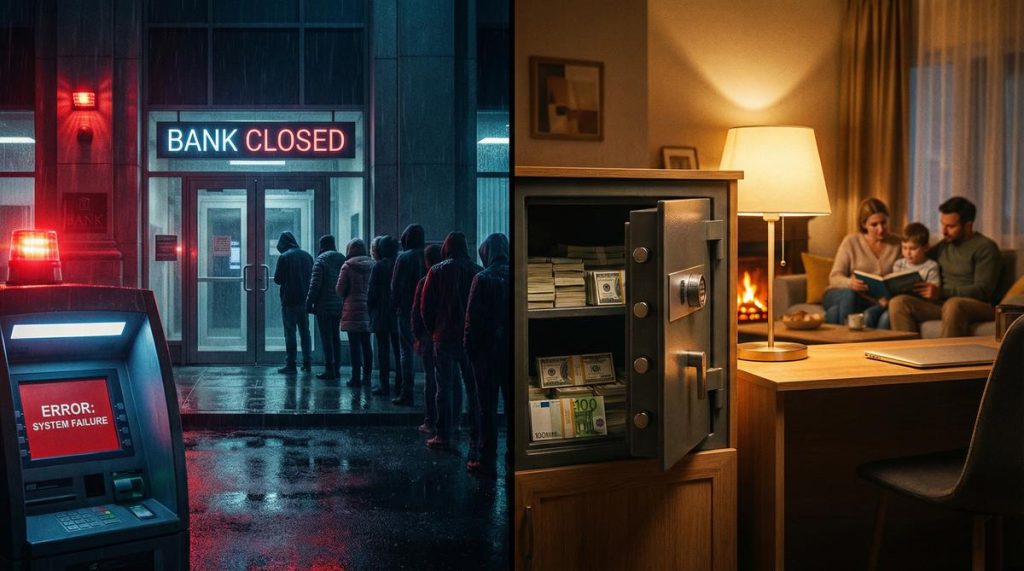
The warning didn’t come from a fringe prepper blog.
It came directly from the central bank of Sweden.
On April 6, 2026, the Riksbank issued an unprecedented directive to its citizens.
Keep at least one week’s worth of cash hidden at home.
They aren’t alone. The central banks of Finland and Norway just issued the exact same warning.
The official reason? “Payment system outages” and “geopolitical uncertainty.”
The real reason? They know exactly how fragile the digital banking system has become.
If you think your money is safe just because it’s sitting in a checking account, you are operating on outdated information.
The rules of the game changed in April 2026.
And if you don’t adapt, you could find yourself locked out of your own life savings in a matter of hours.
The Reality Check: Why the FDIC Won’t Save You
Most Americans sleep soundly believing the FDIC guarantees their deposits.
They believe the $250,000 insurance limit is an ironclad promise.
It is a mathematical impossibility.
The FDIC simply does not have the capital to cover a systemic banking collapse.
And the risk of that collapse just skyrocketed.
On March 19, 2026, the Federal Reserve proposed sweeping changes to bank capital requirements.
They are allowing the largest banks to reduce their capital reserves by 4.8%. Smaller banks get a 7.8% reduction.
They are loosening the reins precisely when the system is under maximum stress.
Private credit markets are flashing red. Commercial real estate is a slow-motion trainwreck.
And the threat of an AI-triggered bank run—where algorithms pull billions of dollars in milliseconds—is now a documented concern at the highest levels of government.
But here is the most terrifying data point.
According to a bombshell study published by the NYU Law Review on April 2, 2026, the FDIC’s track record is abysmal.
Between 1992 and 2007, uninsured depositors took losses in 63% of bank failures.
When a bank goes down, the FDIC’s legal mandate is to resolve it using the “least costly method.”
That means selling off the bank’s assets for pennies on the dollar.
And if your account balance exceeds the insured limit, or if the FDIC simply runs out of funds during a systemic crisis, your money vanishes.
You become an unsecured creditor begging for scraps in bankruptcy court.
Relying on a digital number on a screen is no longer a financial strategy.
It is a dangerous gamble.
The Practical Solution: The 30-Day Cash Fortress
You cannot control the Federal Reserve.
You cannot stop an AI-driven bank run.
But you can control your immediate liquidity.
You need a physical cash reserve outside the banking system. Not gold. Not silver. Not crypto.
Cold, hard, physical fiat currency.
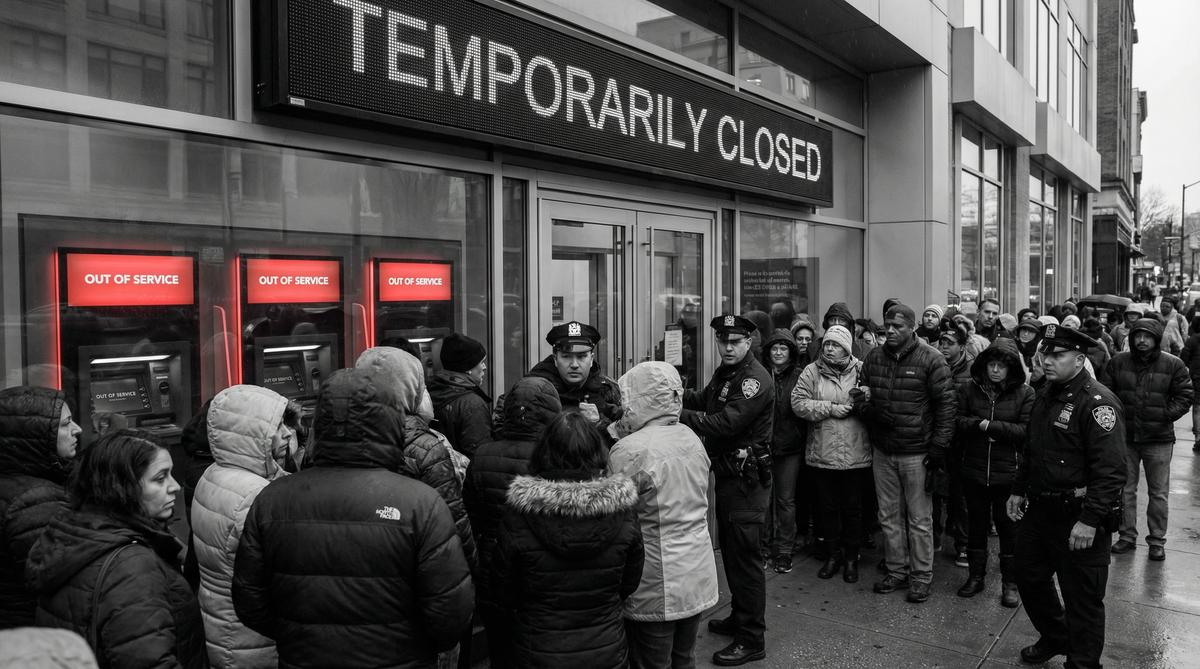
When the ATMs go dark and the point-of-sale terminals freeze, cash is the only bridge between you and starvation.
Here is the exact blueprint for building your 30-Day Cash Fortress.
Step 1: Calculate Your Burn Rate
Do not guess. Look at your last three months of bank statements.
Identify your absolute bare-minimum survival number.
Food, water, essential medications, fuel, and critical utilities.
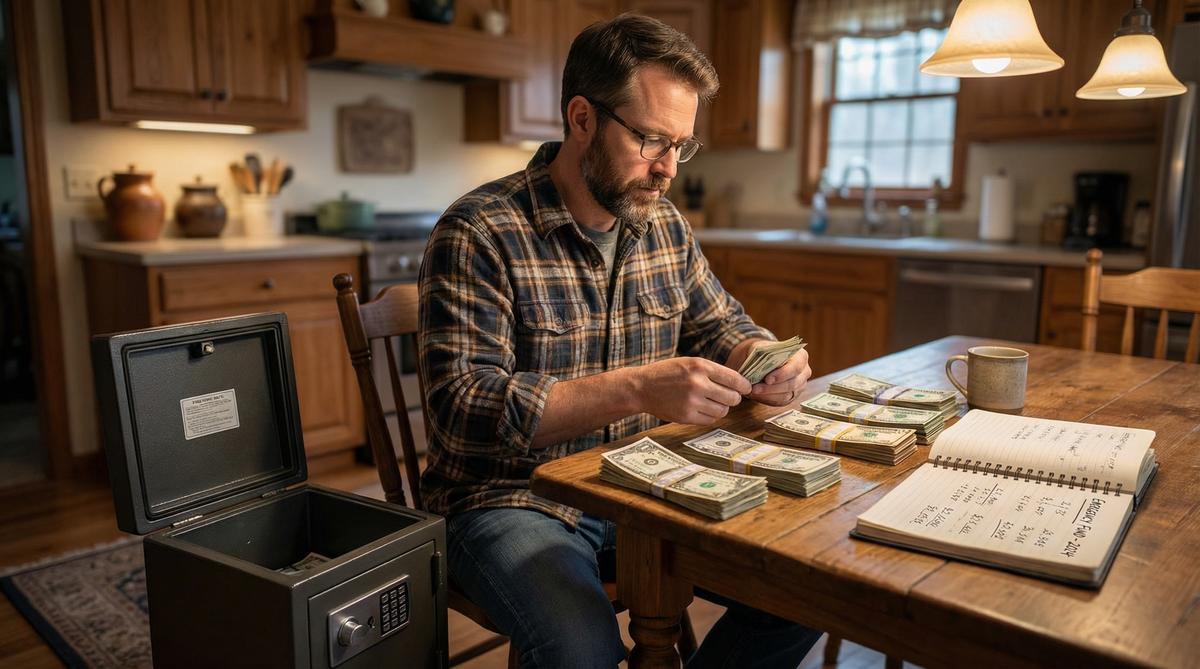
Multiply that number by 30 days. That is your target.
Step 2: The Denomination Strategy
Do not hoard $100 bills.
In a crisis, nobody has change for a hundred. If you try to buy a $5 loaf of bread with a $100 bill, that bread just cost you $100.
Your reserve must be structured precisely:
– 50% in $20 bills
– 25% in $10 bills
– 15% in $5 bills
– 10% in $1 bills
Step 3: The Silent Withdrawal
Do not walk into your bank and demand $5,000 in small bills.
That triggers Suspicious Activity Reports (SARs).
Withdraw $300 to $500 at a time, mixing ATM withdrawals with cash-back transactions at grocery stores.
Build the fortress quietly.
Step 4: Secure Storage
Do not put it under your mattress.
Invest in a high-quality, fireproof, waterproof safe.
Bolt it to the foundation of your home.
Split the stash. Keep 80% in the primary safe and 20% in a secondary, easily accessible “decoy” location.
The Path to Resilience
Taking your money out of the system feels radical.
It goes against everything you were taught.
But true financial sovereignty requires radical action.
When you hold physical cash, you hold leverage.
You are no longer dependent on a fragile digital network.
You are no longer at the mercy of a bank manager deciding if you are allowed to access your own wealth.
You become your own central bank.
This isn’t about fear. It is about profound empowerment.
When the next crisis hits—and it will hit—you won’t be standing in a panicked line outside a locked bank branch.
You will be at home, secure, funded, and ready to weather the storm.
You will have bought yourself the most valuable asset in any crisis: time.
The Blueprint for Independence
Securing your cash is only the first pillar of true independence.
A stack of twenty-dollar bills won’t feed your family if the grocery store shelves are empty. You must build total food sovereignty with the 4ft Farm Blueprint.
When the grid fails and digital payments stop, you need the physical tools to maintain your property, which you can source from Homesteader Depot.
To stay ahead of the next banking collapse, you need the unfiltered intelligence provided by the Self Reliance Report.
Understanding the political maneuvers that threaten your wealth is critical, and American Downfall tracks every move the government makes against your financial freedom.
Stress and panic destroy your immune system during a crisis, making the natural resilience protocols from Seven Holistics essential for your survival.
And because a medical emergency during a bank run can be fatal, you must secure your physical vitality with strategies from Freedom Health Daily.
The system is showing you its cracks.
Do not wait for it to shatter.
Build your fortress today.