
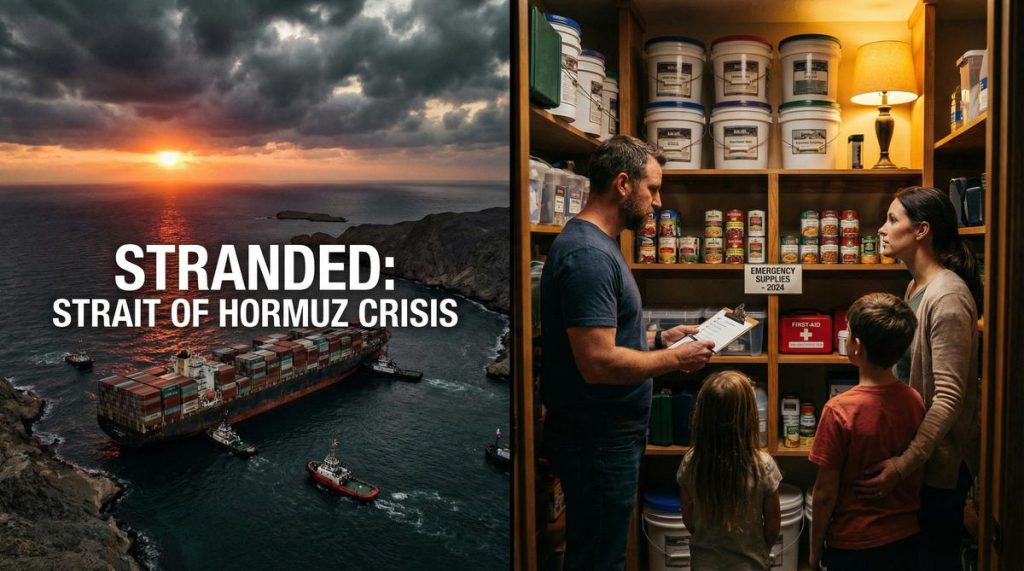
The Triple Threat to Your Food Supply: Why March 2026 is the Tipping Point
The Strait of Hormuz is effectively closed, wholesale prices just jumped 3.4% in a single month, and the real unemployment rate is quietly sitting at 7.9%.
You are being squeezed from three directions simultaneously.
The mainstream financial media is calling it a “temporary supply chain adjustment.”
They are lying to you.
What we are witnessing right now, in March 2026, is the convergence of tariff-driven price hikes, Middle East supply disruptions, and deeply entrenched stagflation.
This is not a drill.
This is a direct assault on your household food budget.
The numbers do not lie, even if the politicians do.
When you walk into the grocery store and feel like your dollar is buying half of what it used to, you are not imagining things.
You are experiencing the leading edge of a massive economic contraction.
The global system that brings food to your table is built on a fragile foundation of cheap energy, open sea lanes, and stable currency.
Right now, all three of those pillars are crumbling at the exact same time.
If you do not take immediate action to secure your own supply lines, you will be left at the mercy of a system that is actively failing.
The window of opportunity to prepare is closing faster than anyone wants to admit.
Every day you wait is another day your purchasing power evaporates.
Every week you delay is another week the supply chain fractures further.
This is the moment you must decide whether you will be a victim of circumstance or the architect of your own survival.
The Reality Check: Why Standard Advice is a Fatal Mistake
If you are relying on the government to stabilize prices, you are making a fatal miscalculation.
The Federal Reserve’s preferred inflation measure, Core PCE, is sitting at 3.1%—well above their target.
Yet, economic growth has ground to a halt, with GDP growth revised down to a meager 0.7%.
This is the textbook definition of stagflation.
And it gets worse.
According to the World Trade Organization’s March 19th report, traffic through the Strait of Hormuz has collapsed from 138 commercial vessels per day to almost zero.
Why does this matter to you?
Because one-third of the world’s fertilizer exports pass through that exact waterway.
No fertilizer means lower crop yields.
Lower crop yields mean massive spikes in grocery prices.
Add to this the new tariff environment, which industry leaders estimate will cost the average American household $2,512 this year alone.
That is a 44% increase from last year.
Your grocery bill is not going up because of “corporate greed.”
It is going up because the global supply chain is fracturing, and the dollar in your pocket is losing its purchasing power by the day.
FEMA cannot print more food.
The government cannot legislate lower prices without causing massive shortages.
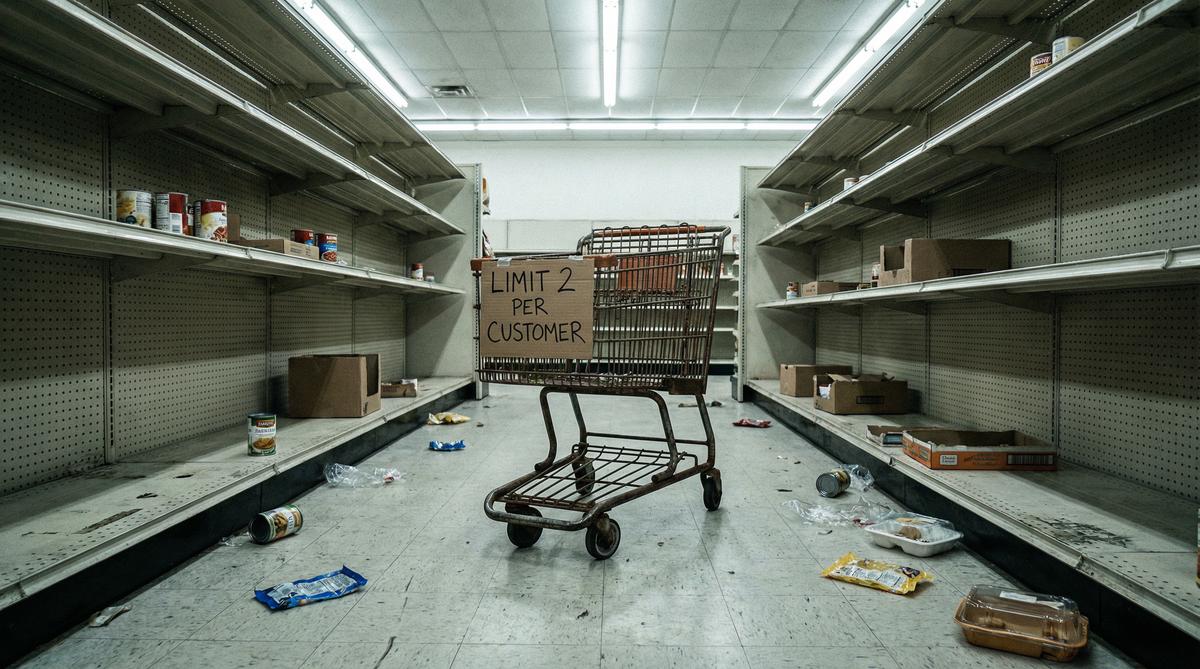
If you wait for the system to fix itself, you will be left staring at empty shelves and unaffordable price tags.
The traditional financial advice of “just budget better” is completely useless when the underlying cost of basic survival is skyrocketing.
You cannot budget your way out of a systemic supply collapse.
You cannot clip coupons when the shelves are bare.
The people who are telling you to stay calm are the same people who will be first in line to buy up the remaining inventory when the panic sets in.
Do not be the person who waits for the evening news to tell them it is time to prepare.
By the time the mainstream media admits there is a crisis, the window to protect yourself will have already slammed shut.
The Strategic Petroleum Reserve is currently sitting at just 58% capacity after years of political maneuvering.
This means the government has no buffer left to absorb the next energy shock.
When diesel prices spike, the cost of transporting every single item in your grocery store spikes with it.
The system is running on fumes, and the warning lights are flashing red.
The Practical Solution: The 3-Month Sovereign Stockpile
You cannot control global trade routes, but you can control your own pantry.
You need to build a 3-Month Sovereign Stockpile immediately.
This is not about hoarding toilet paper; it is about strategic, calorie-dense asset protection.
Here is the exact blueprint to secure your family’s food supply before the next price spike hits.
Step 1: The Caloric Foundation (Cost: ~$300)
Focus on bulk staples that provide maximum calories per dollar and have a shelf life of 20+ years.
You need 150 pounds of hard red wheat, 100 pounds of white rice, and 50 pounds of pinto beans.
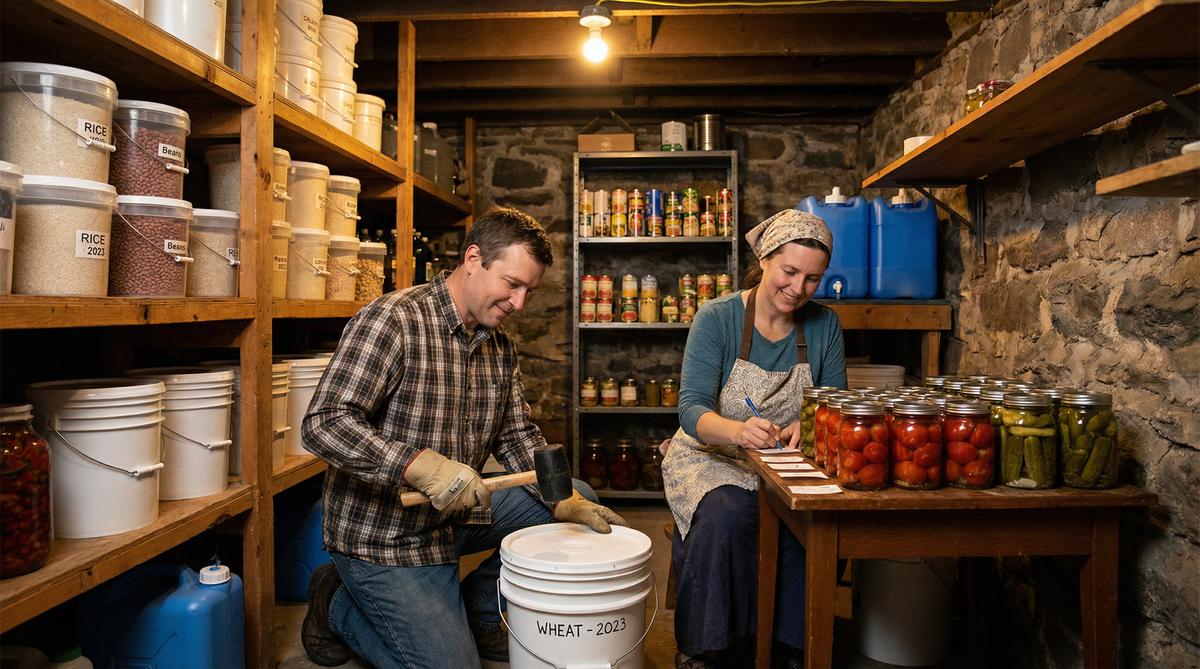
Store these in 5-gallon food-grade buckets with Mylar bags and oxygen absorbers.
This forms the unbreakable base of your survival pyramid.
These items are immune to inflation once you own them.
They will not spoil, they will not degrade, and they will keep your family fed when the grocery stores are empty.
Step 2: The Protein and Fat Reserves (Cost: ~$250)
Carbohydrates will keep you alive, but protein and fat will keep you healthy.
Stockpile canned meats (chicken, beef, tuna), peanut butter, and high-quality cooking oils (coconut oil, olive oil).
Rotate these every 12 to 18 months.
Fat is the most difficult macronutrient to source during a crisis.
Without adequate fat, your body cannot properly absorb vitamins, and your energy levels will plummet.
Do not skip this step.
Canned meats provide immediate, ready-to-eat protein that requires no cooking fuel, which is critical if the grid goes down.
Step 3: The Flavor and Morale Boosters (Cost: ~$100)
Food fatigue is a real psychological threat during a crisis.
Stock up on salt, sugar, honey, bouillon cubes, and your family’s favorite spices.
Instant coffee and tea are non-negotiable morale boosters.
Eating plain rice and beans for three weeks will break the spirit of even the toughest individual.
A simple dash of hot sauce or a cup of hot coffee can be the difference between enduring a crisis and suffering through it.
Step 4: The Water Security Protocol (Cost: ~$150)
Food is useless without clean water to cook it.
You need a minimum of one gallon per person, per day.
Invest in a high-quality gravity water filter and store at least 50 gallons of purified water in heavy-duty, BPA-free containers.
Municipal water systems are highly vulnerable to power grid failures and chemical shortages.
If the grid goes down, the water stops flowing within 48 hours.
You must be your own water utility.
Do not buy pre-packaged “survival kits” that charge a premium for cheap filler.
Build it yourself.
Control the quality.
Control the cost.
This is how you build real, tangible wealth that the government cannot tax and inflation cannot erode.
Every dollar you spend on this stockpile today is a dollar that is protected from tomorrow’s inflation.
The Path to Resilience
The system is fragile, but you do not have to be.
Every bucket of wheat you seal, every gallon of water you store, is a declaration of independence.
You are removing yourself from the vulnerability of the just-in-time supply chain.
You are insulating your family from the hidden tax of inflation.
This is not about fear.
This is about taking decisive action while the window of opportunity is still open.
When the next supply shock hits—and it will—you will not be panicking in the aisles of a big-box store.
You will be at home, secure, knowing that you saw the writing on the wall and acted.
True wealth is not measured in fiat currency.
True wealth is measured in resilience, skills, and tangible assets.
The peace of mind that comes from knowing your family is protected is worth ten times the cost of the supplies.
You are not just buying food; you are buying freedom.
You are buying the ability to say “no” to a system that demands your total dependence.
You are stepping out of the matrix of consumerism and into the reality of self-reliance.
This is the mindset shift that separates the victims from the survivors.
The victims wait for someone to save them.
The survivors save themselves.
They recognize that the cavalry is not coming.
They understand that their security is their own responsibility.
And they embrace that responsibility with quiet, determined action.
You have the power to be one of those people.
You have the power to rewrite your family’s future.
But you must take the first step today.
The Blueprint for Independence
Building your stockpile is just the first step toward total sovereignty.
To truly insulate yourself from the collapsing supply chain, you must learn to produce your own calories, which is exactly what the 4ft Farm Blueprint teaches you to do in any space.
You will also need the right equipment to maintain your independence, and Homesteader Depot provides the essential off-grid gear and tools required for the job.
For ongoing intelligence on economic threats and preparedness strategies, the Self Reliance Report is your daily briefing.
To understand the deeper political and financial forces driving these crises, American Downfall offers the unvarnished analysis you won’t find on cable news.
Physical resilience is just as critical as logistical preparedness, which is why Seven Holistics focuses on natural health and vitality.
Finally, maintaining your medical independence outside the fragile healthcare system is the core mission of Freedom Health Daily.
The time to prepare is not tomorrow.
The time to prepare is right now.